Choosing A Spouse

Vowing to do life with someone until death is a noble promise. Therefore, before committing, serious self-reflection as well as assessment of the person one desires to marry should be considered. A careful plan that strategizes one’s route to marital success is necessary to avoid the pain and cost of a heart wrenching divorce.

One can choose a mate solely with the wisdom and knowledge they’ve gained on the topic from various sources such as observation of other married couples; Internet articles, videos and podcasts; or books, friends, and relatives. Or one can choose a mate seeking God’s will on the matter as to the biblical and comparable attributes the person should have, along with God’s preferred timing. This would happen via prayer, Bible study, and marriage counseling. Also, those personal elements of one’s attraction or preference, desired in a spouse, are considered.

Since God is all-knowing and sovereign, one can trust that He knows more about a person than they know themselves. He sees the future of both individuals, knows their motivations and personalities well, and the purposes they’ve been created to fulfill. Surely, He knows what’s best and is happy to counsel for success. We mustn’t forget that His Holy Spirit is also known as the Counselor. “And I will ask the Father, and he will give you another advocate to help you and be with you forever—the Spirit of truth.” (John 14:16-17) The Greek word for advocate here is paraclete which is likened to a counselor or comforter.

Perhaps most important is that one’s choice should be fairly equal in spirituality among other things. “Do not be unequally yoked together with unbelievers. For what fellowship has righteousness with unrighteousness? What communion has light with darkness?” (2 Corinthians 6:14) Yet other things to take into account would be one’s liking regarding: interests, education, career, appearance, hobbies, childrearing, etc.

A rewarding experience rests in spending quality time with the Lord and one’s Bible, pen and paper to learn and record what He would say specifically to you about the spouse He desires for you and how you should best prepare. To do anything less would be unwise in making such an important decision. When we are sincere about acquiring godly wisdom, God is faithful to reveal to us those necessary truths in various ways.

The Bible tells us in Psalm 37:4 to “Delight yourself in the Lord, and He will give you the desires of your heart.” So, perhaps we should expect our desires to become His desires as we seek Him diligently. If we’re open to receive from Him, overtime we’d find ourselves learning much about what we should keep our eyes open for in choosing a mate.

Ultimately, we are left with the choice, but God will certainly assist us, if we allow Him to do so. To be successful in choosing, we have to be honest in relinquishing any wrong information we may have held as a standard for a spouse. Remember the wisdom of this world is foolishness with God (1 Corinthians 3:19).


We Are God’s Workmanship–Own It

Ah, life! God has given it to us in His image! As a result, His glory should shine on our faces in gratitude. We have so much to be thankful for. Our existence in many colors, sizes and personalities make us masterfully arranged art pieces of great value. God knows well how He’s formed us and what He’s fashioned us to perform, and in knowing what He’s created, we should embrace His brilliance.

The bible says in Genesis 1:27, ” So God created man in His own image; in the image of God, He created him; male and female He created them.” Yet why were we created? “…bring my sons from afar and my daughters from the ends of the earth— everyone who is called by My name, whom I have created for My glory; I have formed him, yes, I have made him.” (Isaiah 43:6-7) For His glory! Further, Ephesians 2:10 declares “For we are His workmanship, created in Christ Jesus for good works, which God prepared beforehand that we should walk in them.”

Isn’t that something to be thrilled about–the fact that we are God’s artistry or design? The reality that we have a purpose and godly destiny chosen uniquely for us, gives us confidence in the face of any insecurities or frustrations we may possess. Moreover, however we may lack in appearance or substance, we should never forget the truth of God’s word concerning us.

Have you ever allowed the enemy to make you feel anything other than grateful for how God has fashioned you? The fact that you are even alive is a blessing alone. In addition, all that God sees in us is maybe beyond our imagination or comprehension. Perhaps we should just confidently and joyfully embrace the fact that we are a marvelous work of our Great Creator.

From Rocky to Healthy Hearts

On thinking about how trials and tribulations can affect one’s faith, I questioned the status of my own heart’s durability of remaining steadfast and continually receiving God’s word with confidence. I remembered Mark 4:3-8, 16 of the Bible where the Lord tells a great crowd a parable (a basic story used to demonstrate a spiritual or moral lesson) of a farmer sowing seed which fell in different places and its various effects on the plants. He mentions the seed falling on the pathway, rocky places, among thorns, and in good soil. However, I’m focusing specifically on the verses that reference the rocky places and its effect on the plants, also citing its account in Matthew 13:20-21.

Mark 4:5-6 tells us that some seed “…fell on rocky places, where it did not have much soil. It sprang up quickly, because the soil was shallow. But when the sun came up, the plants were scorched, and they withered because they had no root.”

Matthew 13:20-21 speaks of the same parable but explains “The seed falling on rocky ground refers to someone who hears the word and at once receives it with joy. But since they have no root, they last only a short time. When trouble or persecution comes because of the word, they quickly fall away.”

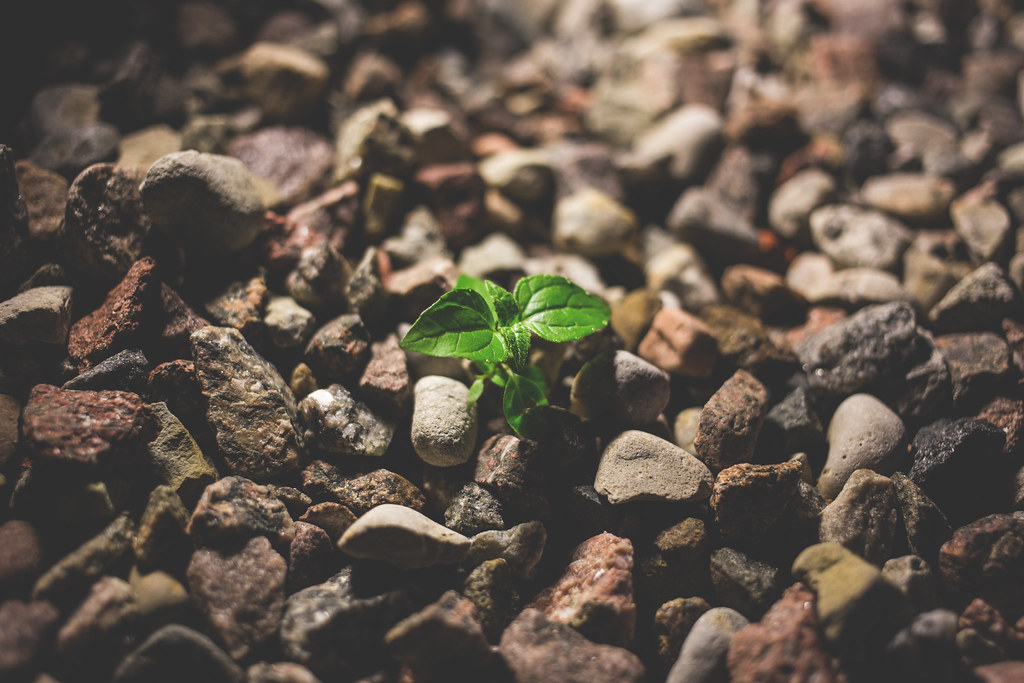
The root of a plant is its support where the plant attaches itself in the soil, the bottom part. The soil must be cultivated. It is where the plant gets its nutrients. A rocky place is not a good place for things to grow. However, some growth may occur in rocky places, but it doesn’t last very long. A plant’s roots can’t grow well in rocks. The rocks hinder growth and later any intense heat would cause the plant to die.

Soil can be filled with pebbles or rocks, lack moisture and nutrients, become compacted, and hard to dig or loosen. This causes the plant to absorb and drain water poorly. Poor drainage potentially causes flooding producing overly wet soil that will leach nutrients, and topsoil can wash away. Soil becomes contaminated from overuse of toxins or chemicals reducing the soil’s fertility.

Assessing our own hearts, we might ask ourselves if our faith would stand when tested by troubles or doubts. Do we keep God first regarding time and interest? Do we get excited about His word, but later pressure causes us to get discouraged toward unbelief? Does our faith have depth? Or are we fickle about the word of God in that we are excited one moment, then later we aren’t? Do we lack endurance? These are important questions for us to consider before facing the trouble and persecution of a Christian’s life. It’s better to be alert and ready ahead of time.

The soil of a plant can be likened to our hearts, with the implanting of the seed of God’s word being necessary to successfully maintain a strong walk of Christian faith. Nurturing this seed in our soil might look like consistent time in personal bible study, meditation on scripture, as well as growing in wisdom through doctrinally sound church sermons and Christian books. All of these aid in strengthening our roots for support that is strong and deep. However, if we allow too many negative stones access to our hearts like false doctrine, offenses toward others, and compromise toward the bible’s teachings, our soil will become shallow. We then risk becoming discouraged, frustrated, weary, and bitter, leading to unbelief.

Let’s remember to do occasional heart checks to ensure we are doing our part to maintain a strong, faith foundation for deep spiritual growth in our lives.

We should fully embrace 1 Corinthians 3:11, “For no other foundation can anyone lay than that which is laid, which is Jesus Christ.” Dependence upon this foundation will ensure that our roots are nourished, and our hearts remain healthy.

The Freedom of Contentment

There’s an interesting satisfaction and flexibility in being content with one’s own life. Wherever we may find ourselves in terms of our relationships, finances, careers, health, etc., embracing being content in God’s care, we are able to experience freedom. This freedom can eliminate the pressure we may feel to perform by the standards of others and allows us room to relax and trust God’s will to manifest in our lives. Knowing and depending upon what God says to us in the Bible regarding this matter is of utmost importance and help.

I define being content as choosing to stay optimistic and hopeful in whatever circumstances we face. Whether trials and tribulations or joys and triumphs, we choose happiness and trusting God over self-pity or bitterness. We realize that as we offer our bodies as “living sacrifices, holy and pleasing to God” (Romans 12:1), we can expect nothing less than God’s best for us.

In Philippians 4:11-13 the Apostle Paul shared that he’d learned that in whatever state he was, to be content:  “… I know how to be abased, and I know how to abound. Everywhere and in all things, I have learned both to be full and to be hungry, both to abound and to suffer need. I can do all things through Christ who strengthens me.” He also reminds us in 1 Timothy 6:6 that “… godliness with contentment is great gain.” What’s key here for me is knowing our ability to endure, succeed, or accomplish anything comes from Christ who strengthens us. Isn’t it a blessing that we don’t have to do it alone?

So, when we’re face with the hard places of life or the ecstatic places of joy and abundance, we can rest in knowing that God favors and loves us as His own. We have the freedom of contentment because we have the promises of God for our lives. The Bible describes them as “exceedingly great and precious” in 2 Peter 1:4. Hence, why would we not embrace the freedom this affords us? When we’re faced with fear and doubt, we can remember Psalm 118:5, ““Out of my distress I called on the Lord; the Lord answered me and set me free.” Remember, the Lord is our Shepherd! It is good to be content.