When Something from Little Means More

1 Corinthians 12:8-10

“To one there is given through the Spirit a message of wisdom, to another a message of knowledge by means of the same Spirit, to another faith by the same Spirit, to another gifts of healing by that one Spirit, to another miraculous powers, to another prophecy, to another distinguishing between spirits, to another speaking in different kinds of tongues, and to still another the interpretation of tongues.”

As children of God, we can be thankful for His spiritual gifts to us–those “demonstrations of the Spirit’s power” so that one’s faith might not rest on human wisdom, but on God’s power (1 Corinthians 2:4-5).

In 2 Kings 4:42, we see a man from a town called Baal-Shalisha who brought the prophet Elisha some freshly cut grain and 20 loaves of bread made from the first barley that was harvested. He told him to give it to the people so they could eat. The servant indicated there wasn’t enough bread for 100 people. Elisha answered, “Give it to the people to eat.” That the Lord said they’ll eat and have some left over. So the man gave it to them, they ate, and there was some left over.

Earlier, in 2 Kings 4, we see that Elisha had returned to Gilgal, and there was a famine in the land at that time, and a company of prophets had come to meet Elisha. Hence, more people would be in town than perhaps on a normal day.

Interestingly, Jesus wasn’t the only one who multiplied food to feed a large group of people, as occurred during a time before Jesus was born on earth. This should remind us that God can make enough and more from very little or nothing, as shown when Jesus turned water into wine at the Wedding of Cana, and had a disciple extract money for his and Jesus’ taxes from a fish’s mouth. God makes it look so easy to obtain. Yet we stress about how we’ll get it.

Moreover, this event should teach us that once God says something will happen, that settles it, even though it may seem unlikely. We can count on it to happen. Believing specifically what he says takes seeing with the eyes of faith, the substance of things hoped for, the evidence of things not seen.

God can use others to perform miracles, as he did with the prophet Elisha. It all depends upon God’s empowerment and will. If he wants to do it, you can count on it to be done excellently. We see him providing not just enough, but with leftovers. Sounds like abundance to me!

This bread incident happened directly after another event where the stew, having been prepared for the company of prophets, was found to be inedible and what they described as “death in the pot”, and again, during this time of famine. Elisha directed his servant to add some flour to the pot and serve it. They ate, and there was nothing harmful in the pot. Now, how would you have responded if there was talk of something being harmful in the stew you were being served, but the prophet you were learning from had the solution to add flour and eat it? Would you have done it?

In any event, I love seeing God’s power manifested this way, and I’m so grateful to be able to read it and perhaps even experience it in some way in my own life. Today, God still makes the gift of working miracles available to those He’s chosen, as shown in 1 Corinthians 12:10. In these cases, it could be described as divine multiplication.

Another example of God’s goodness is when He instructed Moses to throw a stick into the water to make its bitterness sweet so the Israelites could safely drink it. God is truly always making something better!

Filled With Power

Acts 1:8
“But you will receive power when the Holy Spirit comes on you, and you will be my witnesses in Jerusalem, and in all Judea and Samaria, and to the ends of the earth.

For 40 days, Jesus appeared to His disciples before ascending into heaven. On this day, just before He was taken up to heaven, Jesus shared His desire that His disciples would stay in Jerusalem to wait for the gift His Father promised. In a few days, His disciples would be baptized with the Holy Spirit and then become His witnesses in Jerusalem and throughout the world. This baptism was very important as it empowered Jesus’ disciples to witness for the Lord and still does today.

The Greek word for power is dunamis, which is supernatural strength, might, and ability. This would be the necessary power to fulfill God’s purpose as witnesses, the Greek word martyres, those who testify to the truth of Jesus’s life, death, and resurrection from personal experience.

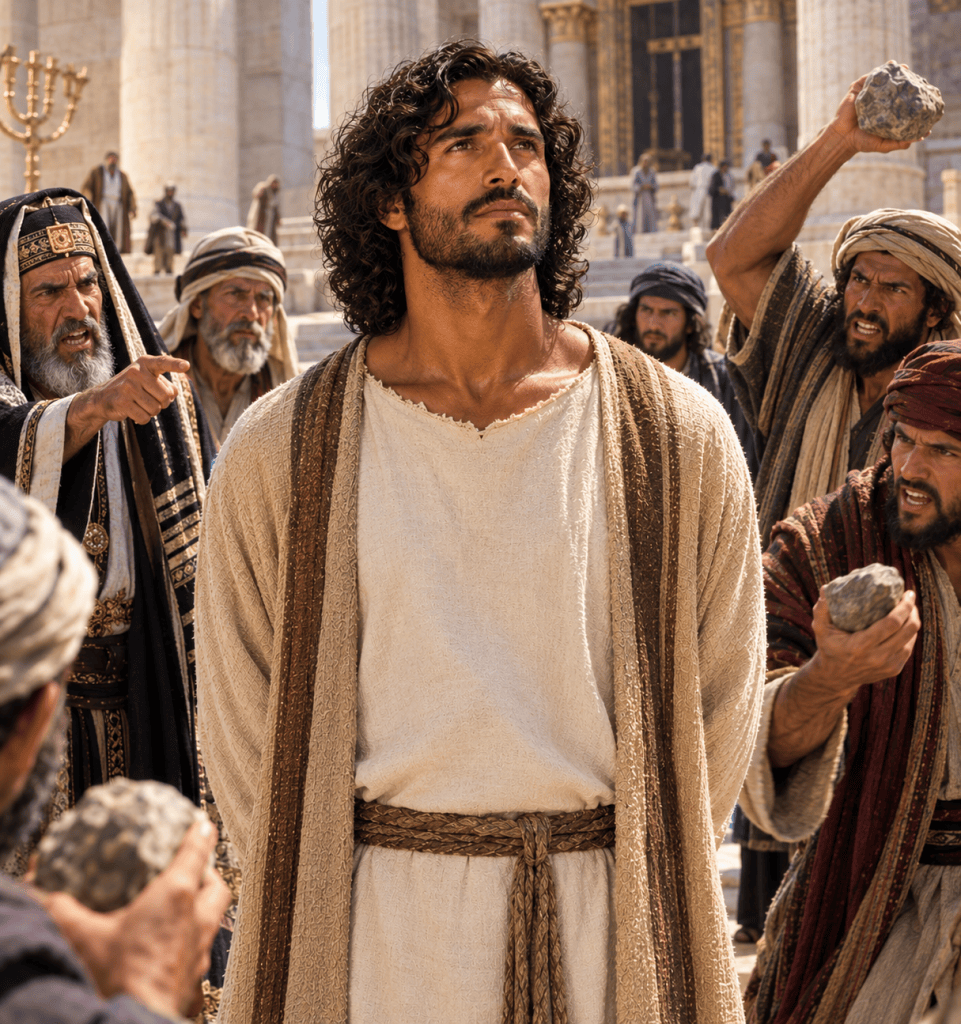
This word sounds a lot like the word we hear today: martyrs, the heroes of faith who suffer persecution and death for advocating or refusing to renounce their belief in, or cause regarding, Jesus Christ. Stephen, one follower the Bible describes as “a man full of God’s grace and power,” who “performed great wonders and signs among the people,” is described in Acts 6:8 as such. He was a man of great wisdom, the Bible says, “the Spirit gave him as he spoke” (Acts 6:10).

Acts 6:9 says that “Jews of Cyrene and Alexandria as well as the provinces of Cilicia and Asia” began to argue with Stephen, but were no match for the wisdom the Holy Spirit provided him. So they secretly convinced some men to say, “We have heard Stephen speak blasphemous words against Moses and against God.”

Then they stirred up the people along with the elders and teachers of the law and brought him before the Sanhedrin, who produced false witnesses against him. The Sanhedrin was the supreme Jewish council and court in ancient Israel, including the High Priest, who governed religious, civil, and criminal matters in Jerusalem. They were influential leaders—Sadducees (priests), Pharisees (scribes), and elders—who questioned Jesus and early Christians.

Sadly, Stephen was stoned to death, but not before he preached a solid, truthful message about Moses and their ancestors, as well as some tight, but right words describing his opposers. He was even privileged to see His Lord and Savior in heaven, standing at the right hand of God, waiting for him as he was being stoned. I would not be surprised if Stephen felt no pain at this point.

We may never endure the level of persecution the first disciples did, but we know that persecution comes with being God-fearing and fully submitted to the Lord. “In fact, everyone who wants to live a godly life in Christ Jesus will be persecuted,” 2 Timothy 3:12. The Holy Spirit gives us the power to endure and persevere with boldness on behalf of the Lord Jesus Christ. The Holy Spirit not only empowers us to be witnesses, but is described as the Third Person of the Trinity who comforts, convicts, teaches, guides, and distributes gifts to the Church.

Let’s remember to thank God for His precious Holy Spirit.

Somebody’s Always With You

Matthew 28:20

“…And surely I am with you always, to the very end of the age.”

Have you ever been amazed by the fact that God sees you at all times, as well as all of your brothers and sisters in the Lord, too? We may wonder how in the world He does it, but the fact is, He is God and can do anything. He sees us and has seen us all of our lives and knows every detail of everything we’ve ever done. Yet we are given the privilege of communicating with Him and knowing Him within the current limits of our human comprehension.

Knowing that God always sees us fosters security and perhaps, in some cases, shame, as we know we aren’t always showing our best behavior. Nevertheless, seeing healthy parents with their imperfect children, we can derive some sense of the love and care God has for His own children. It’s a love that wants to be present and provide for their best well-being.

Our God shows His faithfulness and consideration even to the seemingly unlikely person, as shown in Genesis 16:13. Hagar was an Egyptian slave to Sarah, Abraham’s wife. Sarah had given her to her husband, Isaac, to produce the child promised to them. It had been prophesied that within a year of the Lord and two men’s visit (Genesis 18:10), Sarah would be pregnant with a son, though she and her husband were very old and past normal childbearing years.

Later, Hagar, amidst the frustration of being pregnant by Issac and now mistreated by his wife Sarah, took her child and attempted to run away. God met her on her journey with some comforting words, promising to increase her descendants and convincing her to go back and submit to Sarah. Hagar recognized God as one who saw and considered her suffering, prompting Hagar to call God “El Roi,” meaning “the God who sees me.”

In stories like these, as well as in our own lives, we see that God is not distant from His children, but very much aware of and compassionate toward them, watching over them and offering help as He deems necessary.

Thankfully, God notices those who feel unseen, neglected, or distressed, as he did for Hagar in the wilderness. The name “El Roi” is often used to bring comfort to those who feel lonely or forgotten, reassuring them that God knows their situation and sees them.

Another awesome name signifying God being with us is “Jehovah Immeka,” Hebrew for “the LORD is with you,” which speaks to His abiding presence, companionship, and strength. Referenced from Judges 6:12, this name indicates a time when the angel of the Lord addressed a man named Gideon as a “mighty man of valor,” though Gideon saw himself as defeated. He was frustrated and discouraged and questioned, “If the Lord is with us, why has all this happened to us?” He felt the Lord had abandoned him and was giving him over to their enemies, the Midianites.

I can just hear the Lord’s calm voice, “Go in the strength you have and save Israel out of Midian’s hand. Am I not sending you?” Surely, God would be present to provide help for the battle Gideon was to face. But Gideon’s reply was, “But how can I save Israel? My clan is the weakest in Manasseh, and I am the least in my family.” To which the Lord answered, “I will be with you, and you will strike down all the Midianites, leaving none alive.”

You’d think that would be enough for Gideon, but it wasn’t, and I don’t blame him because I’ve seen myself in some instances similar to this conversation. “If now I have found favor in your eyes, give me a sign that it is really you talking to me. Please do not go away until I come back and bring my offering and set it before you.” The Lord simply replies, “I will wait until you return.” The story goes on to show Gideon preparing a food offering for the Lord, and the Lord consuming it with fire. Yet the Lord assured him that he would not die and to not be afraid.

Yet the story continues, with the Lord giving Gideon further instructions and Gideon still trying to confirm them by testing the Lord with a fleece. I love this story. Poor Gideon, he must have been terrified. Before the battle, the Lord told Gideon that he had too many men, and from the initial 32,000, he interestingly dwindled them all down to 300. He didn’t want anyone boasting it was anyone but the Lord’s doing!

Nevertheless, Gideon obeyed all of the Lord’s instructions, though with doubt, fear, and needing reassurance. Ultimately, he secured the victory over the Midianites. As Judges 8:28 says, “Thus Midian was subdued before the Israelites and did not raise its head again. During Gideon’s lifetime, the land had peace forty years.”

Another time God assures that He sees and cares is shown in Joshua 1. Here, He sought to encourage Joshua that He was with him wherever he went as he’d lead the Israelites into the Promised Land.

God promised Joshua, “No one will be able to stand against you all the days of your life. As I was with Moses, so I will be with you; I will never leave you nor forsake you. Be strong and courageous, because you will lead these people to inherit the land I swore to their ancestors to give them.” Then, after a series of events, the Bible says, “So the Lord was with Joshua, and his fame spread throughout the land” (Joshua 6:27). Whew! Talk about God being with His folk!

No doubt, God is graciously merciful, but as far as I can see from the Bible, God don’t play bout His kids! Keep close to your heart God’s truth that “the eyes of the Lord are in every place” (Proverbs 15:3), and “nothing in all creation is hidden from his sight” (Hebrews 4:13). And if you happen to be one of the Lord’s seasoned saints, in Isaiah 46:4, God promises, “Even to your old age and gray hairs I am he, I am He who will sustain you. I have made you and I will carry you; I will sustain you, and I will rescue you.” This verse highlights God’s steadfast care, defense, and faithfulness throughout a person’s entire life.

When God tells us He is with us and will never leave us, we can rest assured He is. By faith, we believe it without having to feel or see it. He’s the one person who is always with us.


The Healer’s Blessing

James 5:15

“And the prayer of faith will save the sick, and the Lord will raise him up.”

Imagine Jesus, in 2026, here in his physical body, healing someone from their illness. With joy, we can have expectancy of His help in such an event, as we see God’s desired results throughout the gospels. Perhaps sometimes we have not because we ask not. Or, maybe we believe we don’t deserve to be healed, or God doesn’t really want to heal us.

It is comforting to know that even though the Lord will sometimes take someone home to live with Him, He will, at many other times, allow others to be healed and remain a while longer. Of course, this may happen instantly or over time. Yet my point is Jesus is a healer, doesn’t want to see people sick, and demonstrated various types of healing when He walked the earth.

Jesus was a man of compassion, moved by the suffering of others, and being a man of great authority, he healed with a word, a touch, or even from a distance. He was a man who modeled Kingdom power, his miracles fulfilling prophecy, revealing who He was, the Son of God. He also highlighted the role of some people in instances where He told them their faith had healed them. Interestingly, in some places, He could do no great works because of their unbelief (Matthew 13:58 and Mark 6:5-6).

I thought to post about this topic today lest we forget God’s thoughts on sickness and healing. There is no sickness or disease in heaven, and Jesus told us the thief comes to steal, kill, and destroy, but Jesus came that we might have life, and life more abundantly (John 10:10). Hence, we should make no mistake who the thief is, satan, not God.

A few amazing accounts of Jesus healing in the Bible are:

  • Healing 10 lepers (Luke 17:11–19). This was a dreadful, contagious disease that people seriously avoided. As the lepers called out to Jesus from a distance for pity, Jesus told them to go and show themselves to the priests, and while on the way, they were cleansed. Unfortunately, only one leper, a Samaritan (a foreigner), returned to thank Jesus. But Jesus assured him his faith had made him well.
  • Healing the paralyzed man whose friends lowered him through a roof (Matthew 9:1–8; Mark 2:1–12; Luke 5:17–26). This was a bold act of persistence, which Jesus saw as faith shown in getting this man to Him.
  • Healing the woman with an issue of bleeding for 12 years (Matthew 9:20–22; Mark 5:25–34; Luke 8:43–48). This woman believed that if she only touched his clothes, she would be healed. She did, and she was, instantly!
  • Raising a man’s dead daughter to life (Matthew 9:18–26; Mark 5:21–43; Luke 8:40–56). Jesus came to the scene of people crying and wailing loudly about the death of Jairus’ daughter, and upon going in to see her with her parents and a few of his disciples, He took her by the hand and told her to get up, and she did, immediately. So many were blessed that day by this amazing act.
  • Healing a mute, demon-possessed man (Matthew 9:32-34). Seeing the man delivered and speaking, the crowd, astonished, said they’d never seen anything like it in Israel.
  • Healing a crippled woman bent over for 18 years (Luke 13:10–17). The Bible tells us this woman had been crippled, not being able to straighten up at all, by a spirit. He told her she was set free from her infirmity and placed his hands on her, and immediately she straightened up and praised God.

Jesus also performed mass healings where people were healed from every sickness and disease (Matthew 4:23–24; Matthew 9:35). Not to mention, there are so many more miracles that Jesus did that weren’t even recorded (John 21:25).

Jesus willingly and compassionately healed the lame, blind, cripplied and mute (Matthew 15:30). Yet I believe it’s also important to note that, in some instances, sin was related to a person’s need for healing or deliverance, and the Lord told them, once healed, to go and sin no more, or something worse would come upon them (John 5:14 and John 8:11).

Thankfully, “He himself bore our sins” in his body on the cross, so that we might die to sins and live for righteousness; “by his wounds you have been healed” (1 Peter 2:24). Aren’t you glad about it? Now we may call for the elders of our churches, or for other believers to pray prayers of faith (James 5:14-16) that we’d be healed. Just another wonderful thing our heavenly Father has done for us through His marvelous Son, Jesus!

We see in scripture, Jesus shared the blessing in healing, telling his disciples in Matthew 10:8 to “heal the sick and raise the dead,” stating “freely you have received, freely give.” He echoed His desire again in Mark 16:18, just before ascending into heaven, that one of the signs of those who believed would be that they would place their hands on sick people and they would get well. Let us thank the Lord for these beautiful blessings!

Desired Authority

Colossians 2:10

“…and in Christ you have been brought to fullness. He is the head over every power and authority.”

This is amazing news: We’re complete in Christ, the head over all authority! To be loved and connected to someone of such character and stature is in itself a major privilege. This tells us Jesus is no wimp! To be granted by His Father with such an honorable position, and yet to redeem us and call us His own people, is cause for great excitement. We can trust this person with our lives at all times!

Not only is Jesus positioned high above with great authority, but with all authority in heaven and on earth, as stated in Matthew 28:18. In addition, He gave us authority as His disciples in Luke 10:19 when he stated, “Behold, I have given you authority to tread on serpents and scorpions, and over all the power of the enemy, and nothing shall hurt you.”

This delegation of authority was not just a blessing for the disciples of His day, but ours, today, as well. After all, in Matthew 28:19-20, Jesus commanded His disciples to go into all the world and make disciples, baptizing and teaching them to obey His commands. Whenever we obey someone, we are submitting to their leadership, recognizing them as an authority over us.

Over a great period of time, grafted in as Jesus’ family of disciples, we would eventually expand globally. Jesus knew He’d be leaving the earth, and while He was here, He demonstrated to His disciples, then and now, how to live and minister to others, providing His Holy Spirit of power to help us all. Regarding this gift of the Holy Spirit spoken of in Acts 2:39, Jesus stated, “this promise is for you and your children and for all who are far off–for all whom the Lord our God will call.”

As to the authority we’ve been given, Jesus shows us in Mark 16:17-18 that those who believed would be able to cast out demons and heal the sick in His name. In Luke 9:1-2, we see Jesus giving the twelve disciples power and authority over all demons and to cure diseases. Then He promises believers, in John 14:12, that they’d do the same works He’d done, and greater works because He was going to His Father.

Moreover, He’s reminded us that, as His children, we are overcomers because “greater is He that is in us than he that is in the world” (1 John 4:4). Hence, we should not forget that we are given “the victory through our Lord Jesus Christ” (1 Corinthians 15:57). We are “more than conquerors through him that loved us” (Romans 8:37).

It’s also important to remember that with the authority we’ve been given, “The weapons we fight with are not the weapons of the world. On the contrary, they have divine power to demolish strongholds” (2 Corinthians 10:4).

Walking in our God-given authority was never meant for us to accomplish alone. We have the Holy Spirit as our guide, who will lead us in various, unique ways suited to each encounter we may experience.

Angels Galore

Psalm 91:11

“For He will give His angels charge over you,
to guard you in all your ways.”

We’re all familiar with human beings and what it’s like to relate to one another. However, there are other beings created by God of great significance to His people, and these are called angels.

Angels who work on God’s behalf are wonderful! They are spiritual beings that God created to serve Him through carrying out His will. They are powerful and intelligent beings who work with purpose. Revelation 5:11 numbers them as “thousands upon thousands, and ten thousand times ten thousand” encircling God’s throne. Hebrews 12:22 cites them as innumerable!

Though angels are spiritual beings, they can appear in human form. Hebrews 13:2 reminds us not to forget to show hospitality to strangers, “for by so doing some people have shown hospitality to angels without knowing it.”

The Bible mentions various types of angels: Archangels (e.g., Michael), Cherubim (guardians of God’s holiness), Seraphim (worshipers around God’s throne), and “hosts of heaven” (angelic armies).

As God’s messengers, angels deliver warnings, instructions, and revelations. The angel Gabriel delivered a message to Mary, the mother of Jesus, that she was highly favored, the Lord was with her, and she would conceive by the Holy Spirit to bear a son named Jesus (Luke 1:26–38).

In Genesis 18, angels visited Abraham and Sarah, delivering to them the message that Sarah would bear Abraham a son in their old age.

Daniel 10 reveals an intense, prolonged battle in the spiritual realm, with the delivery of messages influencing earthly events. A heavenly messenger is delayed for 21 days by a demonic “prince of Persia” until Michael arrives to help relay the messages to Daniel. 

Angels are also protectors who are known to rescue and guard people, as well as fight battles. In Genesis 19, two angels protected Lot from the violent men of Sodom by striking the mob with blindness, then forcefully escorted Lot, his wife, and their two daughters out of the city to save them from impending destruction. The angels, acting on behalf of God’s mercy, insisted that they leave quickly and helped them escape.

Interestingly, 2 Kings 6 describes Elisha’s servant having his eyes opened to see the hills filled with horses and chariots of fire (angelic warriors) protecting them. 2 Kings 19:35 and Isaiah 37:36 show just one angel of the Lord killing 185,000 soldiers in one night. In Joshua 5, an angel appears to Joshua as the “commander of the army of the Lord.” Psalm 91 speaks of God commanding His angels to guard His people.

Moreover, in the Bible, we see angels engaging in spiritual warfare. Scripture clarifies that this warfare is “against spiritual forces of evil in the heavenly realms” rather than flesh and blood (Ephesians 6:12). Michael the archangel contends with evil powers and is specifically identified as a leader in a conflict battling against Satan and his fallen angels. Revelation 12 describes a war in heaven where Michael and his angels fight against the dragon (Satan) and his angels.

The Bible clearly shows us how angels interact with humanity. They appear to guide, protect, deliver messages, and strengthen believers. Yet the Bible also warns against worship of angels, as only God is worthy of worship.

There are countless stories, historically and even today, of people who have experienced angelic help or visitations. Thankfully, angels are “ministering spirits” (servants) sent by God to actively serve, protect, and assist believers (Hebrews 1:14).

Furthermore, angels worship God. They worship around His throne (Revelation 7:11) and celebrate God’s works, rejoicing when sinners repent (Luke 15:10). However, they also carry out God’s judgements by executing God’s justice. We see them carrying these out in the book of Revelation.

Not all angels are good. The Bible teaches that Satan was originally an angel who rebelled. Other angels followed him and became fallen angels (demons). This is part of an ongoing spiritual conflict Scripture describes.

In remembering angels and their awesome existence, we should always embrace that they are not to be feared or worshiped—but they remind us of God’s nearness, His protection, and His sovereignty.

Golden Rule Love

Matthew 7:12

“So in everything, do to others what you would have them do to you, for this sums up the Law and the Prophets.”

Ever think about how you’d like to be treated? My guess is the answer is yes, more often than we might want to admit. We all want to be treated well, but often, for whatever reason, we face challenges of the opposite. Nevertheless, the Bible gives us a simple method of getting along with others: In all things, doing to others as we would have them do to us.

Perhaps Matthew 7:12 is known as The Golden Rule of the Bible because it actually summarizes the fulfillment of the law and the prophets. This one rule flows into every area of the Christian life. By treating others the way we’d like to be treated, we show our best behavior toward someone else.

The chief attribute of this conduct is love. When we love others, we show we want the best for them, displaying care and concern for their well-being. This behavior could range from mild to more intense, depending on the circumstances of our experience with them. Yet, just by being cordial and polite, we make others’ experiences with us pleasant.

When we show respect toward others, we honor them as better than ourselves, as shown in Philippians 2:3, “in humility consider others more important than yourselves.” We are considerate of their feelings, worth, and boundaries. As believers, we see them as Christ sees them. So, despite their financial status, color, size, age, place of birth, etc., we treat them as valuable creations of God. Galatians 6:10 teaches us, “… as we have opportunity, let us do good to all people, especially to those who belong to the family of believers.”

When we are disappointed or treated badly by others, our Bible teaches us to extend forgiveness, not holding a grudge, but releasing the offense against them, knowing in doing so, our heavenly Father forgives us, and we receive our reward from Him.

Moreover, we demonstrate Christ’s compassion for others by showing empathy, putting ourselves in their shoes, and having concern for their suffering or misfortunes. Considering this, the Bible tells us in Romans 12:15 to “Rejoice with those who rejoice; mourn with those who mourn.”

We’re reminded in Colossians 3:12, “Therefore, as God’s chosen people, holy and dearly loved, clothe yourselves with compassion, kindness, humility, gentleness and patience.” This verse offers some wonderful ways we can treat one another honorably.

Honoring someone requires humility, not overvaluing one’s own importance at the expense of theirs. Showing a mild and tender temperament toward someone is not a mark of being “soft,” as in a debasing way, as is sometimes defined in today’s culture. But gentleness is actually a fruit of the Holy Spirit that Jesus attributes to himself in Matthew 11:29, “Take my yoke upon you and learn from me, for I am gentle and humble in heart, and you will find rest for your souls.”

Jesus, Faith Master

Matthew 14:31

 Immediately, Jesus reached out his hand and caught him. “You of little faith,” he said, “why did you doubt?”

Have you experienced any power outages lately? I have in my neck of the woods. It can be quite frustrating and inconvenient. But what a relief when that welcome surge of power suddenly returns to your residence.

Waking up in total darkness that night, though feeling the Holy Spirit’s peace, brought to my mind how, back in his time on earth, Jesus had no beaming flashlight to brighten his path. Perhaps he used a torch or an oil lamp. Yet nothing like we have today. So, I imagined Him climbing up a mountain, or some other dark space, just before dawn, to be alone and pray. Can you imagine that scene?

I imagined again how Jesus appeared to his terrified disciples walking on water in the darkness. I wondered why they did not recognize him or his voice after having spent much time with him. Perhaps it was due to the fact that it was very dark, or He was initially at a far distance from them. Nor were they expecting his appearance, but it was sudden.

Nevertheless, Jesus shared his power with Peter by enabling him to walk on water after requesting that the Lord tell him to come. But this request also required the faith of Peter to believe that he could walk on water even in the midst of darkness, wind, and intimidating waves.

Peter defied gravity as he eagerly walked on the water at the Lord’s command to come, with the winds and waves eventually overwhelming him with fear. This environment distracted his focus from the Lord and onto the negative possibilities of harm, and he began to sink, losing the power the Lord provided for him to do the seemingly impossible.

Jesus noted the smallness of his faith and questioned why Peter doubted. Yet surely we can relate to how Peter felt in such a scary situation, which is not normally familiar. Just what did that water he walked on feel like? How blustery were the wind and waves, and how loud were their sounds? Surely he could remember all the miracles the Lord had done when they ministered together. Yet in that moment, fear bullied his faith, putting an end to a promising miracle. Somehow, he began to question if the Lord would let him down.

I wondered where Peter’s insecurity could have come from. After experiencing such quality time with the Lord personally, watching His many great works, what would make him doubt the Lord? Perhaps this inspired his faith to even start to actually walk on the water, though eventually fear and doubt caused him to sink. Nevertheless, he was able to experience the Lord’s kindness and mercy as he raised Peter up and kept him from drowning in the sea. However, still the Lord expected Peter not to doubt, but have faith, believing what he desired could successfully happen.

How many times have we found ourselves in situations that seemed too big for us and, in our minds, maybe even too big for God to handle? Yet faith is powerful. It is living and miraculous. Without it, we can’t please God, and without it, we can’t be saved. Faith is the lifestyle of the believer. It is not the norm of the world, as it isn’t based on human logic. It takes us into unfamiliar territory where we need God’s truth and strength not to doubt.

In what ways is our faith being challenged? We should ask God to strengthen us and show us how to stand on His promises in any event. To consistently exercise faith without doubting or wavering is a wonderful thing to master.

Many times we are told in scripture not to be dismayed, discouraged, troubled, or afraid. God promises to uphold us and to give us peace. We’re told in 2 Timothy 2:13 that if we are faithless, the Lord remains faithful, which was demonstrated when Jesus helped Peter as he sank.

Moreover, 2 Thessalonians 3:3 tells us that the Lord is faithful, will establish us, and guard us against the evil one. Therefore, with practice, we can do as Hebrews 10:23 encourages: “… hold fast the confession of our hope without wavering, for He who promised is faithful.” No doubt throughout our lifetime, we’ll have ample lessons to strengthen our faith, along with testimonies to encourage one another.

Chief Design Counsel

Psalm 127:1

Unless the Lord builds the house, the builders labor in vain. Unless the Lord watches over the city, the guards stand watch in vain.


Today, I thought about building. There are so many ways in which we build. Whether we are building a home, business, relationship, or structure of any kind, we are constructing, establishing, or producing something of value to us.

Psalm 127:1 references the Lord’s building and watching relating to His constructing, overseeing, guarding, and protecting, and the importance of His direction. It reminds us that whatever we do, unless the Lord establishes it, it is labor spent in vain.

How is our labor in vain? It is fruitless, useless, to no avail. It is basically a failed effort from the start. Its outcome cannot be excellent or most helpful without God. It may have some measure of beauty, yet it will lack endurance without the Lord’s life and wisdom in it.

When I think of this verse, I think of my life and whatever I plan or design for it. It is truly futile if God is not its architect. Though God gives us a will, authority, and creativity to create and plan, He never means for us to do it without His counsel, as He knows we alone lack the necessary knowledge to be successful.

God sees the future of every endeavor we attempt, along with all else that life presents that surrounds it. Hence, He is the wisest source of counsel we will ever have available to us. So, I am reminded to involve the Lord in anything that I attempt to do if I truly want to be fruitful or prosperous.

We must remember in our planning processes that God’s goals are of utmost importance over ours, as stated in Proverbs 19:21: “Many are the plans in a person’s heart, but it is the Lord’s purpose that prevails”. While humans are ever building for various reasons, true success is linked to God’s purpose.

Consistently seeking God through prayer, listening, and obedience, to know His will for our lives and projects, protects us from wasted time and money. This doesn’t mean we will never make a mistake, but God will work with us to accomplish His wonderful goals.

Moreover, in Luke 14:28-30, Jesus reminds us of the importance of counting the costs of our projects before starting. “Suppose one of you wants to build a tower. Won’t you first sit down and estimate the cost to see if you have enough money to complete it? For if you lay the foundation and are not able to finish it, everyone who sees it will ridicule you, saying, ‘This person began to build and wasn’t able to finish.’

In planning our builds, we are to be certain of how to wisely construct our foundations, remembering 1 Corinthians 3:10: “By the grace God has given me, I laid a foundation as a wise builder, and someone else is building on it. But each one should build with care.”

We want to place whatever we build on a solid foundation, which is our Savior, as shown in Matthew 7:24-25, Jesus’ parable of the wise builder who builds his house on the rock, ensuring it stands firm against storms. Thankfully, God provides the stability, as seen in this parable.

Furthermore, God guards what He has built, making human worry unnecessary. Seeking God’s direction ensures the work is not done in vain.

No Point in Worrying

Matthew 6:27
“Can any one of you by worrying add a single hour to your life?”

I just had a thought about worry and how pointless it is. It truly is a futile exercise of the mind and expends so much energy needlessly. The Lord reminds us in Matthew 6:27 that worry adds no time to our lives. Nor does worrying bring solutions to problems any sooner. It’s wiser and healthier to just trust God on the matter.

Whatever may rattle our minds today, we need only look up one or more scriptures on that very thing, strengthen our faith, and receive God’s peace. Whenever I consult the Bible, perhaps even with a short prayer to the Lord on an issue, I notice a difference in my thinking almost immediately. Yet it may take a while to actually start the process.

Nevertheless, with all those things that can present worrisome thoughts, the Lord tells us further in Matthew 6:33-34, to “seek first his kingdom and his righteousness,” and all these things will be given to us, not worrying about tomorrow, for “tomorrow will worry about itself as each day has enough trouble of its own.”

You could be a planner like me. I like to have everything mapped out in my head or, most often, on paper. I feel a certain security in having a path to follow to reach the end goal. However, sometimes our paths might not be God’s paths, so we need to ask Him to reveal to us His ways.

In James 1:5, He tells us all we have to do is ask for His wisdom, and He’ll give it to us. “If any of you lacks wisdom, you should ask God, who gives generously to all without finding fault, and it will be given to you.” I love how lavish and detailed God is. Not only will He give us wisdom, but He’ll give it to us generously and without fault.

I don’t know about you, but sometimes I feel like I’m always asking the Lord about something, or for something, too often. I start to feel like I’m getting on His nerves. “It’s me again, Lord.” Yet I know this is what He wants for us. He tells us to ask. It is part of being in a relationship with Him. He’s our Father, so there’s no better person to consult.

I love His Hebrew name, “Peleh Yo’etz”, meaning Wonderful Counselor or Miraculous Planner! This name describes one whose wisdom and strategies are extraordinary, incomprehensible, and beyond human capability. The term Peleh indicates a miracle or marvel, while Yo’etz denotes an advisor or one who plans.

So, if you’re feeling at a loss about what to do, or pondering something you need God’s perspective on. Let me encourage you to ask away! Though God doesn’t always answer us immediately, He does provide us with His answers in His timing. He delights in helping us.