The Truth of the Matter

Ephesians 2:6 (NLT)

“For He raised us from the dead along with Christ and seated us with Him in the heavenly realms because we are united with Christ Jesus.” 

If you believe and honor the Bible, don’t listen to lies! Those whose names are written in the Lamb’s Book of Life are now seated in heavenly places with Christ Jesus.  We aren’t prideful about it, but are grateful for it. It is finished! Now, we’re able to act like it. Hallelujah!

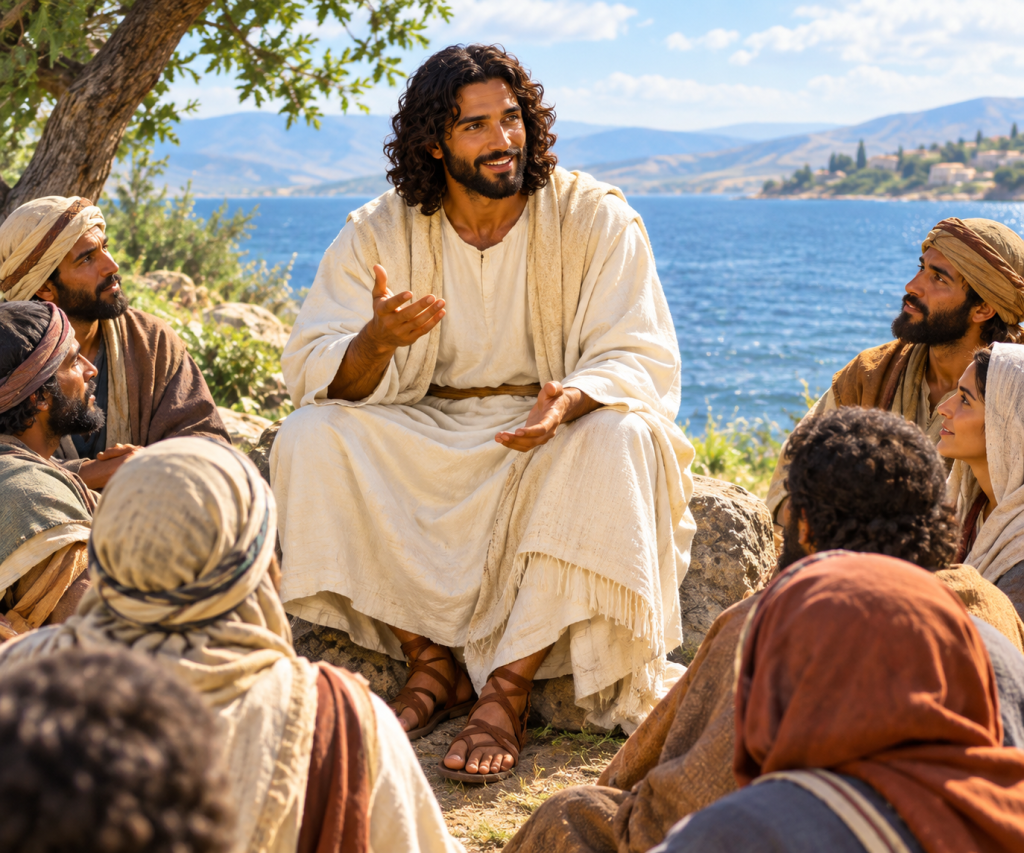
Jesus paid the price for our new position in Him. Mark 1:15 shows us, “The time promised by God has come at last!” he announced. “The Kingdom of God is near! Repent of your sins and believe the Good News!” As such, we are of a different rule, a special place, one of a holy, righteous, and just king. His title, among many, is King of Kings and Lord of Lords.

We are God’s children (Romans 8:16), often called saints, holy people, set apart for God, emphasizing our new identity in Christ. Though we may sin, I love how He calls things that be not as though they already were (Romans 4:17). Not to mention we are now heirs, heirs of God and co-heirs with Christ (Romans 8:17). 

Interestingly, He no longer calls us servants, but friends (John 15:15), and because of our spiritual union with Christ, “…you are a chosen people. You are royal priests, a holy nation, God’s very own possession. As a result, you can show others the goodness of God, for he called you out of the darkness into his wonderful light” (1 Peter 2:9). 

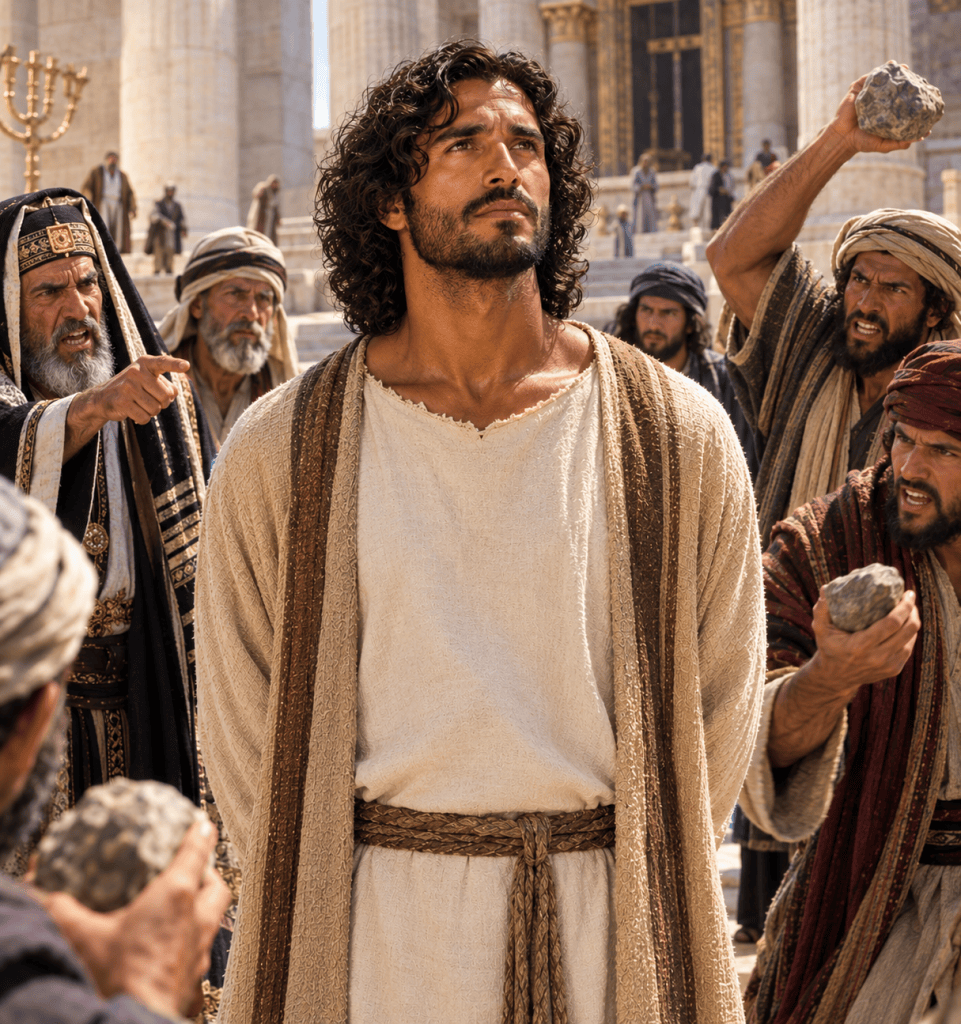
We must remember we are not our own (1 Corinthians 6:19-20), but our bodies are the temple of the Holy Spirit. We’ve been bought for a hefty price and aren’t to become slaves of human beings (1 Corinthians 7:23). And as Stephen reminds us in Acts 7:48, “The Most High doesn’t live in temples made with human hands.” Besides, as stated in Acts 7:50, “Heaven is my throne, and the earth is my footstool. Could you build me a temple as good as that?’ asks the Lord. ‘Could you build me such a resting place? Didn’t my hands make both heaven and earth?’”

As we live on the earth, we will be subject to all kinds of lies our enemy may bring to our minds about who we are, what we can’t do, and so many negative things.  However, don’t receive, dwell on, or embrace any of it! The truth of the matter, as I’m reminded of in an old song we used to sing back in the 80s, written by Dwight Liles and sung by Steve Green, “We are alive in Christ, dead to the world, free from the sin that enslaves. In His death we died, in His life we live again, on the other side of the grave!”

_______________________

Illustration: Easy-Peasy.Ai

3 How-To’s for the Family

Galatians 5:16

“So I say, walk by the Spirit, and you will not gratify the desires of the flesh.”

Today, I thought of three instructions that might be helpful to my brothers and sisters in Christ, as well as to myself. These are things I’ve pondered recently that I thought would help us in our Christian walk. These things relate to behavioral and spiritual enhancements and how we might walk them out with the help of the Holy Spirit.

1. How to Be Different Without Being Rebellious

Some of us, or maybe even most of us, feel very unique from other people. With this thinking, we may, in certain areas, reject any suggestions to change, for fear of becoming something we are not. However, it is not a bad thing to change, as this happens to all of us as we grow older, whether we like it or not, for better or for worse. Yet, thankfully, we are encouraged to grow to become more like Christ. Hence, we want to move further away from being rebellious and closer to improving and being humble.

In 1 Samuel 15:23, the Bible relates being rebellious to witchcraft. It represents an attempt to usurp God’s supreme authority in favor of self-will or other spiritual powers. Rebellion also involves having a rigid attitude that resists rules.

God has given us all a spirit and soul that live in a body, where all three are different from those of other people. Yet He has given us His Bible to teach us how to live and communicate with Him and others in love. Hence, while our personalities are and should be different, our ways of relating to others should align with God’s teachings.

We’ve been reared in various ways, enjoy different things, and dislike other things, which involve our family history, personal desires, learning, and environment. But rejecting rebellion in our lives entails replacing pride with humility, cultivating a teachable spirit, and actively submitting to authority. We are to avoid self-reliance alone and disobedience to God’s will, as a defiant and stubborn spirit leads to judgment and spiritual destruction. 

Thankfully, God has made His will for us known through His Bible and by communicating with Him in prayer. So, if we lack wisdom, we are told in His Word to ask, and He will grant it to us liberally. Moreover, He’s given leaders in the Church to give us His instructions, as well as His Holy Spirit, who leads us into all truth.

2. How Not to Conform, While Being Transformed

The Bible tells us we are being transformed into the image of Christ. Specifically, Romans 8:29 says, “For those God foreknew he also predestined to be conformed to the image of his Son, that he might be the firstborn among many brothers and sisters.” We are also told in Romans 12:2-3, not to “conform to the patterns of this world, but to be transformed” by the renewing of our minds. Then we will be “able to test and approve what God’s will is—His good, pleasing and perfect will.”

Meditating on the Lord’s teachings daily strengthens our faith. It allows us to remember what the Lord’s will actually is, instead of what the world imparts to us. As we train ourselves and practice what He has instructed, we become more accustomed to His will and ways and less desiring of worldly ways and attitudes. Not to mention, His Holy Spirit’s sanctification process, which is a lifelong work in our lives to make us more like Christ.

3. How to Love without Compromise or Carnality

The Bible teaches us in 1 Corinthians 16:14 to “do everything in love.” Also, in 1 Corinthians 13:6, “love does not delight in evil but rejoices with the truth.” So, truth is important in showing love. True love rejects wrongdoing and celebrates truth. Moreover, “love does no harm to a neighbor…” (Romans 13:10).

When we are carnal, we appeal to our flesh, and as Romans 8:7-8 teaches, “The mind governed by the flesh is hostile to God; it does not submit to God’s law, nor can it do so. Those who are in the realm of the flesh cannot please God.” Therefore, we must seek to live according to God’s Spirit and not our own carnal desires.

Living in this world, over time, we have developed worldly habits that need to be replaced by godly habits. We’ve grown accustomed to living and doing in ways that are opposed to God’s desires for us. We won’t know what that is until we hear and study the truth of the Bible’s teachings. Compromising involves settling for an altered version of the truth. And there are many altered versions of truth one can embrace. So, we must know and understand the truth God has made available to us in the Bible.

Consistently, learning and practicing God’s standards for living keeps us in the knowledge and way of truth. Needless to say, encouraging one another in God’s principles for living His life of love is a blessing to our growth.

The chief way to learn how to love is to know God and live close to Him. He will show us how to love others as well as ourselves. The Bible tells us in 1 John 4:8, “Whoever does not love does not know God, because God is love.” So, knowing God is the first step to success in love.

It’s quite apparent that these things can’t be accomplished in our own strength alone, but we need the wisdom and guidance of God to help us. One fruit of the Holy Spirit we can exercise to help us walk by the Spirit and not our flesh is self-control. It empowers believers to govern their desires, speech, and actions rather than being ruled by them.

Who’s In Charge?

Jeremiah 10:23

“Lord, I know that people’s lives are not their own; it is not for them to direct their steps.”

As a child, I was aware that someone had to be in charge if there were no adults in the house. Unfortunately, I was never the one, as I had a brother who was five years older than I was. Hence, he never let me forget I was the baby of the family and he was in charge.

Many years later, I’m still not in charge, as there is one much greater and wiser who has that job. Thankfully, I accept it because I need what’s best, His will over mine in all things. I’m remembering Him as El Shaddai, God Almighty, or the All-Sufficient One. I want to make sure we have not, in our minds, somehow reduced Him from His rightful position as described in His Bible.

God is in charge of the universe He created, the Church over which Jesus was given authority, human government and its authorities that He sets in place or removes, and the home, being the head of man and his family.

So, what makes Him in charge and one to honor? The Bible teaches that God created the heavens and earth and all that exists. He’s also described as the great God and great King above all gods, as well as the First and the Last, the Alpha and Omega, the Beginning and the End. These, among many other scriptures, show His superiority over all things.

The fact that the Lord created the heavens, earth, sea, animals, man, etc., by His great power, shows us the level of His ability or might. Also, the Bible tells us that before He ever formed the earth and the world, from everlasting to everlasting, He is God.

God’s power is unmatched in that nothing shall be impossible with Him. Not to mention that by Him all things were created, in heaven and on earth, visible and invisible, whether thrones or dominions or rulers or authorities—all things were created through Him and for Him.

Another amazing fact is that Jesus, God’s Son, is the radiance of the glory of God and the exact imprint of His nature, and He upholds the universe by the word of His power. After making atonement for our sins, He sat down at the right hand of the Father. He is before all things, and in Him all things hold together. 

In addition to His great superiority and power, He’s not only the great Creator, but the owner of all things. David described in his Psalms that the earth is the Lord’s and the fullness of it, the world, and those that dwell in it. Also, the Lord declared that the silver and gold belong to Him.

Further, every beast of the forest belongs to God, along with the cattle on a thousand hills. Even the bodies of believers, described as our temples, are not our own, but are God’s, as we were bought with the price of His dear Son’s death.

The one and only true God in all His glory and majesty is worthy of being honored for His supreme greatness and power. He is the loving, kind, fair, and generous God whose compassion never fails. We are blessed to know and worship Him.

______________________

Scripture References:

Genesis 1:1, Exodus 20:11, Psalm 24:1, Psalm 50:10, Psalm 90:2, Psalm 95:3, Haggai 2:8, Daniel 2:21, Jeremiah 32:17, Luke 1:37, Romans 13:1, 1 Corinthians 6:19-20, Colossians 1:16-17, Colossians 1:18, Ephesians 5:23, Hebrews 1:3, Revelation 1:8, and Revelation 21:6.

Tongues–An Edifier

1 Corinthians 14:15

“So what shall I do? I will pray with my spirit, but I will also pray with my understanding…”

For readers who accept that speaking in tongues is a biblical practice available to Christians today, I’d like us to recall its purpose and significance. For those who may not know, this is a spiritual gift of speaking in languages we do not know, but is inspired by the Holy Spirit. It’s a gift we see show up in the disciples, given on the Day of Pentecost, described in Acts 2:1-4, when they were all gathered together in prayer in one accord.

I’d like you to know that if you have been given the ability to speak in tongues, please do it more now than ever before. The Bible tells us in 1 Corinthians 14:4 that a person edifies themselves when they speak in tongues. That Greek word is oikodomeō, which means house builder. Hence, when we speak in tongues, we are building and strengthening ourselves. This is a very good thing.

In the world we live in today, many things can deplete us or work for our attention. God has given us His word and prayer to assist us. Speaking in tongues is another way we can develop ourselves. It is a language we speak ourselves that we’re unable to understand unless we, or someone in our presence, has the biblical “gift of interpretation” (1 Corinthians 12:10). Nevertheless, it is a gift from God to be used for His glory and our edification.

Finding time to speak in tongues doesn’t have to be hard, though it may feel somewhat difficult to spend a longer amount of time doing it, versus praying “with understanding” (1 Corinthians 14:15) as the Bible describes in your native tongue. Yet it is an edification tool that is very useful to us, or the Lord would not have made it available to us.

One doesn’t have to just sit quietly alone and speak in tongues. For some, it may be practiced while ironing clothes, cleaning, driving, or even working out. Yet it’s always nice if one has some pleasant worship music on hand, or a place to relax and pray. Sometimes, I’ll even braid, brush, or set my hair while doing it, as it helps me to be more consistent in doing it while doing habitual duties.

At other times, one may be in a prayer meeting, and for those who welcome the practice, the group may begin to pray using their prayer language. Anything appropriate that assists in helping us to use this precious gift will be a blessing to our edification.

The languages we may hear in prayer by another person may be very different from one’s own spiritual dialect. I’m reminded of a church in Silver Spring, Maryland, where some visiting Native Americans spent an evening with us. We had a time of prayer, as many of us began to speak in tongues.

It was a sweet and encouraging time. As we began to pray for one another, a young man approached me with tears and a holy hug, and I was amazed. That very Native American, Indian man spoke a dialect that sounded exactly like mine! It gave me such joy. This was my brother in Christ, though very different in appearance. His prayer language sounded very much like mine and was very amusing to me. This was just a glimpse of heaven in my eyes.

Sometimes, spiritual encounters like these may not be acceptable to some people and may appear weird. However, we must remember that God, heaven, and all things spiritual are not earthly, human-created things. These things and ways of God are higher than our ways and are SUPERnatural! So we shouldn’t expect much from God to be earthly as we know it. Just reading the Bible should help us to understand this.

In any event, allow this post to be a short reminder of another gift the Lord has so graciously given us that is very helpful to us in living a successful Christian life. Being “built up” in our “most holy faith,” praying in “the Spirit every day” (Jude 1:20-21) is an honorable exercise.

Pressure Release

Romans 13:10

“Love does no harm to a neighbor. Therefore, love is the fulfillment of the law.”

The pressure of perfectionism, or the need to follow all the rules, is released when we decide to love everyone, including family and foes. The Bible tells us that whoever loves others fulfills the law. So, we may ask ourselves, until we are accustomed to walking in it by practice, “Am I showing love in this situation or encounter?”

Perhaps it just takes a load off when we simply grow in the traits of expressing love, versus placing too much emphasis on rules. Now rules are crucial and have their place, but the Bible clearly shows us the vast importance of love.

Love requires being considerate and respectful; seeing others with eyes of honor and value, despite how flawed they may look to us. The fact that we were created by God in His image is enough to establish that all people are valuable to Him.

Love involves forgiving, not dishonoring. When we’ve been offended, we are bold enough to tell the offender the truth, so there is no misunderstanding. This is definitely not always easy to do. I must say I struggle with it myself sometimes, opting to just pray for them and releasing the matter. Then, treating them as well as I am able, without mentioning that I had been offended.

Nevertheless, Jesus has taught us in the Bible to let people know when they’ve offended us and to forgive them, as He has forgiven us. This releases the pressure of being angry, resentful, and revengeful. Not to mention it ensures our heavenly Father will forgive us when we do wrong or offend Him.

We may not want the closeness of consistent fellowship with someone if we’ve experienced that we don’t get along or have little in common with them. But that doesn’t stop us from being pleasant and cordial toward them, or simply praying for them.

Love doesn’t deceive or neglect, but cares for the well-being of others. It does not selfishly use or manipulate others for one’s own gain, but authentically cares that they walk in the freedom and self-control the Holy Spirit gives.

Love allows us to be kind, patient, and humble. We don’t delight in evil, but rejoice with the truth, not recoil from it. When we rejoice, we express joy or gladness, doing so in the presence of whoever may have offended us by sharing God’s truth.

Love in our relationships involves sharing and receiving truth honestly, when it may feel difficult to accept. If it is a teaching or principle of the Bible, it should be accepted as truth and provided and welcomed in a spirit of love.

Moreover, when we love, we protect, not malign, others. We don’t say or do things intentionally to make people feel bad or to amuse others for laughter. In our offense, we may experience the temptation to expose or speak negatively about someone, but we don’t have to give in to it. The Lord sees, hears, and understands everyone and is well acquainted with our life experiences and the motives of our hearts. He handles any judgment or discipline for wrongdoing well.

As believers, faith, hope, and love are of great importance, yet the greatest, which fulfills the law, is love. It’s mentioned first in the list of God’s fruit of the Holy Spirit in Galatians 5:22-23, and it is described in 1 Corinthians 12:31 as “the most excellent way.”

If we truly love someone, we do no harm to them. We love Jesus because He first loved us by sacrificing His life to save us. We sacrifice by submitting to others per the Holy Spirit’s leading, showing humility and honor to the very least of us.

As we practice love, we are walking in the Spirit, unafraid, as the Bible reminds us that perfect love casts out fear. Thankfully, Christ loved us at our worst, so we can now love others by the power of His Spirit living in us. He is our help when we feel it is too difficult to love, and He makes possible what seems impossible when we allow Him to do so. As we grow in this exercise, we experience the joy of how God can change someone’s life, by some act of love, great or small, that we’ve expressed toward them.

__________________

More Scriptures on Love:

Exodus 20:6; Leviticus 19:18, 34; Deuteronomy 6:5; Song of Songs 1-2; Mark 12:28-34; Romans 13:8-10; 1 Corinthians 13; 1 John 4:7-21.

Healthy God’s Way

Proverbs 3:7-8

Do not be wise in your own eyes; fear the Lord and shun evil. This will bring health to your body and nourishment to your bones.

https://easy-peasy.ai/ai-image-generator/images/active-lifestyle-illustration-middle-aged-african-woman-running-park

In a world where working out and adopting various diets or appetite suppressants are very popular, the Bible offers some interesting spiritual ways to achieve a healthy body.

In the book of Psalms 107:37, we see God’s preservation of His people when, after many years of horrific slavery, God restored the health and strength of the Israelites during their exodus from Egypt. The Bible describes their health as such that there was not one feeble person among their tribes.

Imagine enduring the suffering of slavery for generations and then departing Egypt, trekking across the Red Sea, to Mount Sinai. Then, on through the wilderness of Kadesh-Barnea, wandering 40 years to the Plains of Moab. Then, later, crossing the Jordan River into the Promised Land of Canaan. I’d say God preserved them well.

In Proverbs 3:7-8, we are shown three ways to achieve good health. We are told not to be wise in our own eyes, to fear the Lord, and to shun evil. Being wise in our own eyes means we lean on our own understanding and rely on our own knowledge, rather than seeking the Lord’s. We view fulfilling our desires and needs through our own perceptions, despite the Bible’s. We place a higher value on the wisdom of men than on God’s wisdom, choosing human knowledge instead of God’s kingdom provisions or remedies.

Fearing the Lord involves reverencing, honoring, and trusting His words; holding Him in higher esteem than ourselves; and relying on His wisdom in any situation. As regards evil, shunning it means turning from, avoiding, or rejecting it. We don’t embrace it as only human or natural, but as satanic and not for the Body of Christ. Amazingly, these behaviors actually bring health to our bodies and nourishment to our bones. We want healthy bones as they are the skeletal system that holds our bodies intact.

Proverbs 4:20-22 encourages us to pay attention to God’s wisdom, keeping His words in our hearts, not letting them out of our sight. This is crucial to our well-being as God’s words are “life to those who find them and health to one’s whole body.”

These are some important instructions to remember, though there are others like Proverbs 17:22, which tells us “a cheerful heart is good medicine…”. Not to mention Proverbs 14:30 that says “a heart at peace gives life to the body…”. How awesome are these words to aid in being healthy? I’m aiming to apply these as a first priority, yet not forgetting the value of some natural ways.

Godly Perfection

Matthew 5:48

“Be perfect, therefore, as your heavenly Father is perfect.”

There are various characteristics of perfection as we know it, but what does the Bible say about being perfect?

In this instance of Matthew 5:48, Jesus is teaching His disciples about loving their enemies. He talked about how if they loved those who loved them and greeted only their own people, what reward would that bring? He questioned what difference that would be from others, as even pagans did the same. He then tells them to be perfect, as their heavenly Father is perfect.

Perfect, here, is translated in Greek as teleios: having reached its end, mature, complete. Strong’s Concordance adds, “complete (in various applications of labor, growth, mental and moral character, etc.); … of full age, man … .”

This would be somewhat different from our English version of being perfect: “being entirely without fault or defect: flawless … satisfying all requirements … .” Yet the Lord with providing the gift of salvation by faith, created a system of sanctification by which we are set apart for God’s special purpose; along with a process of transformation performed by the Holy Spirit, into Christ’s likeness.

Romans 8:29 tells us, “For those God foreknew, He also predestined to be conformed to the image of His Son, that He might be the firstborn among many brothers and sisters. Moreover, “And we all, who with unveiled faces contemplate the Lord’s glory, are being transformed into His image with ever-increasing glory, which comes from the Lord, who is the Spirit” (2 Corinthians 3:18).

Hence, God has done so much for us by sacrificing His Son to atone for our sins and then providing a way for us to be changed into His likeness through His Holy Spirit. Part of our maturing process would include actions like loving our enemies, being salt and light (salt preserves and light reveals, much needed in this age), and not harboring anger toward our brothers and sisters. Letting others see our good deeds glorifies our Father in heaven (Matthew 5:16).

Of all the things that we might find to do in serving the Lord, these are things Jesus mentioned in Matthew 5 that model perfection in God’s eyes. Let’s pray for one another, that as we grow in unity, we prioritize those things that please the Lord most. When we aren’t sure, all we need to do is ask Him, and He will surely let us know. He’s given us His handbook for a fulfilling and impactful Christian life. May His Holy Spirit help us to read it as much as possible.

Persevering in Faith

Hebrews 10:23

“Let us hold unswervingly to the hope we profess, for he who promised is faithful.”

Perhaps more than ever before, it is vital that we persevere in the faith. Thankfully, by the gift of salvation and God’s precious Holy Spirit, we can do so. Hebrews 10:19-23 reminds us that we have confidence to enter the most holy place. This Greek word, parrēsian, for confidence, means we have assured, bold, and free access to the presence of God. Is that amazing, or what?

Because of what Jesus did for us on the cross, there is no longer that boundary that stood between the Father and us. Because of the blood of Jesus shed for us, we can go directly into His presence at any time! The Father has made this new way open to us, providing His own body, and the sacrifice of animals is no longer required. Jesus is now our great High Priest!

So, now what is our duty but to draw near to God, seeking Him in prayer, Bible study, and obedience? As we do so, He draws near to us (James 4:8). Imagine the one who created the universe and everything within it drawing near to us as we seek His presence. We are truly blessed! Yet our hearts must be sincere with “the full assurance that faith brings” (Hebrews 10:22). The motives of our hearts should be right, with faith, “the substance of things hoped for, the evidence of things not seen” (Hebrews 11:1).

We are no longer to carry a guilty conscience, as our bodies have been washed with pure water. Some would attribute this to water baptism, while others would attribute it to spiritual purification by the Holy Spirit and the “washing” of the soul by the Word of God. Or others, both.

Hebrews 10:23 tells us to hold onto the hope we profess unswervingly; the Greek word aklinē, meaning not leaning, unbending, or steadfast. Merriam-Webster defines it as “acting in a constant, steady, and dedicated manner without turning aside or wavering. It describes doing something directly or maintaining loyal, firm support without interruption.” What might this look like for each of us?

Do we esteem Him for who He is, God Almighty, the great I Am? Do we carve out some time to spend with Him daily? Do we genuinely seek His will and wisdom for our lives, and are we obedient when He provides them? I’m asking myself these questions. He’s so loving and kind to us. He deserves our best behavior.

Nevertheless, the Lord is faithful, even when we are not (2 Timothy 2:13). Thankfully, he will strengthen us and protect us from the evil one, as stated in 2 Thessalonians 3:3. Psalm 91:4 tells us, He will cover us with His feathers, and under His wings we’ll find refuge; his faithfulness will be our shield and rampart. So, needless to say, according to the Bible, we can fully place our confidence in God.

Since we have such a wonderful faith, let us continue to persevere, positioning ourselves to never forget the Lord our God is God; the faithful God, keeping His covenant of love to a thousand generations of those who love him and keep his commandments (Deuteronomy 7:9).

Holy Perspectives

Psalm 40:5

Many, O Lord my God, are your wonderful works which you have done; and your thoughts toward us cannot be recounted to you in order; if I would declare and speak of them, they are more than can be numbered.

I questioned my outlook on life and how close my perspectives were to God’s. Merriam-Webster defines perspective as “a mental view or prospect; a visible scene; the interrelation in which a subject or its parts are mentally viewed; the capacity to view things in their true relations or relative importance; …”, very important descriptions to take into account.

We all have our unique perspectives on life, often shaped by our upbringing and personal experiences. Our parents, where we’ve lived, our faith, education, etc. Over time, they change as we age and mentally develop. Also, they may change through various relationships we encounter.

Yet, whether our perspectives are honorable or distorted, there is one standard of viewing life that is perfect, and that would be God’s holy perspective. His perspectives encompass the wisdom, justice, and insight that surpass any human born. Yet most importantly, He has chosen to share His perspectives with us.

Anything we want to know about what God thinks can be found in His book, the Bible, which contains the history of His work on the earth, along with His principles or standards for living a holy life. By holy, I mean a life set apart to God; a life that takes on the fruit of the Holy Spirit by living according to His instructions and sanctification.

In pondering God’s outlook on life for us, I gathered the great importance of esteeming and receiving his will for our lives. Are we truly seeing life from his point of view, and do we respect it to the point of living it? With His grace and mercy in freely sharing His heavenly wisdom, we have opportunities to grow in our mindsets.

Growth in our perspectives will prove healthier than what we’ve known in the past, as we more consistently renew our minds with God’s biblical instructions. Also, an enormous help will be learning to surrender our will to His. Yet I’m convinced none of this is truly possible without prayer, faith, and patience.

What is His will regarding our health, relationships, and finances, among other things? Where are we in living it? Though His mindset is vastly greater than ours, we have an awesome truth found in 1 Corinthians 2:16, “Who has known the mind of the Lord so as to instruct him? But we have the mind of Christ.” In areas where we fall short, we as His family are welcome to request His help.

Let’s ask the Lord to teach us to truly see Him, ourselves, and others as He does. No doubt, having His outlook on life, even in the midst of the negative viewpoints of the world, we can live the abundant life He’s provided for us. It is exciting to seek and learn God’s perspectives on various topics. Those we are currently facing are a great starting point for study.

I’m reminded of 1 Corinthians 2:9-10. I often hear verse 9 quoted, but rarely hear verse 10 along with it: “But as it is written: ‘Eye has not seen, nor ear heard, nor have entered into the heart of man the things which God has prepared for those who love Him.’ But God has revealed them to us through His Spirit. For the Spirit searches all things, yes, the deep things of God.

Somebody’s Always With You

Matthew 28:20

“…And surely I am with you always, to the very end of the age.”

Have you ever been amazed by the fact that God sees you at all times, as well as all of your brothers and sisters in the Lord, too? We may wonder how in the world He does it, but the fact is, He is God and can do anything. He sees us and has seen us all of our lives and knows every detail of everything we’ve ever done. Yet we are given the privilege of communicating with Him and knowing Him within the current limits of our human comprehension.

Knowing that God always sees us fosters security and perhaps, in some cases, shame, as we know we aren’t always showing our best behavior. Nevertheless, seeing healthy parents with their imperfect children, we can derive some sense of the love and care God has for His own children. It’s a love that wants to be present and provide for their best well-being.

Our God shows His faithfulness and consideration even to the seemingly unlikely person, as shown in Genesis 16:13. Hagar was an Egyptian slave to Sarah, Abraham’s wife. Sarah had given her to her husband, Isaac, to produce the child promised to them. It had been prophesied that within a year of the Lord and two men’s visit (Genesis 18:10), Sarah would be pregnant with a son, though she and her husband were very old and past normal childbearing years.

Later, Hagar, amidst the frustration of being pregnant by Issac and now mistreated by his wife Sarah, took her child and attempted to run away. God met her on her journey with some comforting words, promising to increase her descendants and convincing her to go back and submit to Sarah. Hagar recognized God as one who saw and considered her suffering, prompting Hagar to call God “El Roi,” meaning “the God who sees me.”

In stories like these, as well as in our own lives, we see that God is not distant from His children, but very much aware of and compassionate toward them, watching over them and offering help as He deems necessary.

Thankfully, God notices those who feel unseen, neglected, or distressed, as he did for Hagar in the wilderness. The name “El Roi” is often used to bring comfort to those who feel lonely or forgotten, reassuring them that God knows their situation and sees them.

Another awesome name signifying God being with us is “Jehovah Immeka,” Hebrew for “the LORD is with you,” which speaks to His abiding presence, companionship, and strength. Referenced from Judges 6:12, this name indicates a time when the angel of the Lord addressed a man named Gideon as a “mighty man of valor,” though Gideon saw himself as defeated. He was frustrated and discouraged and questioned, “If the Lord is with us, why has all this happened to us?” He felt the Lord had abandoned him and was giving him over to their enemies, the Midianites.

I can just hear the Lord’s calm voice, “Go in the strength you have and save Israel out of Midian’s hand. Am I not sending you?” Surely, God would be present to provide help for the battle Gideon was to face. But Gideon’s reply was, “But how can I save Israel? My clan is the weakest in Manasseh, and I am the least in my family.” To which the Lord answered, “I will be with you, and you will strike down all the Midianites, leaving none alive.”

You’d think that would be enough for Gideon, but it wasn’t, and I don’t blame him because I’ve seen myself in some instances similar to this conversation. “If now I have found favor in your eyes, give me a sign that it is really you talking to me. Please do not go away until I come back and bring my offering and set it before you.” The Lord simply replies, “I will wait until you return.” The story goes on to show Gideon preparing a food offering for the Lord, and the Lord consuming it with fire. Yet the Lord assured him that he would not die and to not be afraid.

Yet the story continues, with the Lord giving Gideon further instructions and Gideon still trying to confirm them by testing the Lord with a fleece. I love this story. Poor Gideon, he must have been terrified. Before the battle, the Lord told Gideon that he had too many men, and from the initial 32,000, he interestingly dwindled them all down to 300. He didn’t want anyone boasting it was anyone but the Lord’s doing!

Nevertheless, Gideon obeyed all of the Lord’s instructions, though with doubt, fear, and needing reassurance. Ultimately, he secured the victory over the Midianites. As Judges 8:28 says, “Thus Midian was subdued before the Israelites and did not raise its head again. During Gideon’s lifetime, the land had peace forty years.”

Another time God assures that He sees and cares is shown in Joshua 1. Here, He sought to encourage Joshua that He was with him wherever he went as he’d lead the Israelites into the Promised Land.

God promised Joshua, “No one will be able to stand against you all the days of your life. As I was with Moses, so I will be with you; I will never leave you nor forsake you. Be strong and courageous, because you will lead these people to inherit the land I swore to their ancestors to give them.” Then, after a series of events, the Bible says, “So the Lord was with Joshua, and his fame spread throughout the land” (Joshua 6:27). Whew! Talk about God being with His folk!

No doubt, God is graciously merciful, but as far as I can see from the Bible, God don’t play bout His kids! Keep close to your heart God’s truth that “the eyes of the Lord are in every place” (Proverbs 15:3), and “nothing in all creation is hidden from his sight” (Hebrews 4:13). And if you happen to be one of the Lord’s seasoned saints, in Isaiah 46:4, God promises, “Even to your old age and gray hairs I am he, I am He who will sustain you. I have made you and I will carry you; I will sustain you, and I will rescue you.” This verse highlights God’s steadfast care, defense, and faithfulness throughout a person’s entire life.

When God tells us He is with us and will never leave us, we can rest assured He is. By faith, we believe it without having to feel or see it. He’s the one person who is always with us.