Godly Perfection

Matthew 5:48

“Be perfect, therefore, as your heavenly Father is perfect.”

There are various characteristics of perfection as we know it, but what does the Bible say about being perfect?

In this instance of Matthew 5:48, Jesus is teaching His disciples about loving their enemies. He talked about how if they loved those who loved them and greeted only their own people, what reward would that bring? He questioned what difference that would be from others, as even pagans did the same. He then tells them to be perfect, as their heavenly Father is perfect.

Perfect, here, is translated in Greek as teleios: having reached its end, mature, complete. Strong’s Concordance adds, “complete (in various applications of labor, growth, mental and moral character, etc.); โ€ฆ of full age, man โ€ฆ .”

This would be somewhat different from our English version of being perfect: “being entirely without fault or defect: flawless โ€ฆ satisfying all requirements โ€ฆ .” Yet the Lord with providing the gift of salvation by faith, created a system of sanctification by which we are set apart for God’s special purpose; along with a process of transformation performed by the Holy Spirit, into Christ’s likeness.

Romans 8:29 tells us, “For those God foreknew, He also predestined to be conformed to the image of His Son, that He might be the firstborn among many brothers and sisters. Moreover, “And we all, who with unveiled faces contemplate the Lordโ€™s glory, are being transformed into His image with ever-increasing glory, which comes from the Lord, who is the Spirit” (2 Corinthians 3:18).

Hence, God has done so much for us by sacrificing His Son to atone for our sins and then providing a way for us to be changed into His likeness through His Holy Spirit. Part of our maturing process would include actions like loving our enemies, being salt and light (salt preserves and light reveals, much needed in this age), and not harboring anger toward our brothers and sisters. Letting others see our good deeds glorifies our Father in heaven (Matthew 5:16).

Of all the things that we might find to do in serving the Lord, these are things Jesus mentioned in Matthew 5 that model perfection in God’s eyes. Let’s pray for one another, that as we grow in unity, we prioritize those things that please the Lord most. When we aren’t sure, all we need to do is ask Him, and He will surely let us know. He’s given us His handbook for a fulfilling and impactful Christian life. May His Holy Spirit help us to read it as much as possible.

Persevering in Faith

Hebrews 10:23

“Let us hold unswervingly to the hopeย we profess,ย for he who promised is faithful.”

Perhaps more than ever before, it is vital that we persevere in the faith. Thankfully, by the gift of salvation and God’s precious Holy Spirit, we can do so. Hebrews 10:19-23 reminds us that we have confidence to enter the most holy place. This Greek word, parrฤ“sian, for confidence, means we have assured, bold, and free access to the presence of God. Is that amazing, or what?

Because of what Jesus did for us on the cross, there is no longer that boundary that stood between the Father and us. Because of the blood of Jesus shed for us, we can go directly into His presence at any time! The Father has made this new way open to us, providing His own body, and the sacrifice of animals is no longer required. Jesus is now our great High Priest!

So, now what is our duty but to draw near to God, seeking Him in prayer, Bible study, and obedience? As we do so, He draws near to us (James 4:8). Imagine the one who created the universe and everything within it drawing near to us as we seek His presence. We are truly blessed! Yet our hearts must be sincere with “the full assurance that faith brings” (Hebrews 10:22). The motives of our hearts should be right, with faith, “the substance of things hoped for, the evidence of things not seen” (Hebrews 11:1).

We are no longer to carry a guilty conscience, as our bodies have been washed with pure water. Some would attribute this to water baptism, while others would attribute it toย spiritual purification by the Holy Spirit and the “washing” of the soul by the Word of God. Or others, both.

Hebrews 10:23 tells us to hold onto the hope we profess unswervingly; the Greek word aklinฤ“, meaning not leaning, unbending, or steadfast. Merriam-Webster defines it as “acting in a constant, steady, and dedicated manner without turning aside or wavering. It describes doing something directly or maintaining loyal, firm support without interruption.” What might this look like for each of us?

Do we esteem Him for who He is, God Almighty, the great I Am? Do we carve out some time to spend with Him daily? Do we genuinely seek His will and wisdom for our lives, and are we obedient when He provides them? I’m asking myself these questions. He’s so loving and kind to us. He deserves our best behavior.

Nevertheless, the Lord is faithful, even when we are not (2 Timothy 2:13). Thankfully, he will strengthen us and protect us from the evil one, as stated in 2 Thessalonians 3:3. Psalm 91:4 tells us, He will cover us with His feathers, and under His wings we’ll find refuge; his faithfulness will be our shield and rampart. So, needless to say, according to the Bible, we can fully place our confidence in God.

Since we have such a wonderful faith, let us continue to persevere, positioning ourselves to never forget the Lord our God is God; the faithful God, keeping His covenant of love to a thousand generations of those who love him and keep his commandments (Deuteronomy 7:9).

Holy Perspectives

Psalm 40:5

Many, Oย Lordย my God,ย areย your wonderful works which you have done; and your thoughts toward us cannot be recounted to you in order; if I would declare and speak of them, they are more than can be numbered.

I questioned my outlook on life and how close my perspectives were to God’s. Merriam-Webster defines perspective as “a mental view or prospect; a visible scene; the interrelation in which a subject or its parts are mentally viewed; the capacity to view things in their true relations or relative importance; …”, very important descriptions to take into account.

We all have our unique perspectives on life, often shaped by our upbringing and personal experiences. Our parents, where we’ve lived, our faith, education, etc. Over time, they change as we age and mentally develop. Also, they may change through various relationships we encounter.

Yet, whether our perspectives are honorable or distorted, there is one standard of viewing life that is perfect, and that would be God’s holy perspective. His perspectives encompass the wisdom, justice, and insight that surpass any human born. Yet most importantly, He has chosen to share His perspectives with us.

Anything we want to know about what God thinks can be found in His book, the Bible, which contains the history of His work on the earth, along with His principles or standards for living a holy life. By holy, I mean a life set apart to God; a life that takes on the fruit of the Holy Spirit by living according to His instructions and sanctification.

In pondering God’s outlook on life for us, I gathered the great importance of esteeming and receiving his will for our lives. Are we truly seeing life from his point of view, and do we respect it to the point of living it? With His grace and mercy in freely sharing His heavenly wisdom, we have opportunities to grow in our mindsets.

Growth in our perspectives will prove healthier than what we’ve known in the past, as we more consistently renew our minds with God’s biblical instructions. Also, an enormous help will be learning to surrender our will to His. Yet I’m convinced none of this is truly possible without prayer, faith, and patience.

What is His will regarding our health, relationships, and finances, among other things? Where are we in living it? Though His mindset is vastly greater than ours, we have an awesome truth found in 1 Corinthians 2:16, โ€œWho has known the mind of the Lord so as to instruct him? But we have the mind of Christ.” In areas where we fall short, we as His family are welcome to request His help.

Let’s ask the Lord to teach us to truly see Him, ourselves, and others as He does. No doubt, having His outlook on life, even in the midst of the negative viewpoints of the world, we can live the abundant life He’s provided for us. It is exciting to seek and learn God’s perspectives on various topics. Those we are currently facing are a great starting point for study.

I’m reminded of 1 Corinthians 2:9-10. I often hear verse 9 quoted, but rarely hear verse 10 along with it: “But as it is written: ‘Eye has not seen, nor ear heard, nor have entered into the heart of man the things which God has prepared for those who love Him.’ Butย God has revealedย themย to us through His Spirit. For the Spirit searches all things, yes, the deep things of God.

The Healer’s Blessing

James 5:15

“And the prayer of faith will save the sick, and the Lord will raise him up.”

Imagine Jesus, in 2026, here in his physical body, healing someone from their illness. With joy, we can have expectancy of His help in such an event, as we see God’s desired results throughout the gospels. Perhaps sometimes we have not because we ask not. Or, maybe we believe we don’t deserve to be healed, or God doesn’t really want to heal us.

It is comforting to know that even though the Lord will sometimes take someone home to live with Him, He will, at many other times, allow others to be healed and remain a while longer. Of course, this may happen instantly or over time. Yet my point is Jesus is a healer, doesn’t want to see people sick, and demonstrated various types of healing when He walked the earth.

Jesus was a man of compassion, moved by the suffering of others, and being a man of great authority, he healed with a word, a touch, or even from a distance. He was a man who modeled Kingdom power, his miracles fulfilling prophecy, revealing who He was, the Son of God. He also highlighted the role of some people in instances where He told them their faith had healed them. Interestingly, in some places, He could do no great works because of their unbelief (Matthew 13:58 and Mark 6:5-6).

I thought to post about this topic today lest we forget God’s thoughts on sickness and healing. There is no sickness or disease in heaven, and Jesus told us the thief comes to steal, kill, and destroy, but Jesus came that we might have life, and life more abundantly (John 10:10). Hence, we should make no mistake who the thief is, satan, not God.

A few amazing accounts of Jesus healing in the Bible are:

  • Healing 10 lepers (Luke 17:11โ€“19). This was a dreadful, contagious disease that people seriously avoided. As the lepers called out to Jesus from a distance for pity, Jesus told them to go and show themselves to the priests, and while on the way, they were cleansed. Unfortunately, only one leper, a Samaritan (a foreigner), returned to thank Jesus. But Jesus assured him his faith had made him well.
  • Healing the paralyzed man whose friends lowered him through a roof (Matthew 9:1โ€“8; Mark 2:1โ€“12; Luke 5:17โ€“26). This was a bold act of persistence, which Jesus saw as faith shown in getting this man to Him.
  • Healing the woman with an issue of bleeding for 12 years (Matthew 9:20โ€“22; Mark 5:25โ€“34; Luke 8:43โ€“48). This woman believed that if she only touched his clothes, she would be healed. She did, and she was, instantly!
  • Raising a man’s dead daughter to life (Matthew 9:18โ€“26; Mark 5:21โ€“43; Luke 8:40โ€“56). Jesus came to the scene of people crying and wailing loudly about the death of Jairus’ daughter, and upon going in to see her with her parents and a few of his disciples, He took her by the hand and told her to get up, and she did, immediately. So many were blessed that day by this amazing act.
  • Healing a mute, demon-possessed man (Matthew 9:32-34). Seeing the man delivered and speaking, the crowd, astonished, said they’d never seen anything like it in Israel.
  • Healing a crippled woman bent over for 18 years (Luke 13:10โ€“17). The Bible tells us this woman had been crippled, not being able to straighten up at all, by a spirit. He told her she was set free from her infirmity and placed his hands on her, and immediately she straightened up and praised God.

Jesus also performed mass healings where people were healed from every sickness and disease (Matthew 4:23โ€“24; Matthew 9:35). Not to mention, there are so many more miracles that Jesus did that weren’t even recorded (John 21:25).

Jesus willingly and compassionately healed the lame, blind, cripplied and mute (Matthew 15:30). Yet I believe it’s also important to note that, in some instances, sin was related to a person’s need for healing or deliverance, and the Lord told them, once healed, to go and sin no more, or something worse would come upon them (John 5:14 and John 8:11).

Thankfully, โ€œHe himself bore our sinsโ€ in his body on the cross, so that we might die to sins and live for righteousness; โ€œby his wounds you have been healedโ€ (1 Peter 2:24). Aren’t you glad about it? Now we may call for the elders of our churches, or for other believers to pray prayers of faith (James 5:14-16) that we’d be healed. Just another wonderful thing our heavenly Father has done for us through His marvelous Son, Jesus!

We see in scripture, Jesus shared the blessing in healing, telling his disciples in Matthew 10:8 to “heal the sick and raise the dead,” stating “freely you have received, freely give.” He echoed His desire again in Mark 16:18, just before ascending into heaven, that one of the signs of those who believed would be that they would place their hands on sick people and they would get well. Let us thank the Lord for these beautiful blessings!

Angels Galore

Psalm 91:11

“For He will give His angels charge over you,
to guard you in all your ways.”

We’re all familiar with human beings and what it’s like to relate to one another. However, there are other beings created by God of great significance to His people, and these are called angels.

Angels who work on God’s behalf are wonderful! They are spiritual beings that God created to serve Him through carrying out His will. They are powerful and intelligent beings who work with purpose. Revelation 5:11 numbers them as “thousands upon thousands, and ten thousand times ten thousand” encircling God’s throne. Hebrews 12:22 cites them as innumerable!

Though angels are spiritual beings, they can appear in human form. Hebrews 13:2 reminds us not to forget to show hospitality to strangers, “for by so doing some people have shown hospitality to angels without knowing it.”

The Bible mentions various types of angels: Archangels (e.g., Michael), Cherubim (guardians of Godโ€™s holiness), Seraphim (worshipers around Godโ€™s throne), and “hosts of heaven” (angelic armies).

As God’s messengers, angels deliver warnings, instructions, and revelations. The angel Gabriel delivered a message to Mary, the mother of Jesus, that she was highly favored, the Lord was with her, and she would conceive by the Holy Spirit to bear a son named Jesus (Luke 1:26โ€“38).

In Genesis 18, angels visited Abraham and Sarah, delivering to them the message that Sarah would bear Abraham a son in their old age.

Daniel 10 reveals an intense, prolonged battle in the spiritual realm, with the delivery of messages influencing earthly events. A heavenly messenger is delayed for 21 days by a demonic “prince of Persia” until Michael arrives to help relay the messages to Daniel. 

Angels are also protectors who are known to rescue and guard people, as well as fight battles. In Genesis 19, two angels protected Lot from the violent men of Sodom by striking the mob with blindness, then forcefully escorted Lot, his wife, and their two daughters out of the city to save them from impending destruction. The angels, acting on behalf of God’s mercy, insisted that they leave quickly and helped them escape.

Interestingly, 2 Kings 6 describes Elisha’s servant having his eyes opened to see the hills filled with horses and chariots of fire (angelic warriors) protecting them. 2 Kings 19:35 and Isaiah 37:36 show just one angel of the Lord killing 185,000 soldiers in one night. In Joshua 5, an angel appears to Joshua as the “commander of the army of the Lord.” Psalm 91 speaks of God commanding His angels to guard His people.

Moreover, in the Bible, we see angels engaging in spiritual warfare. Scripture clarifies that this warfare is “against spiritual forces of evil in the heavenly realms” rather than flesh and blood (Ephesians 6:12).ย Michael the archangel contends with evil powers and is specifically identified as a leader in a conflict battling against Satan and his fallen angels. Revelation 12 describes a war in heaven where Michael and his angels fight against the dragon (Satan) and his angels.

The Bible clearly shows us how angels interact with humanity. They appear to guide, protect, deliver messages, and strengthen believers. Yet the Bible also warns against worship of angels, as only God is worthy of worship.

There are countless stories, historically and even today, of people who have experienced angelic help or visitations. Thankfully, angels are “ministering spirits” (servants) sent by God to actively serve, protect, and assist believers (Hebrews 1:14).

Furthermore, angels worship God. They worship around His throne (Revelation 7:11) and celebrate Godโ€™s works, rejoicing when sinners repent (Luke 15:10). However, they also carry out God’s judgements by executing God’s justice. We see them carrying these out in the book of Revelation.

Not all angels are good. The Bible teaches that Satan was originally an angel who rebelled. Other angels followed him and became fallen angels (demons). This is part of an ongoing spiritual conflict Scripture describes.

In remembering angels and their awesome existence, we should always embrace that they are not to be feared or worshipedโ€”but they remind us of Godโ€™s nearness, His protection, and His sovereignty.

Golden Rule Love

Matthew 7:12

“So in everything, do to others what you would have them do to you, for this sums up the Law and the Prophets.”

Ever think about how you’d like to be treated? My guess is the answer is yes, more often than we might want to admit. We all want to be treated well, but often, for whatever reason, we face challenges of the opposite. Nevertheless, the Bible gives us a simple method of getting along with others: In all things, doing to others as we would have them do to us.

Perhaps Matthew 7:12 is known as The Golden Rule of the Bible because it actually summarizes the fulfillment of the law and the prophets. This one rule flows into every area of the Christian life. By treating others the way we’d like to be treated, we show our best behavior toward someone else.

The chief attribute of this conduct is love. When we love others, we show we want the best for them, displaying care and concern for their well-being. This behavior could range from mild to more intense, depending on the circumstances of our experience with them. Yet, just by being cordial and polite, we make others’ experiences with us pleasant.

When we show respect toward others, we honor them as better than ourselves, as shown in Philippians 2:3, “in humility consider others more important than yourselves.” We are considerate of their feelings, worth, and boundaries. As believers, we see them as Christ sees them. So, despite their financial status, color, size, age, place of birth, etc., we treat them as valuable creations of God. Galatians 6:10 teaches us, “… as we have opportunity, let us do goodย to all people, especially to those who belong to the familyย of believers.”

When we are disappointed or treated badly by others, our Bible teaches us to extend forgiveness, not holding a grudge, but releasing the offense against them, knowing in doing so, our heavenly Father forgives us, and we receive our reward from Him.

Moreover, we demonstrate Christ’s compassion for others by showing empathy, putting ourselves in their shoes, and having concern for their suffering or misfortunes. Considering this, the Bible tells us in Romans 12:15 to “Rejoice with those who rejoice; mourn with those who mourn.”

We’re reminded in Colossians 3:12, “Therefore, as God’s chosen people, holy and dearly loved, clothe yourselves with compassion, kindness, humility, gentleness and patience.” This verse offers some wonderful ways we can treat one another honorably.

Honoring someone requires humility, not overvaluing one’s own importance at the expense of theirs. Showing a mild and tender temperament toward someone is not a mark of being “soft,” as in a debasing way, as is sometimes defined in today’s culture. But gentleness is actually a fruit of the Holy Spirit that Jesus attributes to himself in Matthew 11:29, “Take my yoke upon you and learn from me, for I am gentle and humble in heart, and you will find rest for your souls.”

Jesus, Faith Master

Matthew 14:31

 Immediately, Jesus reached out his hand and caught him. โ€œYou of little faith,โ€ he said, โ€œwhy did you doubt?โ€

Have you experienced any power outages lately? I have in my neck of the woods. It can be quite frustrating and inconvenient. But what a relief when that welcome surge of power suddenly returns to your residence.

Waking up in total darkness that night, though feeling the Holy Spirit’s peace, brought to my mind how, back in his time on earth, Jesus had no beaming flashlight to brighten his path. Perhaps he used a torch or an oil lamp. Yet nothing like we have today. So, I imagined Him climbing up a mountain, or some other dark space, just before dawn, to be alone and pray. Can you imagine that scene?

I imagined again how Jesus appeared to his terrified disciples walking on water in the darkness. I wondered why they did not recognize him or his voice after having spent much time with him. Perhaps it was due to the fact that it was very dark, or He was initially at a far distance from them. Nor were they expecting his appearance, but it was sudden.

Nevertheless, Jesus shared his power with Peter by enabling him to walk on water after requesting that the Lord tell him to come. But this request also required the faith of Peter to believe that he could walk on water even in the midst of darkness, wind, and intimidating waves.

Peter defied gravity as he eagerly walked on the water at the Lord’s command to come, with the winds and waves eventually overwhelming him with fear. This environment distracted his focus from the Lord and onto the negative possibilities of harm, and he began to sink, losing the power the Lord provided for him to do the seemingly impossible.

Jesus noted the smallness of his faith and questioned why Peter doubted. Yet surely we can relate to how Peter felt in such a scary situation, which is not normally familiar. Just what did that water he walked on feel like? How blustery were the wind and waves, and how loud were their sounds? Surely he could remember all the miracles the Lord had done when they ministered together. Yet in that moment, fear bullied his faith, putting an end to a promising miracle. Somehow, he began to question if the Lord would let him down.

I wondered where Peter’s insecurity could have come from. After experiencing such quality time with the Lord personally, watching His many great works, what would make him doubt the Lord? Perhaps this inspired his faith to even start to actually walk on the water, though eventually fear and doubt caused him to sink. Nevertheless, he was able to experience the Lord’s kindness and mercy as he raised Peter up and kept him from drowning in the sea. However, still the Lord expected Peter not to doubt, but have faith, believing what he desired could successfully happen.

How many times have we found ourselves in situations that seemed too big for us and, in our minds, maybe even too big for God to handle? Yet faith is powerful. It is living and miraculous. Without it, we can’t please God, and without it, we can’t be saved. Faith is the lifestyle of the believer. It is not the norm of the world, as it isn’t based on human logic. It takes us into unfamiliar territory where we need God’s truth and strength not to doubt.

In what ways is our faith being challenged? We should ask God to strengthen us and show us how to stand on His promises in any event. To consistently exercise faith without doubting or wavering is a wonderful thing to master.

Many times we are told in scripture not to be dismayed, discouraged, troubled, or afraid. God promises to uphold us and to give us peace. We’re told in 2 Timothy 2:13 that if we are faithless, the Lord remains faithful, which was demonstrated when Jesus helped Peter as he sank.

Moreover, 2 Thessalonians 3:3 tells us that the Lord is faithful, will establish us, and guard us against the evil one. Therefore, with practice, we can do as Hebrews 10:23 encourages: “… hold fast the confession of our hope without wavering, for He who promised is faithful.โ€ No doubt throughout our lifetime, we’ll have ample lessons to strengthen our faith, along with testimonies to encourage one another.

Chief Design Counsel

Psalm 127:1

Unless the Lord builds the house, the builders labor in vain. Unless the Lord watches over the city, the guards stand watch in vain.


Today, I thought about building. There are so many ways in which we build. Whether we are building a home, business, relationship, or structure of any kind, we are constructing, establishing, or producing something of value to us.

Psalm 127:1 references the Lord’s building and watching relating to His constructing, overseeing, guarding, and protecting, and the importance of His direction. It reminds us that whatever we do, unless the Lord establishes it, it is labor spent in vain.

How is our labor in vain? It is fruitless, useless, to no avail. It is basically a failed effort from the start. Its outcome cannot be excellent or most helpful without God. It may have some measure of beauty, yet it will lack endurance without the Lord’s life and wisdom in it.

When I think of this verse, I think of my life and whatever I plan or design for it. It is truly futile if God is not its architect. Though God gives us a will, authority, and creativity to create and plan, He never means for us to do it without His counsel, as He knows we alone lack the necessary knowledge to be successful.

God sees the future of every endeavor we attempt, along with all else that life presents that surrounds it. Hence, He is the wisest source of counsel we will ever have available to us. So, I am reminded to involve the Lord in anything that I attempt to do if I truly want to be fruitful or prosperous.

We must remember in our planning processes that God’s goals are of utmost importance over ours, as stated in Proverbs 19:21: “Many are the plans in a personโ€™s heart, but it is the Lordโ€™s purpose that prevails”. While humans are ever building for various reasons, true success is linked to God’s purpose.

Consistently seeking God through prayer, listening, and obedience, to know His will for our lives and projects, protects us from wasted time and money. This doesn’t mean we will never make a mistake, but God will work with us to accomplish His wonderful goals.

Moreover, in Luke 14:28-30, Jesus reminds us of the importance of counting the costs of our projects before starting. โ€œSuppose one of you wants to build a tower. Wonโ€™t you first sit down and estimate the cost to see if you have enough money to complete it? For if you lay the foundation and are not able to finish it, everyone who sees it will ridicule you, saying, โ€˜This person began to build and wasnโ€™t able to finish.โ€™

In planning our builds, we are to be certain of how to wisely construct our foundations, remembering 1 Corinthians 3:10: “By the grace God has given me, I laid a foundation as a wise builder, and someone else is building on it. But each one should build with care.”

We want to place whatever we build on a solid foundation, which is our Savior, as shown in Matthew 7:24-25, Jesusโ€™ parable of the wise builder who builds his house on the rock, ensuring it stands firm against storms. Thankfully, God provides the stability, as seen in this parable.

Furthermore, God guards what He has built, making human worry unnecessary. Seeking Godโ€™s direction ensures the work is not done in vain.

No Point in Worrying

Matthew 6:27
“Can any one of you by worrying add a single hour to your life?”

I just had a thought about worry and how pointless it is. It truly is a futile exercise of the mind and expends so much energy needlessly. The Lord reminds us in Matthew 6:27 that worry adds no time to our lives. Nor does worrying bring solutions to problems any sooner. It’s wiser and healthier to just trust God on the matter.

Whatever may rattle our minds today, we need only look up one or more scriptures on that very thing, strengthen our faith, and receive God’s peace. Whenever I consult the Bible, perhaps even with a short prayer to the Lord on an issue, I notice a difference in my thinking almost immediately. Yet it may take a while to actually start the process.

Nevertheless, with all those things that can present worrisome thoughts, the Lord tells us further in Matthew 6:33-34, to “seek first his kingdom and his righteousness,” and all these things will be given to us, not worrying about tomorrow, for “tomorrow will worry about itself as each day has enough trouble of its own.”

You could be a planner like me. I like to have everything mapped out in my head or, most often, on paper. I feel a certain security in having a path to follow to reach the end goal. However, sometimes our paths might not be God’s paths, so we need to ask Him to reveal to us His ways.

In James 1:5, He tells us all we have to do is ask for His wisdom, and He’ll give it to us. “If any of you lacks wisdom, you should ask God, who gives generously to all without finding fault, and it will be given to you.” I love how lavish and detailed God is. Not only will He give us wisdom, but He’ll give it to us generously and without fault.

I don’t know about you, but sometimes I feel like I’m always asking the Lord about something, or for something, too often. I start to feel like I’m getting on His nerves. “It’s me again, Lord.” Yet I know this is what He wants for us. He tells us to ask. It is part of being in a relationship with Him. He’s our Father, so there’s no better person to consult.

I love His Hebrew name, “Peleh Yo’etz”, meaning Wonderful Counselor or Miraculous Planner! This name describes one whose wisdom and strategies are extraordinary, incomprehensible, and beyond human capability. The term Peleh indicates a miracle or marvel, while Yo’etz denotes an advisor or one who plans.

So, if you’re feeling at a loss about what to do, or pondering something you need God’s perspective on. Let me encourage you to ask away! Though God doesn’t always answer us immediately, He does provide us with His answers in His timing. He delights in helping us.

Don’t Take It Personally

Isaiah 53:3

He was despised and rejected by mankind, a man of suffering,ย and familiar with pain. Like one from whom people hideย their faces, he was despised,ย and we held him in low esteem.

Have you ever had someone speak evil of you, even though you knew you had done no wrong? Not to mention, they just flat-out lied to others about you? Have you wanted to just give them a piece of your mind about it and attempt to correct their sin publicly to clear your name? Nevertheless, God has shown us what our Lord and Savior, who was without sin, endured in the face of ridicule and humiliation.

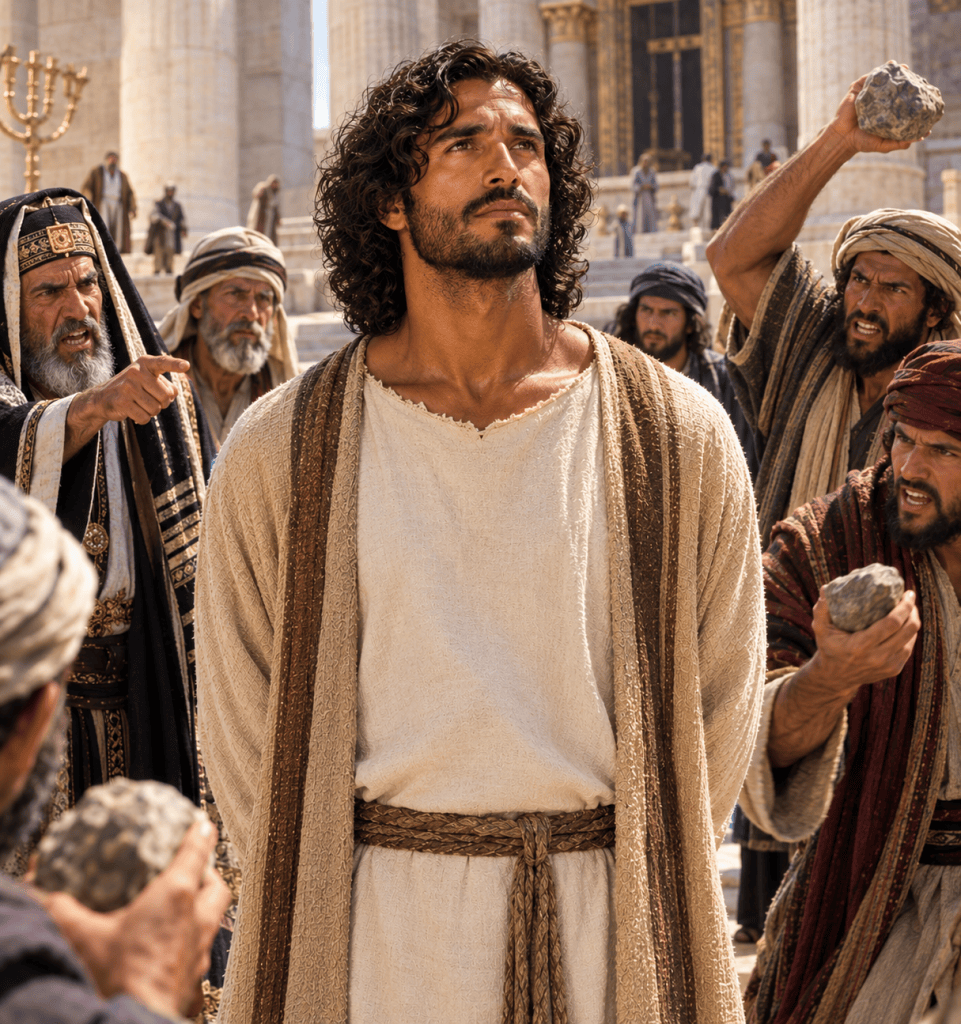
Who was rejected and disrespected more than Jesus during his ministry? The Gospels repeatedly show tension between Jesus and the religious leaders of His dayโ€”Pharisees, scribes (teachers of the law), and chief priests. They questioned Him, doubted Him, spoke of Him angrily, falsely, and plotted against Him.

I don’t know about you, but when I read about the terrible ways that men treated Jesus, who was so holy, righteous, kind, and humble, among many other wonderful things, I feel foolish anytime I feel offended or resentful for any bad behavior toward me.

It helps to remember the following instances in which Jesus encountered wrong treatment:

He was Accused of Blasphemy

Healing the paralytic (Mark 2:1โ€“12; Luke 5:21): When Jesus forgave the paralyzed manโ€™s sins, the teachers of the law said He was blaspheming. They believed only God could forgive sins and saw His claim as offensive.

His Association with Sinners was Criticized

Eating with tax collectors (Mark 2:15โ€“17; Luke 5:30): The Pharisees complained that He ate with โ€œtax collectors and sinners.โ€ They questioned His holiness and authority.

His Authority Over the Sabbath was Challenged

Picking grain on the Sabbath (Matthew 12:1โ€“8; Mark 2:23โ€“28): The Pharisees accused His disciples of breaking the Sabbath. Jesus responded that He is โ€œLord of the Sabbath.โ€

Healing on the Sabbath (Luke 6:6โ€“11; John 5:16): They became furious when He healed on the Sabbath. John notes they began persecuting Him because He did these things on the Sabbath.

It was Claimed His Power Came From Satan

Casting out demons (Matthew 12:22โ€“24; Mark 3:22): The Pharisees said He drove out demons โ€œby Beelzebul, the prince of demons.โ€ This is one of the strongest accusations they ever made.

His Authority to Teach was Questioned

Temple confrontations (Matthew 21:23โ€“27; Mark 11:27โ€“33): The chief priests and elders demanded to know by what authority He acted. They tried to trap Him with questions.

Plots Were Made to Kill Him

After healing on the Sabbath (Mark 3:6), the Pharisees began plotting with the Herodians to kill Him.

After raising Lazarus (John 11:45โ€“53), the chief priests and Pharisees convened a council. They decided Jesus must die because many were believing in Him.

Traps were Set to Trick Him with Questions

Paying taxes to Caesar (Matthew 22:15โ€“22): The Pharisees plotted to trap Him in His words.

The woman caught in adultery (John 8:3โ€“6): The teachers of the law used the woman as bait to accuse Him.

His Claims About His Identity Were Mocked

Calling Him a deceiver (Matthew 27:62โ€“63): After His death, the chief priests and Pharisees called Him โ€œthat deceiver.โ€

Doubting His origins (John 7:41โ€“52): It was argued that He couldnโ€™t be the Messiah because He was from Galilee.

His Exposing of Hypocrisy Triggered Hostility

Woes against the Pharisees (Matthew 23): Jesus publicly rebuked them as โ€œhypocrites,โ€ โ€œblind guides,โ€ and โ€œwhitewashed tombs.โ€ This intensified their hatred.

His Miracles and Growing Influence were Disputed

Triumphal Entry (Luke 19:39): Some of the Pharisees told Jesus to rebuke His disciples for praising Him. They feared His popularity.

Cleansing the Temple (Matthew 21:12โ€“15): The chief priests were indignant when children shouted โ€œHosanna.โ€

His Legitimacy and Background was Questioned

Insulting Him personally (John 8:48): They said He was demon-possessed and questioned His parentage and authority.

His Teachings were Rejected

Bread of Life discourse (John 6): Many disciples turned back and no longer followed him, but the religious leaders outright rejected Him.

In light of these trials, and any other offenses Jesus’ followers will suffer, we’re taught in the Bible not to take revenge, but to “leave room for Godโ€™s wrath” as He will repay (Romans 12:19). Furthermore, in our anger, not to sin, nor let the sun go down while we’re still angry (Ephesians 4:26). Also, not to be quickly provokedย in our spirit, for anger resides in the lap of fools (Ecclesiastes 7:9). We’re encouraged to be kind and compassionate to one another,ย forgiving each other, just as in Christ God forgave us (Ephesians 4:32).

It’s good to know that when experiencing the pain of betrayal, rejection, or persecution, as followers of Jesus, we can find solace in knowing “…we do not have a high priestย who is unable to empathize with our weaknesses, but we have one who has been tempted in every way, just as we areโ€”yet He did not sin” (Hebrews 4:15). That man is Jesus Christ, the one who saved our souls and makes intercession for us. He is no longer dead but has risen and is alive forever!

In any event, I am encouraged by Matthew 28:18-20, “Then Jesus came to them and said, ‘All authority in heaven and on earth has been given to me.ย Therefore, go and make disciples of all nations,ย baptizing them in the name of the Father and of the Son and of the Holy Spirit,ย and teachingย them to obey everything I have commanded you. And surely, I am with youย always, to the very end of the age.'”

We are abundantly blessed!