Never Forget

Deuteronomy 6:12

“Be careful that you do not forget the Lord, who brought you out of Egypt, out of the land of slavery.”

You may have heard the quote, “Don’t forget God when you get what you’ve prayed for.” Well, in Deuteronomy 6, Moses is speaking to the Israelites about the things the Lord had directed him to teach them regarding the land of milk and honey they were going to possess. These were commands, decrees, and laws that they were to observe so that it would go well with them, their children, and their children after them, so that they would enjoy a long life.

Today, we have the entire Bible to show us God’s character and what He likes and dislikes. It shows us His history with His children and how he loved and communicated with them. It also shows us the blessings and curses they received due to their obedience or disobedience, as well as the patterns that human beings show in behavior from time to time. As a result, we learn from their mistakes and triumphs. In addition, we are shown glimpses of the future and what we can expect to occur. Hence, we are able to note the signs of the times and follow any instructions that we are given.

As to the uniqueness of our own personal lives, we have varying degrees of challenges and growth. We are still encouraged to never forget what the Lord has done and is doing in our lives. We should be mindful to remember what we as believers have been taught, despite anyone’s attempt to change or distort them. In 2 Peter 1:12-15, Peter pledges to always remind believers of the foundational truths of our faith.

2 Timothy 2:8 tells us: “Remember Jesus Christ, raised from the dead, descended from David. This is my gospel.” This shows the high value of the resurrection of Jesus, which is key in the Christian faith. It is a reminder of the hope and confidence we believers have in our own resurrection through Christ.

Those wonderful truths that we learn from the Bible help us to enjoy a long life and inspire our obedience. Though Christ has made atonement for our sin, it still has its consequences when we intentionally indulge, and God wants it to go well with us. Therefore, remembering and being grateful for who He is and what He’s already done is a good exercise.

May we never forget all the Lord has done for us. Sometimes, the blessings or troubles of life may distract us from remembering. Yet in remembering, our faith is strengthened, and we experience more peace in life. Not to mention we please the Lord.

Godly Perfection

Matthew 5:48

“Be perfect, therefore, as your heavenly Father is perfect.”

There are various characteristics of perfection as we know it, but what does the Bible say about being perfect?

In this instance of Matthew 5:48, Jesus is teaching His disciples about loving their enemies. He talked about how if they loved those who loved them and greeted only their own people, what reward would that bring? He questioned what difference that would be from others, as even pagans did the same. He then tells them to be perfect, as their heavenly Father is perfect.

Perfect, here, is translated in Greek as teleios: having reached its end, mature, complete. Strong’s Concordance adds, “complete (in various applications of labor, growth, mental and moral character, etc.); โ€ฆ of full age, man โ€ฆ .”

This would be somewhat different from our English version of being perfect: “being entirely without fault or defect: flawless โ€ฆ satisfying all requirements โ€ฆ .” Yet the Lord with providing the gift of salvation by faith, created a system of sanctification by which we are set apart for God’s special purpose; along with a process of transformation performed by the Holy Spirit, into Christ’s likeness.

Romans 8:29 tells us, “For those God foreknew, He also predestined to be conformed to the image of His Son, that He might be the firstborn among many brothers and sisters. Moreover, “And we all, who with unveiled faces contemplate the Lordโ€™s glory, are being transformed into His image with ever-increasing glory, which comes from the Lord, who is the Spirit” (2 Corinthians 3:18).

Hence, God has done so much for us by sacrificing His Son to atone for our sins and then providing a way for us to be changed into His likeness through His Holy Spirit. Part of our maturing process would include actions like loving our enemies, being salt and light (salt preserves and light reveals, much needed in this age), and not harboring anger toward our brothers and sisters. Letting others see our good deeds glorifies our Father in heaven (Matthew 5:16).

Of all the things that we might find to do in serving the Lord, these are things Jesus mentioned in Matthew 5 that model perfection in God’s eyes. Let’s pray for one another, that as we grow in unity, we prioritize those things that please the Lord most. When we aren’t sure, all we need to do is ask Him, and He will surely let us know. He’s given us His handbook for a fulfilling and impactful Christian life. May His Holy Spirit help us to read it as much as possible.

Persevering in Faith

Hebrews 10:23

“Let us hold unswervingly to the hopeย we profess,ย for he who promised is faithful.”

Perhaps more than ever before, it is vital that we persevere in the faith. Thankfully, by the gift of salvation and God’s precious Holy Spirit, we can do so. Hebrews 10:19-23 reminds us that we have confidence to enter the most holy place. This Greek word, parrฤ“sian, for confidence, means we have assured, bold, and free access to the presence of God. Is that amazing, or what?

Because of what Jesus did for us on the cross, there is no longer that boundary that stood between the Father and us. Because of the blood of Jesus shed for us, we can go directly into His presence at any time! The Father has made this new way open to us, providing His own body, and the sacrifice of animals is no longer required. Jesus is now our great High Priest!

So, now what is our duty but to draw near to God, seeking Him in prayer, Bible study, and obedience? As we do so, He draws near to us (James 4:8). Imagine the one who created the universe and everything within it drawing near to us as we seek His presence. We are truly blessed! Yet our hearts must be sincere with “the full assurance that faith brings” (Hebrews 10:22). The motives of our hearts should be right, with faith, “the substance of things hoped for, the evidence of things not seen” (Hebrews 11:1).

We are no longer to carry a guilty conscience, as our bodies have been washed with pure water. Some would attribute this to water baptism, while others would attribute it toย spiritual purification by the Holy Spirit and the “washing” of the soul by the Word of God. Or others, both.

Hebrews 10:23 tells us to hold onto the hope we profess unswervingly; the Greek word aklinฤ“, meaning not leaning, unbending, or steadfast. Merriam-Webster defines it as “acting in a constant, steady, and dedicated manner without turning aside or wavering. It describes doing something directly or maintaining loyal, firm support without interruption.” What might this look like for each of us?

Do we esteem Him for who He is, God Almighty, the great I Am? Do we carve out some time to spend with Him daily? Do we genuinely seek His will and wisdom for our lives, and are we obedient when He provides them? I’m asking myself these questions. He’s so loving and kind to us. He deserves our best behavior.

Nevertheless, the Lord is faithful, even when we are not (2 Timothy 2:13). Thankfully, he will strengthen us and protect us from the evil one, as stated in 2 Thessalonians 3:3. Psalm 91:4 tells us, He will cover us with His feathers, and under His wings we’ll find refuge; his faithfulness will be our shield and rampart. So, needless to say, according to the Bible, we can fully place our confidence in God.

Since we have such a wonderful faith, let us continue to persevere, positioning ourselves to never forget the Lord our God is God; the faithful God, keeping His covenant of love to a thousand generations of those who love him and keep his commandments (Deuteronomy 7:9).

Holy Perspectives

Psalm 40:5

Many, Oย Lordย my God,ย areย your wonderful works which you have done; and your thoughts toward us cannot be recounted to you in order; if I would declare and speak of them, they are more than can be numbered.

I questioned my outlook on life and how close my perspectives were to God’s. Merriam-Webster defines perspective as “a mental view or prospect; a visible scene; the interrelation in which a subject or its parts are mentally viewed; the capacity to view things in their true relations or relative importance; …”, very important descriptions to take into account.

We all have our unique perspectives on life, often shaped by our upbringing and personal experiences. Our parents, where we’ve lived, our faith, education, etc. Over time, they change as we age and mentally develop. Also, they may change through various relationships we encounter.

Yet, whether our perspectives are honorable or distorted, there is one standard of viewing life that is perfect, and that would be God’s holy perspective. His perspectives encompass the wisdom, justice, and insight that surpass any human born. Yet most importantly, He has chosen to share His perspectives with us.

Anything we want to know about what God thinks can be found in His book, the Bible, which contains the history of His work on the earth, along with His principles or standards for living a holy life. By holy, I mean a life set apart to God; a life that takes on the fruit of the Holy Spirit by living according to His instructions and sanctification.

In pondering God’s outlook on life for us, I gathered the great importance of esteeming and receiving his will for our lives. Are we truly seeing life from his point of view, and do we respect it to the point of living it? With His grace and mercy in freely sharing His heavenly wisdom, we have opportunities to grow in our mindsets.

Growth in our perspectives will prove healthier than what we’ve known in the past, as we more consistently renew our minds with God’s biblical instructions. Also, an enormous help will be learning to surrender our will to His. Yet I’m convinced none of this is truly possible without prayer, faith, and patience.

What is His will regarding our health, relationships, and finances, among other things? Where are we in living it? Though His mindset is vastly greater than ours, we have an awesome truth found in 1 Corinthians 2:16, โ€œWho has known the mind of the Lord so as to instruct him? But we have the mind of Christ.” In areas where we fall short, we as His family are welcome to request His help.

Let’s ask the Lord to teach us to truly see Him, ourselves, and others as He does. No doubt, having His outlook on life, even in the midst of the negative viewpoints of the world, we can live the abundant life He’s provided for us. It is exciting to seek and learn God’s perspectives on various topics. Those we are currently facing are a great starting point for study.

I’m reminded of 1 Corinthians 2:9-10. I often hear verse 9 quoted, but rarely hear verse 10 along with it: “But as it is written: ‘Eye has not seen, nor ear heard, nor have entered into the heart of man the things which God has prepared for those who love Him.’ Butย God has revealedย themย to us through His Spirit. For the Spirit searches all things, yes, the deep things of God.

When Something from Little Means More

1 Corinthians 12:8-10

“To one there is given through the Spirit a message of wisdom,ย to another a message of knowledgeย by means of the same Spirit,ย to another faithย by the same Spirit, to another gifts of healingย by that one Spirit,ย to another miraculous powers,ย to another prophecy,ย to another distinguishing between spirits,ย to another speaking in different kinds of tongues, and to still another the interpretation of tongues.”

As children of God, we can be thankful for His spiritual gifts to us–those “demonstrations of the Spiritโ€™s power”ย so that one’s faith might not rest on human wisdom, but on Godโ€™s power (1 Corinthians 2:4-5).

In 2 Kings 4:42, we see a man from a town called Baal-Shalisha who brought the prophet Elisha some freshly cut grain and 20 loaves of bread made from the first barley that was harvested. He told him to give it to the people so they could eat. The servant indicated there wasn’t enough bread for 100 people. Elisha answered, “Give it to the people to eat.” That the Lord said they’ll eat and have some left over. So the man gave it to them, they ate, and there was some left over.

Earlier, in 2 Kings 4, we see that Elisha had returned to Gilgal, and there was a famine in the land at that time, and a company of prophets had come to meet Elisha. Hence, more people would be in town than perhaps on a normal day.

Interestingly, Jesus wasn’t the only one who multiplied food to feed a large group of people, as occurred during a time before Jesus was born on earth. This should remind us that God can make enough and more from very little or nothing, as shown when Jesus turned water into wine at the Wedding of Cana, and had a disciple extract money for his and Jesus’ taxes from a fish’s mouth. God makes it look so easy to obtain. Yet we stress about how we’ll get it.

Moreover, this event should teach us that once God says something will happen, that settles it, even though it may seem unlikely. We can count on it to happen. Believing specifically what he says takes seeing with the eyes of faith, the substance of things hoped for, the evidence of things not seen.

God can use others to perform miracles, as he did with the prophet Elisha. It all depends upon God’s empowerment and will. If he wants to do it, you can count on it to be done excellently. We see him providing not just enough, but with leftovers. Sounds like abundance to me!

This bread incident happened directly after another event where the stew, having been prepared for the company of prophets, was found to be inedible and what they described as “death in the pot”, and again, during this time of famine. Elisha directed his servant to add some flour to the pot and serve it. They ate, and there was nothing harmful in the pot. Now, how would you have responded if there was talk of something being harmful in the stew you were being served, but the prophet you were learning from had the solution to add flour and eat it? Would you have done it?

In any event, I love seeing God’s power manifested this way, and I’m so grateful to be able to read it and perhaps even experience it in some way in my own life. Today, God still makes the gift of working miracles available to those He’s chosen, as shown in 1 Corinthians 12:10. In these cases, it could be described as divine multiplication.

Another example of God’s goodness is when He instructed Moses to throw a stick into the water to make its bitterness sweet so the Israelites could safely drink it. God is truly always making something better!

Filled With Power

Acts 1:8
“But you will receive power when the Holy Spirit comes on you, and you will be my witnesses in Jerusalem, and in all Judea and Samaria, and to the ends of the earth.

For 40 days, Jesus appeared to His disciples before ascending into heaven. On this day, just before He was taken up to heaven, Jesus shared His desire that His disciples would stay in Jerusalem to wait for the gift His Father promised. In a few days, His disciples would be baptized with the Holy Spirit and then become His witnesses in Jerusalem and throughout the world. This baptism was very important as it empowered Jesus’ disciples to witness for the Lord and still does today.

The Greek word for power is dunamis, which is supernatural strength, might, and ability. This would be the necessary power to fulfill God’s purpose as witnesses, the Greek word martyres, those who testify to the truth of Jesusโ€™s life, death, and resurrection from personal experience.

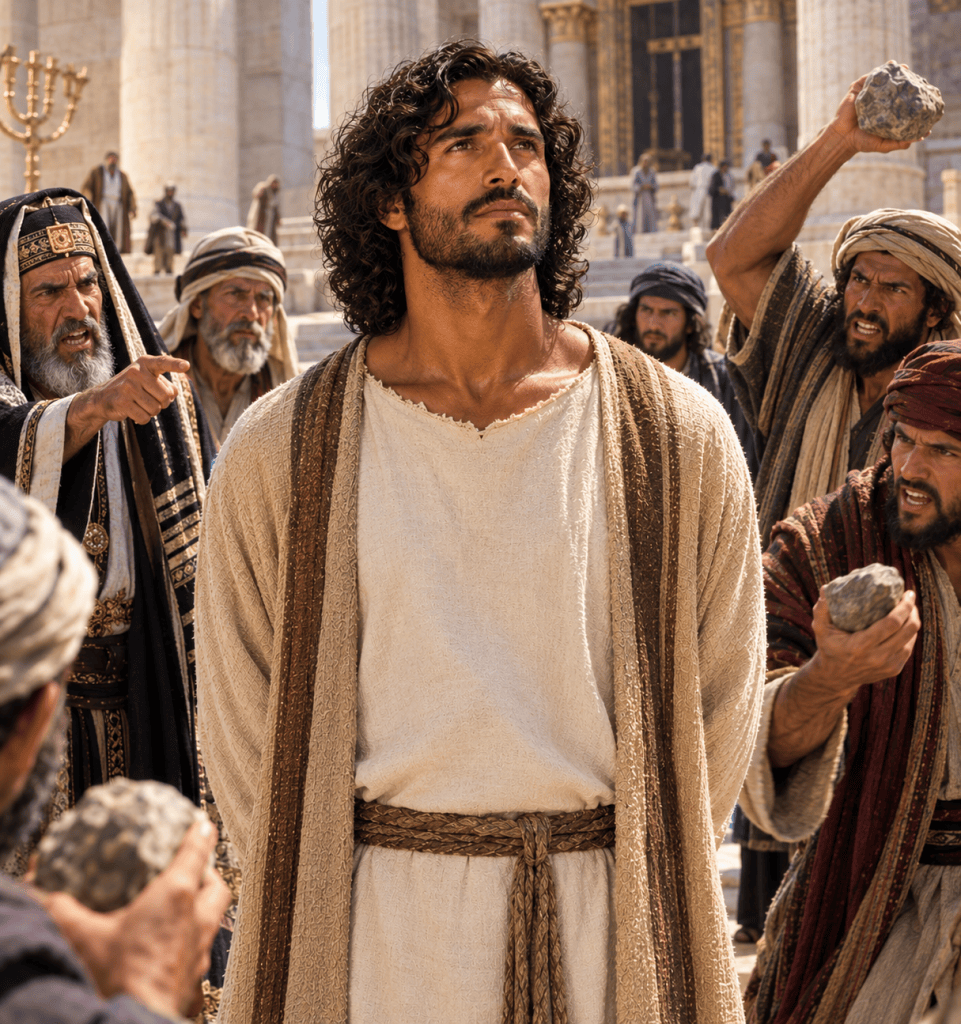
This word sounds a lot like the word we hear today: martyrs, the heroes of faith who suffer persecution and death for advocating or refusing to renounce their belief in, or cause regarding, Jesus Christ. Stephen, one follower the Bible describes as “a man full of God’s grace and power,” who “performed great wonders and signs among the people,” is described in Acts 6:8 as such. He was a man of great wisdom, the Bible says, “the Spirit gave him as he spoke” (Acts 6:10).

Acts 6:9 says that “Jews of Cyrene and Alexandria as well as the provinces of Cilicia and Asia” began to argue with Stephen, but were no match for the wisdom the Holy Spirit provided him. So they secretly convinced some men to say, โ€œWe have heard Stephen speak blasphemous words against Moses and against God.”

Then they stirred up the people along with the elders and teachers of the law and brought him before the Sanhedrin, who produced false witnesses against him. The Sanhedrin was the supreme Jewish council and court in ancient Israel, including the High Priest, who governed religious, civil, and criminal matters in Jerusalem. They were influential leadersโ€”Sadducees (priests), Pharisees (scribes), and eldersโ€”who questioned Jesus and early Christians.

Sadly, Stephen was stoned to death, but not before he preached a solid, truthful message about Moses and their ancestors, as well as some tight, but right words describing his opposers. He was even privileged to see His Lord and Savior in heaven, standing at the right hand of God, waiting for him as he was being stoned. I would not be surprised if Stephen felt no pain at this point.

We may never endure the level of persecution the first disciples did, but we know that persecution comes with being God-fearing and fully submitted to the Lord. “In fact, everyone who wants to live a godly life in Christ Jesus will be persecuted,” 2 Timothy 3:12. The Holy Spirit gives us the power to endure and persevere with boldness on behalf of the Lord Jesus Christ. The Holy Spirit not only empowers us to be witnesses, but is described as the Third Person of the Trinity who comforts, convicts, teaches, guides, and distributes gifts to the Church.

Let’s remember to thank God for His precious Holy Spirit.

Somebody’s Always With You

Matthew 28:20

“…And surely I am with you always, to the very end of the age.โ€

Have you ever been amazed by the fact that God sees you at all times, as well as all of your brothers and sisters in the Lord, too? We may wonder how in the world He does it, but the fact is, He is God and can do anything. He sees us and has seen us all of our lives and knows every detail of everything we’ve ever done. Yet we are given the privilege of communicating with Him and knowing Him within the current limits of our human comprehension.

Knowing that God always sees us fosters security and perhaps, in some cases, shame, as we know we aren’t always showing our best behavior. Nevertheless, seeing healthy parents with their imperfect children, we can derive some sense of the love and care God has for His own children. It’s a love that wants to be present and provide for their best well-being.

Our God shows His faithfulness and consideration even to the seemingly unlikely person, as shown in Genesis 16:13. Hagar was an Egyptian slave to Sarah, Abraham’s wife. Sarah had given her to her husband, Isaac, to produce the child promised to them. It had been prophesied that within a year of the Lord and two men’s visit (Genesis 18:10), Sarah would be pregnant with a son, though she and her husband were very old and past normal childbearing years.

Later, Hagar, amidst the frustration of being pregnant by Issac and now mistreated by his wife Sarah, took her child and attempted to run away. God met her on her journey with some comforting words, promising to increase her descendants and convincing her to go back and submit to Sarah. Hagar recognized God as one who saw and considered her suffering, prompting Hagar to call God “El Roi,” meaning “the God who sees me.”

In stories like these, as well as in our own lives, we see that God is not distant from His children, but very much aware of and compassionate toward them, watching over them and offering help as He deems necessary.

Thankfully, God notices those who feel unseen, neglected, or distressed, as he did for Hagar in the wilderness. The name “El Roi” is often used to bring comfort to those who feel lonely or forgotten, reassuring them that God knows their situation and sees them.

Another awesome name signifying God being with us is “Jehovah Immeka,” Hebrew for “the LORD is with you,” which speaks to His abiding presence, companionship, and strength. Referenced from Judges 6:12, this name indicates a time when the angel of the Lord addressed a man named Gideon as a “mighty man of valor,” though Gideon saw himself as defeated. He was frustrated and discouraged and questioned, “If theย Lordย is with us, why has all this happened to us?” He felt the Lord had abandoned him and was giving him over to their enemies, the Midianites.

I can just hear the Lord’s calm voice, “Go in the strength you have and save Israel out of Midianโ€™s hand. Am I not sending you?โ€ Surely, God would be present to provide help for the battle Gideon was to face. But Gideon’s reply was, “But how can I save Israel? My clan is the weakest in Manasseh, and I am the least in my family.โ€ To which the Lord answered, โ€œI will be with you, and you will strike down all the Midianites, leaving none alive.โ€

You’d think that would be enough for Gideon, but it wasn’t, and I don’t blame him because I’ve seen myself in some instances similar to this conversation. โ€œIf now I have found favor in your eyes, give me a sign that it is really you talking to me. Please do not go away until I come back and bring my offering and set it before you.โ€ The Lord simply replies, โ€œI will wait until you return.โ€ The story goes on to show Gideon preparing a food offering for the Lord, and the Lord consuming it with fire. Yet the Lord assured him that he would not die and to not be afraid.

Yet the story continues, with the Lord giving Gideon further instructions and Gideon still trying to confirm them by testing the Lord with a fleece. I love this story. Poor Gideon, he must have been terrified. Before the battle, the Lord told Gideon that he had too many men, and from the initial 32,000, he interestingly dwindled them all down to 300. He didn’t want anyone boasting it was anyone but the Lord’s doing!

Nevertheless, Gideon obeyed all of the Lord’s instructions, though with doubt, fear, and needing reassurance. Ultimately, he secured the victory over the Midianites. As Judges 8:28 says, “Thus Midian was subdued before the Israelites and did not raise its head again. During Gideonโ€™s lifetime, the land had peace forty years.”

Another time God assures that He sees and cares is shown in Joshua 1. Here, He sought to encourage Joshua that He was with him wherever he went as he’d lead the Israelites into the Promised Land.

God promised Joshua, “No one will be able to stand against you all the days of your life. As I was with Moses, so I will be with you; I will never leave you nor forsake you. Be strong and courageous, because you will lead these people to inherit the land I swore to their ancestors to give them.” Then, after a series of events, the Bible says, “So the Lord was with Joshua, and his fame spread throughout the land” (Joshua 6:27). Whew! Talk about God being with His folk!

No doubt, God is graciously merciful, but as far as I can see from the Bible, God don’t play bout His kids! Keep close to your heart God’s truth that “the eyes of the Lord are in every place” (Proverbs 15:3), and “nothing in all creation is hidden from his sight” (Hebrews 4:13). And if you happen to be one of the Lord’s seasoned saints, in Isaiah 46:4, God promises, “Even to your old age and gray hairs I am he, I am He who will sustain you. I have made you and I will carry you; I will sustain you, and I will rescue you.” This verse highlights Godโ€™s steadfast care, defense, and faithfulness throughout a person’s entire life.

When God tells us He is with us and will never leave us, we can rest assured He is. By faith, we believe it without having to feel or see it. He’s the one person who is always with us.


The Healer’s Blessing

James 5:15

“And the prayer of faith will save the sick, and the Lord will raise him up.”

Imagine Jesus, in 2026, here in his physical body, healing someone from their illness. With joy, we can have expectancy of His help in such an event, as we see God’s desired results throughout the gospels. Perhaps sometimes we have not because we ask not. Or, maybe we believe we don’t deserve to be healed, or God doesn’t really want to heal us.

It is comforting to know that even though the Lord will sometimes take someone home to live with Him, He will, at many other times, allow others to be healed and remain a while longer. Of course, this may happen instantly or over time. Yet my point is Jesus is a healer, doesn’t want to see people sick, and demonstrated various types of healing when He walked the earth.

Jesus was a man of compassion, moved by the suffering of others, and being a man of great authority, he healed with a word, a touch, or even from a distance. He was a man who modeled Kingdom power, his miracles fulfilling prophecy, revealing who He was, the Son of God. He also highlighted the role of some people in instances where He told them their faith had healed them. Interestingly, in some places, He could do no great works because of their unbelief (Matthew 13:58 and Mark 6:5-6).

I thought to post about this topic today lest we forget God’s thoughts on sickness and healing. There is no sickness or disease in heaven, and Jesus told us the thief comes to steal, kill, and destroy, but Jesus came that we might have life, and life more abundantly (John 10:10). Hence, we should make no mistake who the thief is, satan, not God.

A few amazing accounts of Jesus healing in the Bible are:

  • Healing 10 lepers (Luke 17:11โ€“19). This was a dreadful, contagious disease that people seriously avoided. As the lepers called out to Jesus from a distance for pity, Jesus told them to go and show themselves to the priests, and while on the way, they were cleansed. Unfortunately, only one leper, a Samaritan (a foreigner), returned to thank Jesus. But Jesus assured him his faith had made him well.
  • Healing the paralyzed man whose friends lowered him through a roof (Matthew 9:1โ€“8; Mark 2:1โ€“12; Luke 5:17โ€“26). This was a bold act of persistence, which Jesus saw as faith shown in getting this man to Him.
  • Healing the woman with an issue of bleeding for 12 years (Matthew 9:20โ€“22; Mark 5:25โ€“34; Luke 8:43โ€“48). This woman believed that if she only touched his clothes, she would be healed. She did, and she was, instantly!
  • Raising a man’s dead daughter to life (Matthew 9:18โ€“26; Mark 5:21โ€“43; Luke 8:40โ€“56). Jesus came to the scene of people crying and wailing loudly about the death of Jairus’ daughter, and upon going in to see her with her parents and a few of his disciples, He took her by the hand and told her to get up, and she did, immediately. So many were blessed that day by this amazing act.
  • Healing a mute, demon-possessed man (Matthew 9:32-34). Seeing the man delivered and speaking, the crowd, astonished, said they’d never seen anything like it in Israel.
  • Healing a crippled woman bent over for 18 years (Luke 13:10โ€“17). The Bible tells us this woman had been crippled, not being able to straighten up at all, by a spirit. He told her she was set free from her infirmity and placed his hands on her, and immediately she straightened up and praised God.

Jesus also performed mass healings where people were healed from every sickness and disease (Matthew 4:23โ€“24; Matthew 9:35). Not to mention, there are so many more miracles that Jesus did that weren’t even recorded (John 21:25).

Jesus willingly and compassionately healed the lame, blind, cripplied and mute (Matthew 15:30). Yet I believe it’s also important to note that, in some instances, sin was related to a person’s need for healing or deliverance, and the Lord told them, once healed, to go and sin no more, or something worse would come upon them (John 5:14 and John 8:11).

Thankfully, โ€œHe himself bore our sinsโ€ in his body on the cross, so that we might die to sins and live for righteousness; โ€œby his wounds you have been healedโ€ (1 Peter 2:24). Aren’t you glad about it? Now we may call for the elders of our churches, or for other believers to pray prayers of faith (James 5:14-16) that we’d be healed. Just another wonderful thing our heavenly Father has done for us through His marvelous Son, Jesus!

We see in scripture, Jesus shared the blessing in healing, telling his disciples in Matthew 10:8 to “heal the sick and raise the dead,” stating “freely you have received, freely give.” He echoed His desire again in Mark 16:18, just before ascending into heaven, that one of the signs of those who believed would be that they would place their hands on sick people and they would get well. Let us thank the Lord for these beautiful blessings!

Desired Authority

Colossians 2:10

“โ€ฆand in Christ you have been brought to fullness. He is the head over every power and authority.”

This is amazing news: We’re complete in Christ, the head over all authority! To be loved and connected to someone of such character and stature is in itself a major privilege. This tells us Jesus is no wimp! To be granted by His Father with such an honorable position, and yet to redeem us and call us His own people, is cause for great excitement. We can trust this person with our lives at all times!

Not only is Jesus positioned high above with great authority, but with all authority in heaven and on earth, as stated in Matthew 28:18. In addition, He gave us authority as His disciples in Luke 10:19 when he stated, “Behold, I have given you authority to tread on serpents and scorpions, and over all the power of the enemy, and nothing shall hurt you.”

This delegation of authority was not just a blessing for the disciples of His day, but ours, today, as well. After all, in Matthew 28:19-20, Jesus commanded His disciples to go into all the world and make disciples, baptizing and teaching them to obey His commands. Whenever we obey someone, we are submitting to their leadership, recognizing them as an authority over us.

Over a great period of time, grafted in as Jesus’ family of disciples, we would eventually expand globally. Jesus knew He’d be leaving the earth, and while He was here, He demonstrated to His disciples, then and now, how to live and minister to others, providing His Holy Spirit of power to help us all. Regarding this gift of the Holy Spirit spoken of in Acts 2:39, Jesus stated, “this promise is for you and your children and for all who are far off–for all whom the Lord our God will call.”

As to the authority we’ve been given, Jesus shows us in Mark 16:17-18 that those who believed would be able to cast out demons and heal the sick in His name. In Luke 9:1-2, we see Jesus giving the twelve disciples power and authority over all demons and to cure diseases. Then He promises believers, in John 14:12, that they’d do the same works He’d done, and greater works because He was going to His Father.

Moreover, He’s reminded us that, as His children, we are overcomers because “greater is He that is in us than he that is in the world” (1 John 4:4). Hence, we should not forget that we are given “the victory through our Lord Jesus Christ” (1 Corinthians 15:57). We are “more than conquerors through him that loved us” (Romans 8:37).

It’s also important to remember that with the authority we’ve been given, “The weapons we fight with are not the weapons of the world. On the contrary, they have divine power to demolish strongholds” (2 Corinthians 10:4).

Walking in our God-given authority was never meant for us to accomplish alone. We have the Holy Spirit as our guide, who will lead us in various, unique ways suited to each encounter we may experience.

Angels Galore

Psalm 91:11

“For He will give His angels charge over you,
to guard you in all your ways.”

We’re all familiar with human beings and what it’s like to relate to one another. However, there are other beings created by God of great significance to His people, and these are called angels.

Angels who work on God’s behalf are wonderful! They are spiritual beings that God created to serve Him through carrying out His will. They are powerful and intelligent beings who work with purpose. Revelation 5:11 numbers them as “thousands upon thousands, and ten thousand times ten thousand” encircling God’s throne. Hebrews 12:22 cites them as innumerable!

Though angels are spiritual beings, they can appear in human form. Hebrews 13:2 reminds us not to forget to show hospitality to strangers, “for by so doing some people have shown hospitality to angels without knowing it.”

The Bible mentions various types of angels: Archangels (e.g., Michael), Cherubim (guardians of Godโ€™s holiness), Seraphim (worshipers around Godโ€™s throne), and “hosts of heaven” (angelic armies).

As God’s messengers, angels deliver warnings, instructions, and revelations. The angel Gabriel delivered a message to Mary, the mother of Jesus, that she was highly favored, the Lord was with her, and she would conceive by the Holy Spirit to bear a son named Jesus (Luke 1:26โ€“38).

In Genesis 18, angels visited Abraham and Sarah, delivering to them the message that Sarah would bear Abraham a son in their old age.

Daniel 10 reveals an intense, prolonged battle in the spiritual realm, with the delivery of messages influencing earthly events. A heavenly messenger is delayed for 21 days by a demonic “prince of Persia” until Michael arrives to help relay the messages to Daniel. 

Angels are also protectors who are known to rescue and guard people, as well as fight battles. In Genesis 19, two angels protected Lot from the violent men of Sodom by striking the mob with blindness, then forcefully escorted Lot, his wife, and their two daughters out of the city to save them from impending destruction. The angels, acting on behalf of God’s mercy, insisted that they leave quickly and helped them escape.

Interestingly, 2 Kings 6 describes Elisha’s servant having his eyes opened to see the hills filled with horses and chariots of fire (angelic warriors) protecting them. 2 Kings 19:35 and Isaiah 37:36 show just one angel of the Lord killing 185,000 soldiers in one night. In Joshua 5, an angel appears to Joshua as the “commander of the army of the Lord.” Psalm 91 speaks of God commanding His angels to guard His people.

Moreover, in the Bible, we see angels engaging in spiritual warfare. Scripture clarifies that this warfare is “against spiritual forces of evil in the heavenly realms” rather than flesh and blood (Ephesians 6:12).ย Michael the archangel contends with evil powers and is specifically identified as a leader in a conflict battling against Satan and his fallen angels. Revelation 12 describes a war in heaven where Michael and his angels fight against the dragon (Satan) and his angels.

The Bible clearly shows us how angels interact with humanity. They appear to guide, protect, deliver messages, and strengthen believers. Yet the Bible also warns against worship of angels, as only God is worthy of worship.

There are countless stories, historically and even today, of people who have experienced angelic help or visitations. Thankfully, angels are “ministering spirits” (servants) sent by God to actively serve, protect, and assist believers (Hebrews 1:14).

Furthermore, angels worship God. They worship around His throne (Revelation 7:11) and celebrate Godโ€™s works, rejoicing when sinners repent (Luke 15:10). However, they also carry out God’s judgements by executing God’s justice. We see them carrying these out in the book of Revelation.

Not all angels are good. The Bible teaches that Satan was originally an angel who rebelled. Other angels followed him and became fallen angels (demons). This is part of an ongoing spiritual conflict Scripture describes.

In remembering angels and their awesome existence, we should always embrace that they are not to be feared or worshipedโ€”but they remind us of Godโ€™s nearness, His protection, and His sovereignty.