We’re Separating

Unity is a beautiful thing. However, sometimes separating isn’t so bad. Sometimes it’s necessary. I’m referencing 2 Corinthians 6:14-18/NIV where the Apostle Paul is preaching regarding God’s will on separation. He first tells us not to be yoked together with unbelievers. The Greek word for yoked is Zugas which means to be burdened or in bondage. When you yoke yourself with someone or a thing, you are attaching, connecting, or closely linking with them.

Image: anna/Flickr

Unbelievers are those who have no relationship with Christ and don’t believe as God determines belief. They haven’t repented, submitted their lives to the Lord, nor been baptized. Also, they are often those who have professed faith in Christ by words only while living totally contrary to its definition.

Paul characterized this wrongly yoked relationship with the following contrasts:

Righteousness vs Wickedness

Light vs Darkness

Christ vs Belial

Believer vs Unbeliever

Temple of God vs Idols

Image: aboodi vesakaran/Pexels

Paul reminds us that we are the temple of God. So, as believers, we can now trust what God has said that He will live with us, walk among us, and be our God and we His people. But the Lord tells us to come out and be separate, not to touch any unclean thing and He’ll receive us. Therefore, we can expect God to be a Father to us and we’ll be His sons and daughters.

Further, in 2 Corinthians 7/NIV, Paul tells us to purify ourselves from everything that contaminates body and spirit, “perfecting holiness out of reverence for God.” Hence, since we love and respect our Father, we honor Him by living holy and separate from the sinful life that grieves Him.

Image: Hagerty Ryan, USFWS/Pixnio

This doesn’t mean we don’t pray for and show love toward those who don’t believe, but we aren’t to yoke ourselves to them. This can be seen in the Bible’s commands that believers only marry believers. There should only be bonding and connection in this manner to believers. He gives us these commands for a reason. They aren’t to be a means of haughtiness or conceit, but of protection as the bible clearly tells us “A little yeast works through the whole batch of dough.” (Galatians 5:9/NIV)

video: BYJUSClass910/Youtube

There’s no mistaking the awesome privilege of God’s grace and mercy toward us in that while we were yet sinners Christ died for us. However, there is clearly still work to be done where we recognize what contaminates, defiles, or corrupts our bodies and spirits and cleanse ourselves of those things as shown in 2 Corinthians 7/NIV. We should not be mistaken on this, as some might have us to be, because God expects this of us. If He didn’t, He would not have expressed it in His word.

Revelation 18:4/NIV tells us, “Then I heard another voice from heaven say: “‘Come out of her, my people,’  so that you will not share in her sins so that you will not receive any of her plagues; … .” This is another instance of God requiring separation.

Image: Chris Clark/Pexels

We are wise to assess ourselves and where we are in Christ, as we’re reminded in Revelation 22:12/NIV, ““Look, I am coming soon! My reward is with me, and I will give to each person according to what they have done…, ” and Revelation 22:14-15/NIV, “Blessed are those who wash their robes, that they may have the right to the tree of life and may go through the gates into the city. Outside are the dogs, those who practice magic arts, the sexually immoral, the murderers, the idolaters, and everyone who loves and practices falsehood.” We want to live eternally with Christ and don’t want the consequences of being disobedient to His commands.

Moreover, we should not be surprised about the popularity of ungodly living. God has warned us ahead of time, that according to Matthew 7:13-14, we are to  “Enter through the narrow gate. For wide is the gate and broad is the road that leads to destruction, and many enter through it. But small is the gate and narrow the road that leads to life, and only a few find it.”

Image: Adam/Flickr

In any event, we all have been given the right to choose whose way we will follow: our own, another wayward man’s, or God’s. Nevertheless, a sobering thought is Revelation 22:11, “Let the one who does wrong continue to do wrong; let the vile person continue to be vile; let the one who does right continue to do right; and let the holy person continue to be holy.”

While remaining alert to how we yoke ourselves in relationships, whether marriage, career, dating, business, etc., may we choose to remember these words of our Lord, ” I am coming soon. Hold on to what you have so that no one will take your crown.” (Revelation 3:11/NIV)

Image: Antony Trivet/Pexels

How to Live to Please God

Ever felt like you just want to be pleasing to God? Yet just how do we please God? 1 Thessalonians 4 tells how to live to please God. In it, we learn that it is God’s will that we are sanctified. The Greek translation for sanctify is hagiazo, which means to set apart for God’s purpose; make holy or consecrate–sanctification being the separation from that which is evil for dedication to God.

In God’s will for us to be sanctified, it is first indicated in 1 Thessalonians 4 that we avoid sexual immorality. Sexual immorality can be defined as any sexual behavior apart from God’s standards provided in the Bible. We are told to control our own bodies, by living holy and honorable. We aren’t to behave in passionate lust like we don’t even know God. We aren’t to take advantage of a brother or sister and we should understand that the Lord will punish those who do these things. We should recognize that God didn’t call us to be impure but to live holy, and if we reject this teaching, we don’t reject men, but God.

In addition, we are told to love one another as we have been taught by God. Moreover, if we are already doing it, we should do it more and more.

In today’s society where we are encouraged to grind and strive to work ambitiously toward monetary success, here we are taught our ambition should be to lead a quiet life with the following qualities:

— Minding our own business (focusing on what God is requiring of us, specifically in our own individual lives).
— Working with our hands (performing assignments we’ve been given, whether preaching, parenting, building, selling, teaching, nursing, managing, etc.); winning the respect of outsiders (esteemed because of the way we exemplify godly living); and ensuring that we aren’t dependent upon anybody.

In conclusion, I’m reminded of another scripture that relates largely to pleasing God: Hebrews 11:6, “And without faith, it is impossible to please God, because anyone who comes to him must believe that he exists and that he rewards those who earnestly seek him.” Faith, love, trust, belief, confidence–all these things exercised toward God make Him happy.

The Bible also references these actions in pleasing God:

— When we offer our bodies as living sacrifices, holy and pleasing to God—this is our true and proper worship (Romans 12:1).
— When we serve Christ in a spirit of righteousness, peace, and joy in the Holy Spirit, because anyone who serves Christ in this way is pleasing to God and receives human approval (Romans 14:17-18).
— When we speak as those approved by God to be entrusted with the gospel, not seeking to please people, but God, who tests our hearts (1 Thessalonians 2:4).
— When we honor our parents, and take care of our widowed parents and grandparents (1 Timothy 5:4, Deuteronomy 5:16).

Carrying His Presence

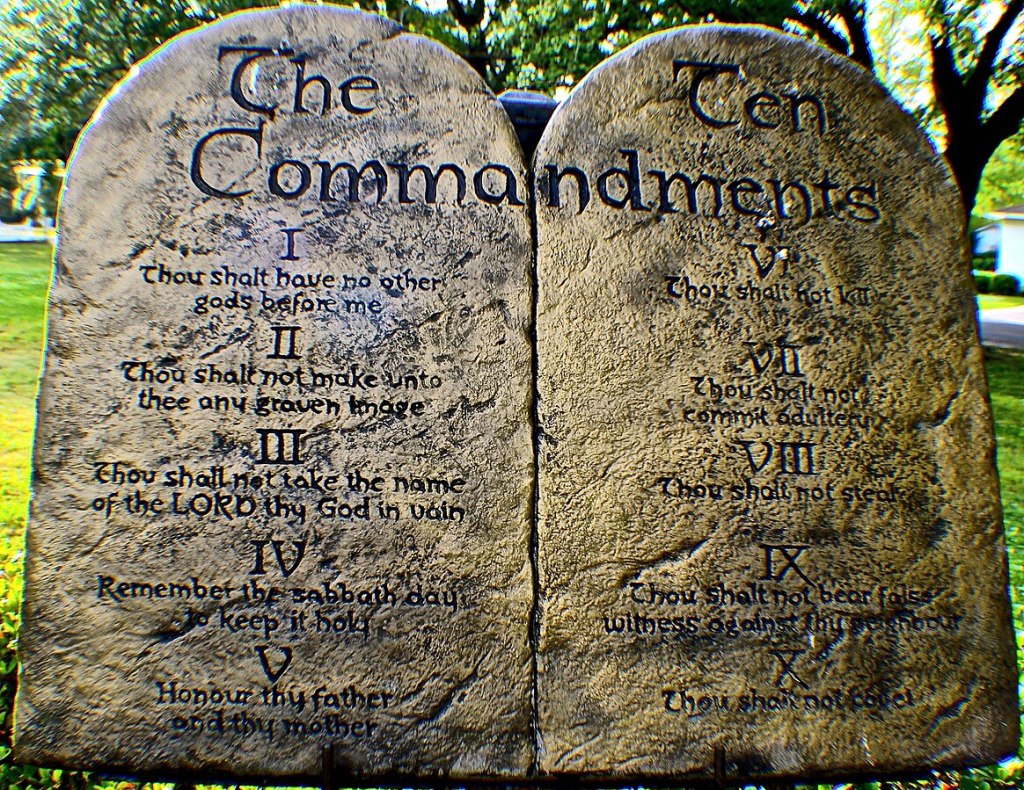
Recently, I read an interesting account in the Bible (1 Samuel 5-6) about the theft of the ark of God (a wooden chest coated in pure gold that contained the tablets of the 10 Commandments given to Moses by God) taken into a place of idolatry. The placement of the ark, representing God’s presence, in this evil place, brought about a curse of tumors and death.

The Philistines who were enemies of Israel stole the ark and carried it to Ashdod, into the temple of their god, Dagon, and and set it beside him. When they got up the next day, Dagon had fallen on his face, so they stood him back up again. The next morning they found him fallen over on the ground with his head and hands broken off in the doorway and his torso remaining. Then, the people of Ashdod were afflicted with tumors.

(Image credit: Universal History Archive / Contributor via Getty Images)

Needless to say, the people of Ashdod wanted nothing more to do with the ark and moved it to a city called Gath. However, after they moved it there, the Bible says God afflicted the people of that city, “both young and old” with an outbreak of tumors. So they moved the ark to another city, Ekron, but as it was arriving, the people of Ekron cried out in fear that the ark was brought to kill them. Apparently, death had filled that city and those who didn’t die were afflicted with tumors and there was a great cry toward heaven.

The Philistines later called for the priests and diviners to inquire what to do with the ark and they were instructed to return it with a gift, a guilt offering (with special instructions on how this would be done), as this would bring healing. As they moved on, sadly, on the ark’s trip back to the Israelites, God struck down some of the inhabitants of another city, Beth Shemesh, killing 70 of them because they looked inside the ark.

The people marveled asking, “Who can stand in the presence of the Lord, this holy God? To whom will the ark go up from here?” Messengers were sent to notify the men of a town, Kiriath Jearim, that the Philistines were returning the ark and they brought it to the house of a man named Abinadab. Afterward, the ark remained there for a long time, twenty years.

The ark of the covenant represented the presence of God for His people, the Israelites. But I pondered how it might relate to us, all of God’s people, today. Currently, believers in Christ are indwelt by the Holy Spirit, and in 1 Corinthians 6:19-20, the Bible tells us we are temples of the Holy Spirit who is in us whom we’ve received from God. We are not our own, but bought with a price and as such, we should honor God with our bodies.

Hence, our bodies are a place of holiness, set apart for God’s presence. Isn’t this an awesome thought that this could occur? I had to repent in my heart of any way I might have dishonored or disrespected this holy presence I carry by behaving in some way inappropriate for a child of God.

God is merciful and forgiving toward his children, yet to continually grieve God’s Spirit brings about consequences that would not be advantageous to us. Because we love God, we choose not to involve ourselves in idolatry or other acts of evil that might cause grievance to His Spirit within us.

We can clearly see from this, and other scriptural examples, how God feels about idolatry or the worship of other gods. So, even with Jesus’ atonement made for our sins, He can become saddened by our behavior. However, the good news is that when we confess our sins, God is faithful and just to forgive us and cleanse us (1 John 1:9). We are privileged to carry the person and companionship of the One who created heaven and earth. This is mindboggling and thrilling to me.

What Makes You Attractive?

Let me take a moment to remind you that sometimes it isn’t your body, clothes, degrees, money, homes, or cars that make you most attractive. Sometimes it’s your:

  * Distinctive, principled perceptions of life

  * Gracious attitude toward others

  * Honorable values for living

  * Pleasant and witty sense of humor

  * Empathetic and compassionate heart

  * Sense of style and artistic expression that don’t mirror

   the majority

  * Influential creativity 

  * All those things that make you uniquely interesting 

There are so many components to being attractive. Today, remember to love how God fashioned you.

True Freedom

Freedom. Nothing seems to ring more blessed to one’s ears than this word. It is described by Oxford Languages as “the power or right to act, speak, or think as one wants without hindrance or restraint.” The Bible’s Hebrew word for it is “cherut”, and its Greek word, “eleutheria”. Both denote liberty, “a state of freedom, especially as opposed to political subjection, imprisonment, or slavery” (britannica.com). It is also a state where God has given us the ability to choose right or wrong in our daily decisions.

What makes you feel free? Is it the ability to say whatever you want, whenever you want? The ability to sleep in on a weekday without disturbance? The ability to go on a shopping spree anytime you want? Or, perhaps the ability to take a weekend trip away at any hour you choose?

Those of us who have chosen to believe in the Lord Jesus Christ and to give our hearts and lives to Him, understand that “it is for freedom that Christ has set us free…” and that we should stand firm, not letting ourselves be “burdened again by a yoke of slavery.” (Galatians 5:1)

To do this, we must have knowledge of those things that bind or constrict us; those things that cause us to feel imprisoned, and how to rid ourselves of them. If the Bible tells us that God’s people perish for lack of knowledge, we can expect that we are also hindered by it.

Helpful to the maintenance of our freedom is renewing our mind (Romans 12:2) with the study of His word, the Bible, so as not to be “conformed to this world, but transformed”, so by testing we may discern the will of God. Hence, Psalm 119:45, “I will walk about in freedom, for I have sought out your precepts.”

Let’s remember to walk in the freedom Christ has given us. He came to set the captives free from the state of bondage in which we once found ourselves.

——————————————–

More scriptures to remember on freedom:

Isaiah 61:1
(The Year of the Lord’s Favor)
The Spirit of the Sovereign Lord is on me because the Lord has anointed me to proclaim good news to the poor. He has sent me to bind up the brokenhearted, to proclaim freedom for the captives and release from darkness for the prisoners,

Luke 4:18
“The Spirit of the Lord is on me, because he has anointed me to proclaim good news to the poor. He has sent me to proclaim freedom for the prisoners and recovery of sight for the blind, to set the oppressed free,

Romans 8:21
that the creation itself will be liberated from its bondage to decay and brought into the freedom and glory of the children of God.

2 Corinthians 3:17
Now the Lord is the Spirit, and where the Spirit of the Lord is, there is freedom.

Galatians 2:4
This matter arose because some false believers had infiltrated our ranks to spy on the freedom we have in Christ Jesus and to make us slaves.

Ephesians 3:12
In Him and through faith in him we may approach God with freedom and confidence.

James 1:25
But whoever looks intently into the perfect law that gives freedom, and continues in it—not forgetting what they have heard, but doing it—they will be blessed in what they do.

1 Peter 2:16
Live as free people, but do not use your freedom as a cover-up for evil; live as God’s slaves.

James 2:12
Speak and act as those who are going to be judged by the law that gives freedom.