The Power of God’s Presence and Instruction

Today, I came across the event in 1 Chronicles 13 of the Bible where David, with the whole assembly of Israel, had set out to bring the Ark of God back to him. It had been placed at Abinidab’s house. This Abinidab (there are others mentioned in the Old Testament) was a Levite of Kiriath Jearim. His house was where the Ark of God was taken after having been brought back from the land of the Philistines (1 Samuel 7:1-2). Uzzah was a son of Abinidab.

During the celebration of the Ark’s return, as they came to Kiriath Jearim, Uzzah reached out his hand to steady it because the oxen that carried it stumbled. As he did this, the Lord was angered and struck Uzzah dead. The Bible tells us in 1 Chronicles 13:10 that God did this because Uzzah had put his hand on the ark.

In an earlier instance of the movement of God’s holy possessions, in Numbers 4:15 we see God giving instructions to Moses and Aaron that “after Aaron and his sons have finished covering the holy furnishings and all the holy articles, and when the camp is ready to move, only then are the Kohathites to come and do the carrying. But they must not touch the holy things or they will die. The Kohathites are to carry those things that are in the tent of meeting.” The Kohathites were a branch of the Levites. God’s consecration of his sacred items is clearly evident, the result being death for disobeying.

Upon Uzzah’s death in 1 Chronicles 13, the Bible says that David was angry and afraid that day because of the Lord’s anger. So, he did not take the Ark to the City of David as he’d planned, but to the house of Obed-Edom the Gittite. The Ark stayed there for three months, with the result of the Lord blessing his household and everything he had.

In the next chapter of 1 Chronicles 14, we see David’s focus on his own house and the defeat of the Philistines. We see that he takes on more wives and then fathers more children. The Philistines hear of David being anointed to be king of all of Israel and search for him. Then David inquires of the Lord if he should attack them and the Lord replies that he should and that He would deliver them into David’s hands.

David was successful in defeating the Philistines but was later attacked again and David sought the Lord’s counsel. The Lord gave him very specific instructions that differed from the first attack and by following them, David succeeded again. As a result, David became even more famous and was feared by all the nations.

Next, in 1 Chronicles 15, we see David erecting buildings for himself as well as a place for the Ark of God. He very clearly instructs, “No one but the Levites may carry the Ark of God, because the Lord chose them to carry the Ark of the Lord and to minister before him forever.”

David called together the descendants of Aaron and the Levites and summoned Zadok and Abiathar the priests, and Uriel, Asaiah, Joel, Shemaiah, Eliel, and Amminadab the Levites. He clearly recognized them as the heads of the Levitical families and told them to consecrate themselves and bring up the Ark to the place he had prepared for it.  He told them, “It was because you, the Levites, did not bring it up the first time that the Lord our God broke out in anger against us. We did not inquire of him about how to do it in the prescribed way. And the Levites carried the Ark of God with the poles on their shoulders, as Moses had commanded in accordance with the word of the Lord.”
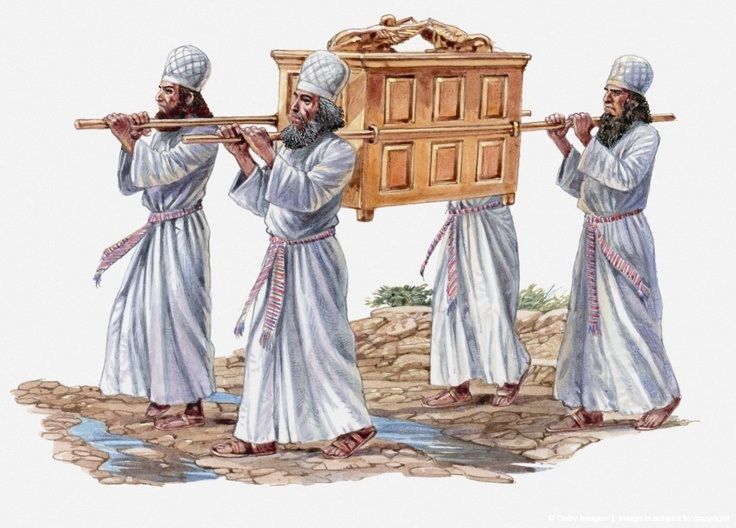
Despite the unfortunate circumstance of the death of Uzzah and later the disappearance of the Ark, the New Testament’s Revelation 11:19, shown by God to John, indicates “…God’s temple in heaven was opened, and within his temple was seen the Ark of his Covenant. And there came flashes of lightning, rumblings, peals of thunder, an earthquake, and a severe hailstorm.” The Ark still exists!

As for us today, 2 Corinthians 6:16 reminds us: “…we are the temple of the living God. As God has said: “I will live with them and walk among them, and I will be their God, and they will be my people.” Praise the Lord! No more carrying his presence from place to place in a box untouchable. Further, He has provided the pouring out of His precious Holy Spirit on all flesh! (Joel 2:28-32). Confirmation also exists in John 14:17, “the Spirit of truth, whom the world cannot receive, because it neither sees Him nor knows Him; but you know Him, for He dwells with you and will be in you.” In addition, 2 Corinthians 13:5,  Examine yourselves to see whether you are in the faith; test yourselves. Do you not realize that Christ Jesus is in you—unless, of course, you fail the test?”

Moreover, 1 Corinthians 6:19-20 reminds us that our bodies are temples of the Holy Spirit, who is in us, whom we’ve received from God and we are not our own, but bought at a price. Therefore we are to honor God with our bodies.

When something or someone is sacred, it or they are holy, sanctified, consecrated, dedicated, or set apart. God, his instructions, and we as born-again believers, are such, and worthy to be treated with respect.

There is so much more we can study and gather from this passage in 1 Chronicles 13. However, may we all be granted the mindset to place the highest reverence on that which God has so graciously given us–his presence and instructions; not to mention one another.

Nevertheless, today much light is made of God’s instructions in the Bible. However, as for myself, I need to read some part of it every single day because I don’t want to forget any of it. Thankfully, His Holy Spirit helps us recall what He’s written and will sometimes even give us a heads up with some aspect of it that will be needed for a specific future circumstance to come in our lives. His mercies through His sacred counsel are to be much appreciated.

If I learn nothing else from all of this, I learn it pays to obey even when my own plans might appear to be and feel better. We all should inquire of Him about His prescribed way if we truly want successful results from our decisions.


Submission, Grace, and Forgiveness for Authority

Embracing 1 Peter 2 of the Bible can be a tough pill to swallow, yet it is forever necessary. Perhaps the hardest action within it is submitting to every human authority, not only the good and considerate, but those who are harsh. The Bible is very clear on this instruction in 1 Peter 2:13 and 18. Moreover, this behavior is deemed in the Bible as “for the Lord’s sake” and shows a “reverential fear” of God.

This passage of 1 Peter 2, starting at verse 11, urges us to abstain from sinful desires, and to live good lives so that people will see our good works that glorify God even though we might be accused of doing wrong. We’re told that in doing good, we silence the ignorant talk of foolish people. Also, it’s comforting to know that, the Bible tells us in 1 Peter 2:16 that we are to live as free people, but not to use that freedom to cover evil. Our aim should be to live fully submitted to God.

In addition, we’re encouraged to show “proper” respect for everyone. This entails: loving our family of believers, fearing or reverencing God, and honoring the “Emperor,” or for us today, the head of government. Further, we are shown in verse 20 that it is commendable before God if we suffer for doing good and endure it. And we all know that Christ modeled suffering well for us, that we might do the same.

Moreover, “He committed no sin and no deceit was found in His mouth.” (1 Peter 2:22) We are now encouraged to even love our enemies, bless them that curse us, do good to them that hate us, and pray for them which despitefully use and persecute us (Matthew 5:43–44).

Furthermore, the Bible reminds us that when people cast insults at Jesus, he didn’t retaliate, and when he suffered, he didn’t make threats. Who doesn’t know this to be a major temptation to threaten someone who is harassing you? It does indeed take a dying to self to act as the Lord did when encountering offenders or submitting to someone in authority who may be rude and prideful. Yet it may offer some solace to know the Bible tells us in Matthew 18:15-17 how to handle an offense among spiritual family:

““If your brother sins against you, go and tell him his fault, between you and him alone. If he listens to you, you have gained your brother. But if he does not listen, take one or two others along with you, that every charge may be established by the evidence of two or three witnesses. If he refuses to listen to them, tell it to the church. And if he refuses to listen even to the church, let him be to you as a Gentile and a tax collector.”

Well, we know how Jesus treated Gentiles and tax collectors–with grace and truth–remembering when, in one passage (Luke 3:12-13), we see Jesus instructing two tax collectors who came to be baptized, not to collect more money than was required. Also, in Matthew 9:9-13, we see Jesus choose Matthew, a tax collector seated at his booth, to follow Him as one in the first group of his disciples. So we still see the Lord offering a gracious chance for a relationship.

Further, we are reminded of God’s grace toward us in Romans 11:17, “And you Gentiles, who were branches from a wild olive tree, have been grafted in. So now you also receive the blessing God has promised Abraham and his children, sharing in the rich nourishment from the root of God’s special olive tree.”

Also, Romans 13 gives us a very clear view of the authorities that God has established and how we are to relate to them. We are told that there is no authority except that which God has established and those that exist were established by Him. As a result, if we rebel against them, we rebel against what God has instituted and bring consequences on ourselves. So, when all is said and done, we are given the freedom to decide if we will include God’s Holy Spirit and His principles in our choices.

In his mercy and wisdom, God allows us the ability to make choices in employment, homes (buildings, cities, states, countries), schools, spouses, churches, purchases, etc., and with those choices, the responsibility to submit to the authorities ruling those areas, thereby choosing our officials.

When there is error or negligence in those choices we’ve made, there is God-given wisdom available through the Bible, wise counsel, and prayer on how to rectify those situations. Sometimes the remedies may include separation or staying and making adjustments. Nevertheless, our actions should be in a spirit of honor and respect for God’s word in keeping the right attitudes and representing Him well. Though imperfect, we are not without hope or help.

Hence, all of these things assist us when contemplating the obedience required in submitting to those in authority over us. Thankfully, we can look to our Lord for help in carrying out his instructions remembering “He bore our sins in His body on the cross, so that we might die to sins and live for righteousness.” (1 Peter 2:24-25) We’ve been healed by his wounds so that though we were once going astray, we’ve now returned to the Shepherd and Overseer of our souls.

Now, submission is for all of us as Ephesians 5:21 tells us, “ Submit to one another out of reverence for Christ.” So, though it may be very difficult at times to follow Christ’s example of submission, we can do it. Let’s help each other through it!

Abraham and Sarah: Lessons in Growth, Faith and Victory

In Genesis 11:27-25:11 of the Bible, we are privileged to see how Abraham and Sarah lived long and strong experiencing God’s blessings and struggles toward their victories in life. In their story, we see the results of their faith as well as those moments of their lack of faith.

Some bible facts about Abraham and Sarah: Abraham’s name was Abram before the Lord changed it. His father was Terah (who lived 205 years), and Abram had two brothers named Nahor and Haran (the father of Lot–Abram’s nephew).

Abram’s wife’s name was Sarai before the Lord changed it to Sarah. She was unable to conceive, so at that time, she had no children.

The Lord told Abram to leave his country and go to where He would show him. Abram at 75 years of age took his wife Sarai, his possessions, and his nephew Lot, and went, obeying the Lord. He went to Canaan, then to Bethel, the Negev, then on to Egypt.

Sarai was a very beautiful woman, so Abram asked Sarai to say she was his sister and not his wife so that his life would be saved and he’d be treated well by the Egyptians.

When the Egyptians saw Sarai, she was taken into Pharaoh’s palace and Abram got special treatment and added wealth because of her. Then God inflicted deadly diseases on Pharaoh and his household, after which he told Abram to take his wife and leave which he did with everything he had, along with Lot, his nephew.

Abram was very wealthy in livestock, silver, and gold. Lot, his nephew, was also wealthy and he and Abram could no longer stay together because of their great possessions, as the land could not support it. Quarreling arose between Abram’s and Lot’s herders, so they decided to separate.

Lot and his possessions got carried off by kings that invaded Sodom and Gomorrah as he had pitched his tents near Sodom which was experiencing war. Abram rescued Lot and brought him back along with his possessions.

Later God told Abram that he would give him an heir from his own flesh and blood. He also told him that he would have offspring numbered as the stars in the sky. The Bible tells us Abram believed the Lord and credited it to him as righteousness.

Since Sarai hadn’t given Abram any children, she asked Abram to sleep with her Egyptian slave to build a family through her. Abram agreed and slept with her slave, Hagar, and she had a son whom she named Ishmael (meaning God hears). Eventually, the slave’s pregnancy and the birth of Ishmael caused some problems in Abram’s household. Yet, God was still quite aware and active in graciously helping and an Angel of the Lord promised to multiply her descendants greatly. Abram was 86 years old when Hagar birthed Ishmael.

When Abram was 99 years old, the Lord appeared to him and established his covenant of circumcision promising to greatly increase his numbers and that he’d be the father of many nations. Also, at that time, the Lord changed his name from Abram to Abraham and his wife’s name from Sarai to Sarah, promising she would give Abraham a son, be the mother of nations, and that kings of people would come from her.

During a visit from three men including the Lord, Abraham was told that by that time of the next year, Sarah would have a son. The Bible describes Abraham and Sarah as “already very old” at this time. Sarah was listening and laughed, but out of fear denied she laughed. Yet, by the next year, Sarah gave birth to a baby boy named Isaac. She was 90 years old when Isaac was born and her husband, Abraham was 100.

I’ve only chosen to highlight a few facts about Abraham and Sarah’s exciting life of faith, so as not to go beyond the few minutes I have with you.

I find it remarkable that by faith, Abraham left his family and the land he knew without knowing where he was going. However, his faith did not allow him to have enough courage to tell the truth about Sarah being his wife and trusting God to keep them both safe. He risked her being sexually violated out of fear, but God was faithful and showed everyone who was boss. He would not have her harmed.

Moreover, for Sarah to attempt to speed up God’s promise of birthing a child by giving her slave to Abram, without any mention in the Bible of hesitation from him, but agreement, is somewhat disappointing, though understandable.

Nevertheless, before Sarah’s death at 127 years of age, and Abraham’s at 175, their lives were filled with faith lessons and victories from which our own faith is now inspired.

So what can we, God’s children, do or accept by faith today? What seems impossible or too difficult to do, or believe, that God has actually said would happen for us individually and corporately as Jesus’ body of believers? We should remember the lives of Abraham and Sarah, great lessons in faith, and God’s supernatural ability to bring His will to pass.

Knowing and Enjoying God’s Presence and Leadership

Thinking about getting to know God, and experiencing His presence in our decision-making and relationships, the Bible has provided so many promises and stories that encourage us toward maturing in our walk with God.

In Exodus 33:13 Moses speaks with the Lord and says, “… Show me now Your way, that I may know You and that I may find grace in Your sight. …” The Lord replies in verse 14, “My Presence will go with you, and I will give you rest.” How wonderful is that? To experience God being with you, and giving you rest? An amazing privilege. And yet we have this blessing today via His Holy Spirit living inside of us. We only need to seek Him and we’ll find Him, when we seek Him with all our hearts, as stated in Jeremiah 29:13.

Regarding the lives of believers in Christ, John 10:10 tells us that “The thief comes only to steal, kill and destroy; I have come that they may have life, and have it to the full..” Knowing this truth, we as believers in Christ should accept nothing less than what God says He wants for our lives. Hence, it should be our ambition to stay closely connected to Him; growing in who He is and being who He desires us to be.

Spending enough time in God’s presence, we’ll eventually recognize His Holy Spirit in our lives, as well as in the lives of others we may encounter. We’ll also develop the ability to rightly discern good and evil.

The Bible tells us, “Beloved, do not believe every spirit, but test the spirits, whether they are of God; because many false prophets have gone out into the world.” (1 John 4:1/NKJV) This scripture was written for all believers, as we are His Beloved.

Then a few verses down in verse 7 we find “Beloved, let us love one another, for love is of God; and everyone who loves is born of God and knows God. He who does not love does not know God, for God is love.”

So, we should know God’s Holy Spirit and His love for us and not be deceived. We should also know that this love is not that we loved God, but that He loved us and sent His son to be the propitiation, or atoning sacrifice, for our sins, also stated in 1 John 4.

Our love for one another should be reflected in our speech toward others as Colossians 4:6 tells us to let it “always be with grace, seasoned with salt” so that we may know how we ought to answer each one.

In addition, the safety measures of setting healthy boundaries are good and necessary to be established in all places; work, church, family, and friendships. Knowing when someone is going beyond what the Bible shows to be a sound and respectful relationship of any kind helps us to guard our hearts as mentioned in Proverbs 4:23. Its importance is highlighted as it is written that our hearts are the wellsprings of life. What is a wellspring? A bountiful source of something.

Praying to God and studying the Bible to learn God’s character and principles for godly living, we come to know God specifically for ourselves, versus only through the experiences and advice of others.

We should then ask God to show us how to be led by His Holy Spirit, and then how to be led by others as we’ll need to do both in life. We’re told in Galatians 5:16 to be led by the Spirit so that we won’t fulfill the lusts of our flesh. These include those selfish things that are harmful to us and others; and those things that displease God. These things include: “sexual immorality, impurity, and debauchery; idolatry and witchcraft; hatred, discord, jealousy, fits of rage, selfish ambition, dissensions, factions, and envy; drunkenness, orgies, and the like” as stated in Galatians 5:19-20. Thankfully, His Holy Spirit’s fruit is love, joy, peace, patience, kindness, goodness, faithfulness, gentleness, and self-control (Galatians 5:22-23).

Moreover, we should ask God to give us His perspective on relationships and not be discouraged if we haven’t fully seen it in our lives yet. God is available and willing to help us if we desire His help.

Living in His presence will protect us and help us to understand that love isn’t devious, deceptive, or controlling. We need only focus on Jesus, who’s full of goodness, honesty, and freedom. Hallelujah! Per Psalm 16:11, He’s made known to us “the path of life” and in “His presence there is fullness of joy;” and at “His right hand are pleasures forevermore.”

On Earth As It Is In Heaven

On this National Day of Prayer, I’m reminded of an event in the Bible in Luke 11:1-4/KJV where the Lord responded to his disciples when they asked him to teach them to pray as John had taught his disciples. The Lord gave them a simple prayer that encompasses everything we need today. He started by telling them that when they prayed they were to say:

Our Father which art in heaven,
We can now pray to the Father in the place He resides, which the Bible tells us is Heaven, though Jesus also lives in us.
“Who is like unto the Lord our God, who dwelleth on high…” (Psalm 113:5/KJV) Examine yourselves, whether ye be in the faith; prove your own selves. Know ye not your own selves, how that Jesus Christ is in you, except ye be reprobates? (2 Corinthians 13:5)

Hallowed be thy name.
The Lord’s name is holy, consecrated; set apart
“Neither shall ye profane my holy name; but I will be hallowed among the children of Israel: I am the Lord which hallow you,” (Leviticus 22:32/KJV)

Thy kingdom come.
The Lord introduces His kingdom to his disciples as well as the blessings that come with it.
“And heal the sick that are therein, and say unto them, The kingdom of God is come nigh unto you.” (Luke 10:9/KJV)

Thy will be done, as in heaven, so in earth.
The Lord desires His will to be done where we live as where He lives. This can happen by renewing our minds via the Bible, thereby forgoing the ways of the world, which results in change.
“And be not conformed to this world: but be ye transformed by the renewing of your mind, that ye may prove what is that good, and acceptable, and perfect, will of God.” (Romans 12:2/KJV)

Give us day by day our daily bread.
As our heavenly Father, God can be trusted to supply all of our needs. He created the earth and everything in it. He is omnipotent; all-powerful. This is easy for Him.
But my God shall supply all your need according to his riches in glory by Christ Jesus. (Philippians 4:19/KJV)

And forgive us our sins; for we also forgive everyone that is indebted to us.

God is merciful and gracious to forgive our sins, but He does require that we forgive others when we’ve been offended.
“For if ye forgive men their trespasses, your heavenly Father will also forgive you:
But if ye forgive not men their trespasses, neither will your Father forgive your trespasses.” (Matthew 6:14-15/KJV)

And lead us not into temptation; but deliver us from evil.
We can rely on God to order our steps and deliver us from every form of evil.
“And the Lord shall deliver me from every evil work and will preserve me unto his heavenly kingdom: to whom be glory forever and ever. Amen.” (2 Timothy 4:18/KJV)
“For it is God which worketh in you both to will and to do of his good pleasure.” (Philippians 2:13/KJV)

Many other factual words of encouragement can be given to uphold these verses in the Lord’s teaching on prayer. However, I’ve only provided a few in my minutes of sharing with you. Nevertheless, I’d like us to remember the following words when our needs or the needs of others come to mind:

“And this is the confidence that we have in him, that, if we ask anything according to his will, he heareth us: And if we know that he hear us, whatsoever we ask, we know that we have the petitions that we desired of him.” (1 John 5:14-15/KJV)
“And I say unto you, Ask, and it shall be given you; seek, and ye shall find; knock, and it shall be opened unto you.” (Luke 11:9/KJV)
“Therefore I say unto you, What things soever ye desire, when ye pray, believe that ye receive them, and ye shall have them.” (Mark 11:24/KJV)
“If ye then, being evil, know how to give good gifts unto your children, how much more shall your Father which is in heaven give good things to them that ask him?” (Matthew 7:11/KJV)