Jesus, Faith Master

Matthew 14:31

 Immediately, Jesus reached out his hand and caught him. “You of little faith,” he said, “why did you doubt?”

Have you experienced any power outages lately? I have in my neck of the woods. It can be quite frustrating and inconvenient. But what a relief when that welcome surge of power suddenly returns to your residence.

Waking up in total darkness that night, though feeling the Holy Spirit’s peace, brought to my mind how, back in his time on earth, Jesus had no beaming flashlight to brighten his path. Perhaps he used a torch or an oil lamp. Yet nothing like we have today. So, I imagined Him climbing up a mountain, or some other dark space, just before dawn, to be alone and pray. Can you imagine that scene?

I imagined again how Jesus appeared to his terrified disciples walking on water in the darkness. I wondered why they did not recognize him or his voice after having spent much time with him. Perhaps it was due to the fact that it was very dark, or He was initially at a far distance from them. Nor were they expecting his appearance, but it was sudden.

Nevertheless, Jesus shared his power with Peter by enabling him to walk on water after requesting that the Lord tell him to come. But this request also required the faith of Peter to believe that he could walk on water even in the midst of darkness, wind, and intimidating waves.

Peter defied gravity as he eagerly walked on the water at the Lord’s command to come, with the winds and waves eventually overwhelming him with fear. This environment distracted his focus from the Lord and onto the negative possibilities of harm, and he began to sink, losing the power the Lord provided for him to do the seemingly impossible.

Jesus noted the smallness of his faith and questioned why Peter doubted. Yet surely we can relate to how Peter felt in such a scary situation, which is not normally familiar. Just what did that water he walked on feel like? How blustery were the wind and waves, and how loud were their sounds? Surely he could remember all the miracles the Lord had done when they ministered together. Yet in that moment, fear bullied his faith, putting an end to a promising miracle. Somehow, he began to question if the Lord would let him down.

I wondered where Peter’s insecurity could have come from. After experiencing such quality time with the Lord personally, watching His many great works, what would make him doubt the Lord? Perhaps this inspired his faith to even start to actually walk on the water, though eventually fear and doubt caused him to sink. Nevertheless, he was able to experience the Lord’s kindness and mercy as he raised Peter up and kept him from drowning in the sea. However, still the Lord expected Peter not to doubt, but have faith, believing what he desired could successfully happen.

How many times have we found ourselves in situations that seemed too big for us and, in our minds, maybe even too big for God to handle? Yet faith is powerful. It is living and miraculous. Without it, we can’t please God, and without it, we can’t be saved. Faith is the lifestyle of the believer. It is not the norm of the world, as it isn’t based on human logic. It takes us into unfamiliar territory where we need God’s truth and strength not to doubt.

In what ways is our faith being challenged? We should ask God to strengthen us and show us how to stand on His promises in any event. To consistently exercise faith without doubting or wavering is a wonderful thing to master.

Many times we are told in scripture not to be dismayed, discouraged, troubled, or afraid. God promises to uphold us and to give us peace. We’re told in 2 Timothy 2:13 that if we are faithless, the Lord remains faithful, which was demonstrated when Jesus helped Peter as he sank.

Moreover, 2 Thessalonians 3:3 tells us that the Lord is faithful, will establish us, and guard us against the evil one. Therefore, with practice, we can do as Hebrews 10:23 encourages: “… hold fast the confession of our hope without wavering, for He who promised is faithful.” No doubt throughout our lifetime, we’ll have ample lessons to strengthen our faith, along with testimonies to encourage one another.


Chief Design Counsel

Psalm 127:1

Unless the Lord builds the house, the builders labor in vain. Unless the Lord watches over the city, the guards stand watch in vain.


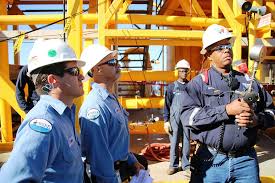
Today, I thought about building. There are so many ways in which we build. Whether we are building a home, business, relationship, or structure of any kind, we are constructing, establishing, or producing something of value to us.

Psalm 127:1 references the Lord’s building and watching relating to His constructing, overseeing, guarding, and protecting, and the importance of His direction. It reminds us that whatever we do, unless the Lord establishes it, it is labor spent in vain.

How is our labor in vain? It is fruitless, useless, to no avail. It is basically a failed effort from the start. Its outcome cannot be excellent or most helpful without God. It may have some measure of beauty, yet it will lack endurance without the Lord’s life and wisdom in it.

When I think of this verse, I think of my life and whatever I plan or design for it. It is truly futile if God is not its architect. Though God gives us a will, authority, and creativity to create and plan, He never means for us to do it without His counsel, as He knows we alone lack the necessary knowledge to be successful.

God sees the future of every endeavor we attempt, along with all else that life presents that surrounds it. Hence, He is the wisest source of counsel we will ever have available to us. So, I am reminded to involve the Lord in anything that I attempt to do if I truly want to be fruitful or prosperous.

We must remember in our planning processes that God’s goals are of utmost importance over ours, as stated in Proverbs 19:21: “Many are the plans in a person’s heart, but it is the Lord’s purpose that prevails”. While humans are ever building for various reasons, true success is linked to God’s purpose.

Consistently seeking God through prayer, listening, and obedience, to know His will for our lives and projects, protects us from wasted time and money. This doesn’t mean we will never make a mistake, but God will work with us to accomplish His wonderful goals.

Moreover, in Luke 14:28-30, Jesus reminds us of the importance of counting the costs of our projects before starting. “Suppose one of you wants to build a tower. Won’t you first sit down and estimate the cost to see if you have enough money to complete it? For if you lay the foundation and are not able to finish it, everyone who sees it will ridicule you, saying, ‘This person began to build and wasn’t able to finish.’

In planning our builds, we are to be certain of how to wisely construct our foundations, remembering 1 Corinthians 3:10: “By the grace God has given me, I laid a foundation as a wise builder, and someone else is building on it. But each one should build with care.”

We want to place whatever we build on a solid foundation, which is our Savior, as shown in Matthew 7:24-25, Jesus’ parable of the wise builder who builds his house on the rock, ensuring it stands firm against storms. Thankfully, God provides the stability, as seen in this parable.

Furthermore, God guards what He has built, making human worry unnecessary. Seeking God’s direction ensures the work is not done in vain.

No Point in Worrying

Matthew 6:27
“Can any one of you by worrying add a single hour to your life?”

I just had a thought about worry and how pointless it is. It truly is a futile exercise of the mind and expends so much energy needlessly. The Lord reminds us in Matthew 6:27 that worry adds no time to our lives. Nor does worrying bring solutions to problems any sooner. It’s wiser and healthier to just trust God on the matter.

Whatever may rattle our minds today, we need only look up one or more scriptures on that very thing, strengthen our faith, and receive God’s peace. Whenever I consult the Bible, perhaps even with a short prayer to the Lord on an issue, I notice a difference in my thinking almost immediately. Yet it may take a while to actually start the process.

Nevertheless, with all those things that can present worrisome thoughts, the Lord tells us further in Matthew 6:33-34, to “seek first his kingdom and his righteousness,” and all these things will be given to us, not worrying about tomorrow, for “tomorrow will worry about itself as each day has enough trouble of its own.”

You could be a planner like me. I like to have everything mapped out in my head or, most often, on paper. I feel a certain security in having a path to follow to reach the end goal. However, sometimes our paths might not be God’s paths, so we need to ask Him to reveal to us His ways.

In James 1:5, He tells us all we have to do is ask for His wisdom, and He’ll give it to us. “If any of you lacks wisdom, you should ask God, who gives generously to all without finding fault, and it will be given to you.” I love how lavish and detailed God is. Not only will He give us wisdom, but He’ll give it to us generously and without fault.

I don’t know about you, but sometimes I feel like I’m always asking the Lord about something, or for something, too often. I start to feel like I’m getting on His nerves. “It’s me again, Lord.” Yet I know this is what He wants for us. He tells us to ask. It is part of being in a relationship with Him. He’s our Father, so there’s no better person to consult.

I love His Hebrew name, “Peleh Yo’etz”, meaning Wonderful Counselor or Miraculous Planner! This name describes one whose wisdom and strategies are extraordinary, incomprehensible, and beyond human capability. The term Peleh indicates a miracle or marvel, while Yo’etz denotes an advisor or one who plans.

So, if you’re feeling at a loss about what to do, or pondering something you need God’s perspective on. Let me encourage you to ask away! Though God doesn’t always answer us immediately, He does provide us with His answers in His timing. He delights in helping us.

Don’t Take It Personally

Isaiah 53:3

He was despised and rejected by mankind, a man of suffering, and familiar with pain. Like one from whom people hide their faces, he was despised, and we held him in low esteem.

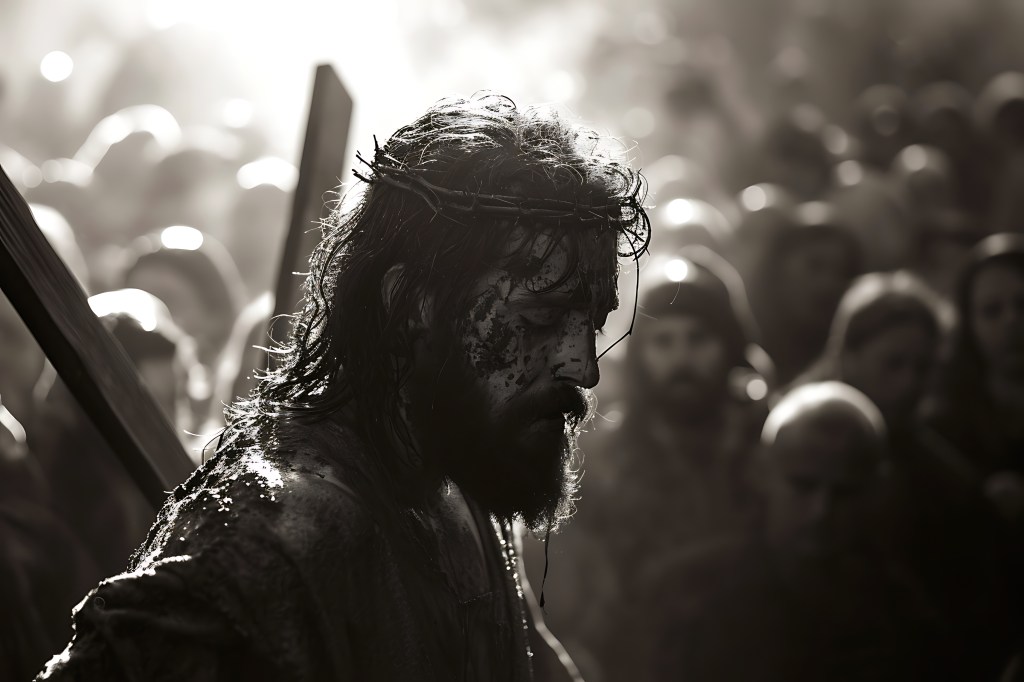
Have you ever had someone speak evil of you, even though you knew you had done no wrong? Not to mention, they just flat-out lied to others about you? Have you wanted to just give them a piece of your mind about it and attempt to correct their sin publicly to clear your name? Nevertheless, God has shown us what our Lord and Savior, who was without sin, endured in the face of ridicule and humiliation.

Who was rejected and disrespected more than Jesus during his ministry? The Gospels repeatedly show tension between Jesus and the religious leaders of His day—Pharisees, scribes (teachers of the law), and chief priests. They questioned Him, doubted Him, spoke of Him angrily, falsely, and plotted against Him.

I don’t know about you, but when I read about the terrible ways that men treated Jesus, who was so holy, righteous, kind, and humble, among many other wonderful things, I feel foolish anytime I feel offended or resentful for any bad behavior toward me.

It helps to remember the following instances in which Jesus encountered wrong treatment:

He was Accused of Blasphemy

Healing the paralytic (Mark 2:1–12; Luke 5:21): When Jesus forgave the paralyzed man’s sins, the teachers of the law said He was blaspheming. They believed only God could forgive sins and saw His claim as offensive.

His Association with Sinners was Criticized

Eating with tax collectors (Mark 2:15–17; Luke 5:30): The Pharisees complained that He ate with “tax collectors and sinners.” They questioned His holiness and authority.

His Authority Over the Sabbath was Challenged

Picking grain on the Sabbath (Matthew 12:1–8; Mark 2:23–28): The Pharisees accused His disciples of breaking the Sabbath. Jesus responded that He is “Lord of the Sabbath.”

Healing on the Sabbath (Luke 6:6–11; John 5:16): They became furious when He healed on the Sabbath. John notes they began persecuting Him because He did these things on the Sabbath.

It was Claimed His Power Came From Satan

Casting out demons (Matthew 12:22–24; Mark 3:22): The Pharisees said He drove out demons “by Beelzebul, the prince of demons.” This is one of the strongest accusations they ever made.

His Authority to Teach was Questioned

Temple confrontations (Matthew 21:23–27; Mark 11:27–33): The chief priests and elders demanded to know by what authority He acted. They tried to trap Him with questions.

Plots Were Made to Kill Him

After healing on the Sabbath (Mark 3:6), the Pharisees began plotting with the Herodians to kill Him.

After raising Lazarus (John 11:45–53), the chief priests and Pharisees convened a council. They decided Jesus must die because many were believing in Him.

Traps were Set to Trick Him with Questions

Paying taxes to Caesar (Matthew 22:15–22): The Pharisees plotted to trap Him in His words.

The woman caught in adultery (John 8:3–6): The teachers of the law used the woman as bait to accuse Him.

His Claims About His Identity Were Mocked

Calling Him a deceiver (Matthew 27:62–63): After His death, the chief priests and Pharisees called Him “that deceiver.”

Doubting His origins (John 7:41–52): It was argued that He couldn’t be the Messiah because He was from Galilee.

His Exposing of Hypocrisy Triggered Hostility

Woes against the Pharisees (Matthew 23): Jesus publicly rebuked them as “hypocrites,” “blind guides,” and “whitewashed tombs.” This intensified their hatred.

His Miracles and Growing Influence were Disputed

Triumphal Entry (Luke 19:39): Some of the Pharisees told Jesus to rebuke His disciples for praising Him. They feared His popularity.

Cleansing the Temple (Matthew 21:12–15): The chief priests were indignant when children shouted “Hosanna.”

His Legitimacy and Background was Questioned

Insulting Him personally (John 8:48): They said He was demon-possessed and questioned His parentage and authority.

His Teachings were Rejected

Bread of Life discourse (John 6): Many disciples turned back and no longer followed him, but the religious leaders outright rejected Him.

In light of these trials, and any other offenses Jesus’ followers will suffer, we’re taught in the Bible not to take revenge, but to “leave room for God’s wrath” as He will repay (Romans 12:19). Furthermore, in our anger, not to sin, nor let the sun go down while we’re still angry (Ephesians 4:26). Also, not to be quickly provoked in our spirit, for anger resides in the lap of fools (Ecclesiastes 7:9). We’re encouraged to be kind and compassionate to one another, forgiving each other, just as in Christ God forgave us (Ephesians 4:32).

It’s good to know that when experiencing the pain of betrayal, rejection, or persecution, as followers of Jesus, we can find solace in knowing “…we do not have a high priest who is unable to empathize with our weaknesses, but we have one who has been tempted in every way, just as we are—yet He did not sin” (Hebrews 4:15). That man is Jesus Christ, the one who saved our souls and makes intercession for us. He is no longer dead but has risen and is alive forever!

In any event, I am encouraged by Matthew 28:18-20, “Then Jesus came to them and said, ‘All authority in heaven and on earth has been given to me. Therefore, go and make disciples of all nations, baptizing them in the name of the Father and of the Son and of the Holy Spirit, and teaching them to obey everything I have commanded you. And surely, I am with you always, to the very end of the age.'”

We are abundantly blessed!