
Isaiah 53:3
“He was despised and rejected by mankind, a man of suffering, and familiar with pain. Like one from whom people hide their faces, he was despised, and we held him in low esteem.“

Have you ever had someone speak evil of you, even though you knew you had done no wrong? Not to mention, they just flat-out lied to others about you? Have you wanted to just give them a piece of your mind about it and attempt to correct their sin publicly to clear your name? Nevertheless, God has shown us what our Lord and Savior, who was without sin, endured in the face of ridicule and humiliation.
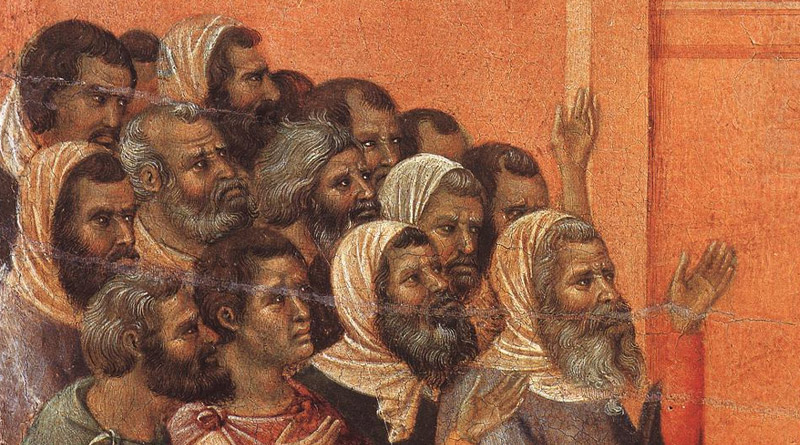
Who was rejected and disrespected more than Jesus during his ministry? The Gospels repeatedly show tension between Jesus and the religious leaders of His day—Pharisees, scribes (teachers of the law), and chief priests. They questioned Him, doubted Him, spoke of Him angrily, falsely, and plotted against Him.

I don’t know about you, but when I read about the terrible ways that men treated Jesus, who was so holy, righteous, kind, and humble, among many other wonderful things, I feel foolish anytime I feel offended or resentful for any bad behavior toward me.
It helps to remember the following instances in which Jesus encountered wrong treatment:
He was Accused of Blasphemy
Healing the paralytic (Mark 2:1–12; Luke 5:21): When Jesus forgave the paralyzed man’s sins, the teachers of the law said He was blaspheming. They believed only God could forgive sins and saw His claim as offensive.
His Association with Sinners was Criticized
Eating with tax collectors (Mark 2:15–17; Luke 5:30): The Pharisees complained that He ate with “tax collectors and sinners.” They questioned His holiness and authority.
His Authority Over the Sabbath was Challenged
Picking grain on the Sabbath (Matthew 12:1–8; Mark 2:23–28): The Pharisees accused His disciples of breaking the Sabbath. Jesus responded that He is “Lord of the Sabbath.”
Healing on the Sabbath (Luke 6:6–11; John 5:16): They became furious when He healed on the Sabbath. John notes they began persecuting Him because He did these things on the Sabbath.
It was Claimed His Power Came From Satan
Casting out demons (Matthew 12:22–24; Mark 3:22): The Pharisees said He drove out demons “by Beelzebul, the prince of demons.” This is one of the strongest accusations they ever made.
His Authority to Teach was Questioned
Temple confrontations (Matthew 21:23–27; Mark 11:27–33): The chief priests and elders demanded to know by what authority He acted. They tried to trap Him with questions.
Plots Were Made to Kill Him
After healing on the Sabbath (Mark 3:6), the Pharisees began plotting with the Herodians to kill Him.
After raising Lazarus (John 11:45–53), the chief priests and Pharisees convened a council. They decided Jesus must die because many were believing in Him.
Traps were Set to Trick Him with Questions
Paying taxes to Caesar (Matthew 22:15–22): The Pharisees plotted to trap Him in His words.
The woman caught in adultery (John 8:3–6): The teachers of the law used the woman as bait to accuse Him.
His Claims About His Identity Were Mocked
Calling Him a deceiver (Matthew 27:62–63): After His death, the chief priests and Pharisees called Him “that deceiver.”
Doubting His origins (John 7:41–52): It was argued that He couldn’t be the Messiah because He was from Galilee.
His Exposing of Hypocrisy Triggered Hostility
Woes against the Pharisees (Matthew 23): Jesus publicly rebuked them as “hypocrites,” “blind guides,” and “whitewashed tombs.” This intensified their hatred.
His Miracles and Growing Influence were Disputed
Triumphal Entry (Luke 19:39): Some of the Pharisees told Jesus to rebuke His disciples for praising Him. They feared His popularity.
Cleansing the Temple (Matthew 21:12–15): The chief priests were indignant when children shouted “Hosanna.”
His Legitimacy and Background was Questioned
Insulting Him personally (John 8:48): They said He was demon-possessed and questioned His parentage and authority.
His Teachings were Rejected
Bread of Life discourse (John 6): Many disciples turned back and no longer followed him, but the religious leaders outright rejected Him.
In light of these trials, and any other offenses Jesus’ followers will suffer, we’re taught in the Bible not to take revenge, but to “leave room for God’s wrath” as He will repay (Romans 12:19). Furthermore, in our anger, not to sin, nor let the sun go down while we’re still angry (Ephesians 4:26). Also, not to be quickly provoked in our spirit, for anger resides in the lap of fools (Ecclesiastes 7:9). We’re encouraged to be kind and compassionate to one another, forgiving each other, just as in Christ God forgave us (Ephesians 4:32).
It’s good to know that when experiencing the pain of betrayal, rejection, or persecution, as followers of Jesus, we can find solace in knowing “…we do not have a high priest who is unable to empathize with our weaknesses, but we have one who has been tempted in every way, just as we are—yet He did not sin” (Hebrews 4:15). That man is Jesus Christ, the one who saved our souls and makes intercession for us. He is no longer dead but has risen and is alive forever!
In any event, I am encouraged by Matthew 28:18-20, “Then Jesus came to them and said, ‘All authority in heaven and on earth has been given to me. Therefore, go and make disciples of all nations, baptizing them in the name of the Father and of the Son and of the Holy Spirit, and teaching them to obey everything I have commanded you. And surely, I am with you always, to the very end of the age.'”
We are abundantly blessed!

 Ms. Rita's Minute