We’re Separating

Unity is a beautiful thing. However, sometimes separating isn’t so bad. Sometimes it’s necessary. I’m referencing 2 Corinthians 6:14-18/NIV where the Apostle Paul is preaching regarding God’s will on separation. He first tells us not to be yoked together with unbelievers. The Greek word for yoked is Zugas which means to be burdened or in bondage. When you yoke yourself with someone or a thing, you are attaching, connecting, or closely linking with them.

Image: anna/Flickr

Unbelievers are those who have no relationship with Christ and don’t believe as God determines belief. They haven’t repented, submitted their lives to the Lord, nor been baptized. Also, they are often those who have professed faith in Christ by words only while living totally contrary to its definition.

Paul characterized this wrongly yoked relationship with the following contrasts:

Righteousness vs Wickedness

Light vs Darkness

Christ vs Belial

Believer vs Unbeliever

Temple of God vs Idols

Image: aboodi vesakaran/Pexels

Paul reminds us that we are the temple of God. So, as believers, we can now trust what God has said that He will live with us, walk among us, and be our God and we His people. But the Lord tells us to come out and be separate, not to touch any unclean thing and He’ll receive us. Therefore, we can expect God to be a Father to us and we’ll be His sons and daughters.

Further, in 2 Corinthians 7/NIV, Paul tells us to purify ourselves from everything that contaminates body and spirit, “perfecting holiness out of reverence for God.” Hence, since we love and respect our Father, we honor Him by living holy and separate from the sinful life that grieves Him.

Image: Hagerty Ryan, USFWS/Pixnio

This doesn’t mean we don’t pray for and show love toward those who don’t believe, but we aren’t to yoke ourselves to them. This can be seen in the Bible’s commands that believers only marry believers. There should only be bonding and connection in this manner to believers. He gives us these commands for a reason. They aren’t to be a means of haughtiness or conceit, but of protection as the bible clearly tells us “A little yeast works through the whole batch of dough.” (Galatians 5:9/NIV)

video: BYJUSClass910/Youtube

There’s no mistaking the awesome privilege of God’s grace and mercy toward us in that while we were yet sinners Christ died for us. However, there is clearly still work to be done where we recognize what contaminates, defiles, or corrupts our bodies and spirits and cleanse ourselves of those things as shown in 2 Corinthians 7/NIV. We should not be mistaken on this, as some might have us to be, because God expects this of us. If He didn’t, He would not have expressed it in His word.

Revelation 18:4/NIV tells us, “Then I heard another voice from heaven say: “‘Come out of her, my people,’  so that you will not share in her sins so that you will not receive any of her plagues; … .” This is another instance of God requiring separation.

Image: Chris Clark/Pexels

We are wise to assess ourselves and where we are in Christ, as we’re reminded in Revelation 22:12/NIV, ““Look, I am coming soon! My reward is with me, and I will give to each person according to what they have done…, ” and Revelation 22:14-15/NIV, “Blessed are those who wash their robes, that they may have the right to the tree of life and may go through the gates into the city. Outside are the dogs, those who practice magic arts, the sexually immoral, the murderers, the idolaters, and everyone who loves and practices falsehood.” We want to live eternally with Christ and don’t want the consequences of being disobedient to His commands.

Moreover, we should not be surprised about the popularity of ungodly living. God has warned us ahead of time, that according to Matthew 7:13-14, we are to  “Enter through the narrow gate. For wide is the gate and broad is the road that leads to destruction, and many enter through it. But small is the gate and narrow the road that leads to life, and only a few find it.”

Image: Adam/Flickr

In any event, we all have been given the right to choose whose way we will follow: our own, another wayward man’s, or God’s. Nevertheless, a sobering thought is Revelation 22:11, “Let the one who does wrong continue to do wrong; let the vile person continue to be vile; let the one who does right continue to do right; and let the holy person continue to be holy.”

While remaining alert to how we yoke ourselves in relationships, whether marriage, career, dating, business, etc., may we choose to remember these words of our Lord, ” I am coming soon. Hold on to what you have so that no one will take your crown.” (Revelation 3:11/NIV)

Image: Antony Trivet/Pexels

How to Live to Please God

Ever felt like you just want to be pleasing to God? Yet just how do we please God? 1 Thessalonians 4 tells how to live to please God. In it, we learn that it is God’s will that we are sanctified. The Greek translation for sanctify is hagiazo, which means to set apart for God’s purpose; make holy or consecrate–sanctification being the separation from that which is evil for dedication to God.

In God’s will for us to be sanctified, it is first indicated in 1 Thessalonians 4 that we avoid sexual immorality. Sexual immorality can be defined as any sexual behavior apart from God’s standards provided in the Bible. We are told to control our own bodies, by living holy and honorable. We aren’t to behave in passionate lust like we don’t even know God. We aren’t to take advantage of a brother or sister and we should understand that the Lord will punish those who do these things. We should recognize that God didn’t call us to be impure but to live holy, and if we reject this teaching, we don’t reject men, but God.

In addition, we are told to love one another as we have been taught by God. Moreover, if we are already doing it, we should do it more and more.

In today’s society where we are encouraged to grind and strive to work ambitiously toward monetary success, here we are taught our ambition should be to lead a quiet life with the following qualities:

— Minding our own business (focusing on what God is requiring of us, specifically in our own individual lives).
— Working with our hands (performing assignments we’ve been given, whether preaching, parenting, building, selling, teaching, nursing, managing, etc.); winning the respect of outsiders (esteemed because of the way we exemplify godly living); and ensuring that we aren’t dependent upon anybody.

In conclusion, I’m reminded of another scripture that relates largely to pleasing God: Hebrews 11:6, “And without faith, it is impossible to please God, because anyone who comes to him must believe that he exists and that he rewards those who earnestly seek him.” Faith, love, trust, belief, confidence–all these things exercised toward God make Him happy.

The Bible also references these actions in pleasing God:

— When we offer our bodies as living sacrifices, holy and pleasing to God—this is our true and proper worship (Romans 12:1).
— When we serve Christ in a spirit of righteousness, peace, and joy in the Holy Spirit, because anyone who serves Christ in this way is pleasing to God and receives human approval (Romans 14:17-18).
— When we speak as those approved by God to be entrusted with the gospel, not seeking to please people, but God, who tests our hearts (1 Thessalonians 2:4).
— When we honor our parents, and take care of our widowed parents and grandparents (1 Timothy 5:4, Deuteronomy 5:16).

Carrying His Presence

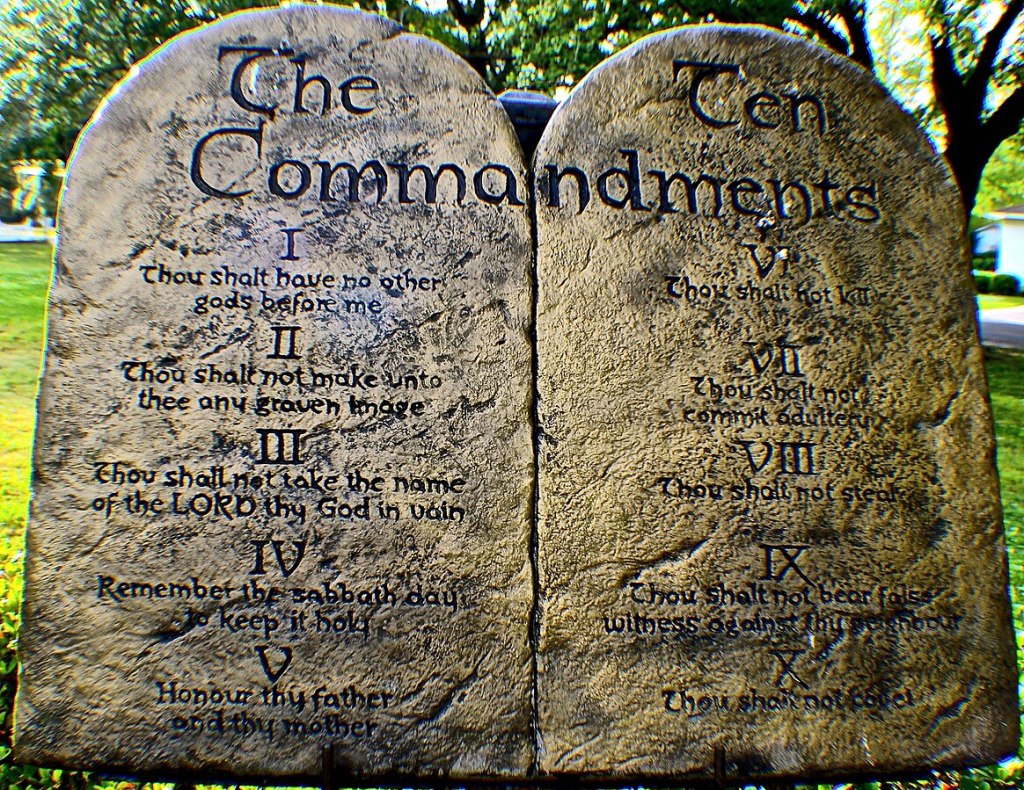
Recently, I read an interesting account in the Bible (1 Samuel 5-6) about the theft of the ark of God (a wooden chest coated in pure gold that contained the tablets of the 10 Commandments given to Moses by God) taken into a place of idolatry. The placement of the ark, representing God’s presence, in this evil place, brought about a curse of tumors and death.

The Philistines who were enemies of Israel stole the ark and carried it to Ashdod, into the temple of their god, Dagon, and and set it beside him. When they got up the next day, Dagon had fallen on his face, so they stood him back up again. The next morning they found him fallen over on the ground with his head and hands broken off in the doorway and his torso remaining. Then, the people of Ashdod were afflicted with tumors.

(Image credit: Universal History Archive / Contributor via Getty Images)

Needless to say, the people of Ashdod wanted nothing more to do with the ark and moved it to a city called Gath. However, after they moved it there, the Bible says God afflicted the people of that city, “both young and old” with an outbreak of tumors. So they moved the ark to another city, Ekron, but as it was arriving, the people of Ekron cried out in fear that the ark was brought to kill them. Apparently, death had filled that city and those who didn’t die were afflicted with tumors and there was a great cry toward heaven.

The Philistines later called for the priests and diviners to inquire what to do with the ark and they were instructed to return it with a gift, a guilt offering (with special instructions on how this would be done), as this would bring healing. As they moved on, sadly, on the ark’s trip back to the Israelites, God struck down some of the inhabitants of another city, Beth Shemesh, killing 70 of them because they looked inside the ark.

The people marveled asking, “Who can stand in the presence of the Lord, this holy God? To whom will the ark go up from here?” Messengers were sent to notify the men of a town, Kiriath Jearim, that the Philistines were returning the ark and they brought it to the house of a man named Abinadab. Afterward, the ark remained there for a long time, twenty years.

The ark of the covenant represented the presence of God for His people, the Israelites. But I pondered how it might relate to us, all of God’s people, today. Currently, believers in Christ are indwelt by the Holy Spirit, and in 1 Corinthians 6:19-20, the Bible tells us we are temples of the Holy Spirit who is in us whom we’ve received from God. We are not our own, but bought with a price and as such, we should honor God with our bodies.

Hence, our bodies are a place of holiness, set apart for God’s presence. Isn’t this an awesome thought that this could occur? I had to repent in my heart of any way I might have dishonored or disrespected this holy presence I carry by behaving in some way inappropriate for a child of God.

God is merciful and forgiving toward his children, yet to continually grieve God’s Spirit brings about consequences that would not be advantageous to us. Because we love God, we choose not to involve ourselves in idolatry or other acts of evil that might cause grievance to His Spirit within us.

We can clearly see from this, and other scriptural examples, how God feels about idolatry or the worship of other gods. So, even with Jesus’ atonement made for our sins, He can become saddened by our behavior. However, the good news is that when we confess our sins, God is faithful and just to forgive us and cleanse us (1 John 1:9). We are privileged to carry the person and companionship of the One who created heaven and earth. This is mindboggling and thrilling to me.

What Makes You Attractive?

Let me take a moment to remind you that sometimes it isn’t your body, clothes, degrees, money, homes, or cars that make you most attractive. Sometimes it’s your:

  * Distinctive, principled perceptions of life

  * Gracious attitude toward others

  * Honorable values for living

  * Pleasant and witty sense of humor

  * Empathetic and compassionate heart

  * Sense of style and artistic expression that don’t mirror

   the majority

  * Influential creativity 

  * All those things that make you uniquely interesting 

There are so many components to being attractive. Today, remember to love how God fashioned you.

True Freedom

Freedom. Nothing seems to ring more blessed to one’s ears than this word. It is described by Oxford Languages as “the power or right to act, speak, or think as one wants without hindrance or restraint.” The Bible’s Hebrew word for it is “cherut”, and its Greek word, “eleutheria”. Both denote liberty, “a state of freedom, especially as opposed to political subjection, imprisonment, or slavery” (britannica.com). It is also a state where God has given us the ability to choose right or wrong in our daily decisions.

What makes you feel free? Is it the ability to say whatever you want, whenever you want? The ability to sleep in on a weekday without disturbance? The ability to go on a shopping spree anytime you want? Or, perhaps the ability to take a weekend trip away at any hour you choose?

Those of us who have chosen to believe in the Lord Jesus Christ and to give our hearts and lives to Him, understand that “it is for freedom that Christ has set us free…” and that we should stand firm, not letting ourselves be “burdened again by a yoke of slavery.” (Galatians 5:1)

To do this, we must have knowledge of those things that bind or constrict us; those things that cause us to feel imprisoned, and how to rid ourselves of them. If the Bible tells us that God’s people perish for lack of knowledge, we can expect that we are also hindered by it.

Helpful to the maintenance of our freedom is renewing our mind (Romans 12:2) with the study of His word, the Bible, so as not to be “conformed to this world, but transformed”, so by testing we may discern the will of God. Hence, Psalm 119:45, “I will walk about in freedom, for I have sought out your precepts.”

Let’s remember to walk in the freedom Christ has given us. He came to set the captives free from the state of bondage in which we once found ourselves.

——————————————–

More scriptures to remember on freedom:

Isaiah 61:1
(The Year of the Lord’s Favor)
The Spirit of the Sovereign Lord is on me because the Lord has anointed me to proclaim good news to the poor. He has sent me to bind up the brokenhearted, to proclaim freedom for the captives and release from darkness for the prisoners,

Luke 4:18
“The Spirit of the Lord is on me, because he has anointed me to proclaim good news to the poor. He has sent me to proclaim freedom for the prisoners and recovery of sight for the blind, to set the oppressed free,

Romans 8:21
that the creation itself will be liberated from its bondage to decay and brought into the freedom and glory of the children of God.

2 Corinthians 3:17
Now the Lord is the Spirit, and where the Spirit of the Lord is, there is freedom.

Galatians 2:4
This matter arose because some false believers had infiltrated our ranks to spy on the freedom we have in Christ Jesus and to make us slaves.

Ephesians 3:12
In Him and through faith in him we may approach God with freedom and confidence.

James 1:25
But whoever looks intently into the perfect law that gives freedom, and continues in it—not forgetting what they have heard, but doing it—they will be blessed in what they do.

1 Peter 2:16
Live as free people, but do not use your freedom as a cover-up for evil; live as God’s slaves.

James 2:12
Speak and act as those who are going to be judged by the law that gives freedom.

Is What You’re Reading Real?

If you’re a major fan of social media and find great joy in communicating within it, it’s wise to stay alert to the possibilities of catfishing in your neck of the scrolling woods. Of course, I’m not referring to the sport of catching that tasty seafood we often enjoy fried with a touch of our favorite sauce and perhaps a huge buttered baked potato and garden salad.

In our ever-expanding world of the Internet, the catfishing I’m referring to is the one where a person is lured into a relationship with a false personality, often undercover as a prank. There are many stories of people of all ages engaging in relationships with numerous identities, sometimes over years, never actually seeing the person behind the typewritten words. Some have delved deep into fantasies of love relationships while possibly communicating with anyone from age 19 to 90, male or female. Not to mention, some have been scammed for thousands of dollars because of being too naive or gullible regarding the possibilities of fictitious behavior on the web.

Today, I’m highlighting this topic as I recently pondered just how influential catfishing can be to someone’s life and the need to always discern the difference between virtual and authentic communication. Not to say one can’t communicate virtually with someone honestly, but that engagement must be proven to be a reality to be deemed safe.

I am urging you to keep in mind that the securest way to communicate with someone realistically is in person, face-to-face, not “almost” but entirely. That’s if you truly desire to know and be known by that person. Be aware that anything you encounter over the Internet should only be taken as factual if proven. Otherwise, it should be taken with a grain of salt. However, if there is greater interest, investigate its legitimacy.

Stay safe out on the World Wide Web! Sometimes, there’s darkness where we may only desire light.

Appreciating God’s Discipline

“..When your judgments come upon the earth, the people of the world learn righteousness. But when grace is shown to the wicked, they do not learn righteousness; even in a land of uprightness they go on doing evil and do not regard the majesty of the Lord.” (~Isaiah 26:9-10/NIV)

Upon reading these verses, I felt a little sad. Sad, because I realize that even in my own life, there have been times when I received a measure of God’s uncomfortable discipline, rather than His pleasant grace. I understood the truth of the matter; that sometimes we as human beings can be stubborn, prideful, and self-absorbed, wanting our own way in all things. However, God always has a plan to lead us along the correct paths as we submit to His direction and discipline. His ways are always better than our own, and we simply don’t always live our lives honoring them.

Oxford defines discipline as “the practice of training people to obey rules or a code of behavior, using punishment to correct disobedience,” while it defines judgment as “a misfortune or calamity viewed as a divine punishment.”

For the believer, I equated this topic to the correction of a toddler or puppy. Sometimes, a favorite treat or toy won’t bring about the good behavior we want in a situation, though occasionally it may. Learning the right conduct often may require some measure of discipline instead. Of course, it doesn’t mean we don’t love our toddlers or puppies, but we want them to avoid trouble and have the best existence possible. So, we teach them with all the healthy and effective methods of wisdom, knowledge, and correction we can provide.

Hebrews 12:11 teaches us that “No discipline seems pleasant at the time, but painful.” Yet we can find comfort in the fact that “Later on, however, it produces a harvest of righteousness and peace for those who have been trained by it.”

For those who may not yet have accepted Christ, they lack the Holy Spirit’s power to be successful in living for the Lord as He wills. Thus, consistently being open to spiritual attacks on their lives and painful judgment. However, we who choose to believe can rest assured that when we sin,  “If we confess our sins, he is faithful and just and will forgive us our sins and purify us from all unrighteousness” (1 John 1:9/NIV).

The Safety of Wise Choices

It’s interesting how with all the wisdom the Bible provides regarding trusting the Lord for protection, it instructs us in the practical ways to live safely.

There’s a passage in Proverbs 2 that teaches us that wise choices will watch over us and understanding will keep us safe. This means we should seriously consider and pray about our options regarding any decisions we make in life. What might be the outcome and what are the related costs? Having a good understanding of all of the elements involved and their effect on our lives, along with seeking God’s will in each case, will provide protection from unnecessary, future distress.

This passage also teaches us that wisdom will save us from people who don’t mean us well and who use words that are unhealthy or distorted. Further, it indicates that these people turned from a right path onto a wrong one which leads to darkness and corruption. These are people who enjoy doing wrong and the perverted ways of wickedness. These are people who only bring problems to your life and should be avoided.

In this new year, we should make it our aim to gain wisdom and understanding for making godly choices in all areas of our lives. The Bible has more than enough information to help us gain all the wisdom and understanding we need. We just need to apply ourselves by taking some time during the day to read and pray. This needn’t be a lengthy amount of time, but just a consistency of time, so that we are successful in acclimating ourselves to God’s character and principles.

In this age of information technology, there are so many convenient resources available to us. Not to mention the traditional ways of learning via counsel from people personally, or through books or other forms of media.

Doesn’t it feel good to know you can be safe, avoiding unnecessary trouble and deception through wise decision-making? I’m so glad God has given us His very own word for assistance.

————————————————-

Wise choices will watch over you. Understanding will keep you safe. Wisdom will save you from evil people, from those whose words are twisted. These men turn from the right way to walk down dark paths. They take pleasure in doing wrong, and they enjoy the twisted ways of evil. ~Proverbs 2:11-14/NLT

How to Seek God

Many of us have heard and thought about God, but feel at a loss in seeking or getting to know Him.  We’re accustomed to our ways of interacting with other human beings, but the thought of truly knowing a supreme being may appear to be out of our reach. We may even have a desire to worship such a person but don’t feel we have the tools to be successful in doing so.  Yet we can be comforted in knowing that Jesus, “…the Son of Man came to seek and save those who are lost” (Luke 19:10/NLT). Jesus tells us in Matthew 7:8/NLT, “For everyone who asks, receives. Everyone who seeks, finds. And to everyone who knocks, the door will be opened.”  We can be confident that when we seek God with all of our hearts, we will find Him. (Deuteronomy 4:29, Jeremiah 29:13). 

The three ways I have sought and found God are through:

PRAYER

Prayer is simply communicating with God. We position ourselves to receive from Him when we, first, establish a relationship with Him by which we:

  • Acknowledge, Repent, and Submit to God.  Our prayer should be one of acknowledgment, repentance, and submission, accepting His Son, Jesus, as the Savior by which we are reconciled to God. We understand the first man and woman (Adam and Eve) had made us guilty of sin, and worthy of death, after which our Heavenly Father provided atonement for our dire consequences. Repentance is our willingness to turn from our old ways of doing and being to God’s ways.  By submitting,  we yield ourselves to His authority and participate in baptism, where we express identification with the Lord’s death and resurrection, carried out via the Lord’s gifts discussed later.

As we communicate with God we also offer Him:

  • Thanksgiving and Praise. Gratitude, adoration, and worship for all that He is and does for us.
  • Supplications.  Making our requests known to Him.

We can communicate with God at any time because the bible tells us He is omnipresent, capable of being everywhere at the same time. “Can anyone hide from me in a secret place? Am I not everywhere in all the heavens and earth? says the Lord” (Jeremiah 23:24/NLT).  However, it would be a good habit of discipline to schedule a time daily to meet with God consistently during periods when there are fewer distractions. We choose a time when we feel most alert and at ease to spend time with God, whether for 15 minutes or an hour or more.  

THE BIBLE

In seeking God, the Bible is to be respected as the necessary guide for living a Christ-like life by the power of the Holy Spirit.  It contains the history and future of God’s relationship with mankind and contains His attributes, character, and will for our lives.  I’d say the Bible is the chief way of seeking Him; getting to know Him, and what He expects of us.  Reading or studying alone, and/or with others, is crucial to strengthening our faith and growth. “So faith comes from hearing, that is, hearing the Good News about Christ” (Romans 10:17/NLT).  Further, we know that seeking the Lord through His word is pleasing to Him. “And it is impossible to please God without faith. Anyone who wants to come to him must believe that God exists and that he rewards those who sincerely seek him.” (Hebrews 11:6/NLT).

THE BODY OF CHRIST

Jesus Christ is the Head of the Church, the Body of Christ.  “God has put all things under the authority of Christ and has made him head over all things for the benefit of the church. And the church is his body; it is made full and complete by Christ, who fills all things everywhere with himself” (Ephesians 1:22-23). 

As the Body of Christ, we have been given gifts.  The bible names, these gifts in Ephesians 4:11/NLT:  “Now these are the gifts Christ gave to the church: the apostles, the prophets, the evangelists, and the pastors and teachers.”  After seeking God for His will for our lives in the place He chooses, and availing ourselves of these gifts (of which we may eventually become ourselves) we mature, growing in our faith into those who resemble our Lord in word and deed. “For God knew his people in advance, and he chose them to become like his Son, so that his Son would be the firstborn among many brothers and sisters” (Romans 8:29/NLT).

Perhaps the most precious gift working with us today is the gift of the Holy Spirit, who has been described as our Counselor, Comforter, and Advocate, and endues us with power for godly living and ministry.  “But when the Father sends the Advocate as my representative—that is, the Holy Spirit—he will teach you everything and will remind you of everything I have told you” (John 14:26/NLT).  “But you will receive power when the Holy Spirit comes upon you. And you will be my witnesses, telling people about me everywhere—in Jerusalem, throughout Judea, in Samaria, and to the ends of the earth” (Acts 1:8/NLT).

We have so many resources available to us as we seek God.  He has given us various additional gifts to help us to be successful in glorifying God in our families, careers, local church ministries, and simply, everyday life.  I’m remembering 1 Corinthians 12:8-10, and the nine gifts of the Spirit:  the word of wisdom, word of knowledge, faith, healing, miracles, prophecy, discerning of spirits, speaking in tongues, and the interpretation of tonguesNot to mention the fruit of the spirit in Galatians 5:22:  love, joy, peace, patience, kindness, goodness, faithfulness, gentleness, and self-control. 

All of this and more involves seeking God, and as we do, we get to know Him, grow, and function in His grace as His very own children, dearly loved.

Receiving God’s SUPERnatural

The Bible is so magnificent, but there are times when some of its contents are difficult to accept as truth. Yet that doesn’t negate the validity of its scriptures. Of the Bible’s many astonishing events, I recently remembered its fig tree story and how it relates to us.

In Mark 11, we find Jesus leaving Bethany, hungry. He sees a fig tree from a distance and decides to go check if it has any fruit. He finds nothing but fig leaves as it was not the season for figs. Then, within the disciples’ hearing, he speaks to the tree, “May no one ever eat fruit from you again.”

Afterwards, Jesus and his disciples arrive in Jerusalem and encounter the buying and selling of various items in the temple courts. Jesus is displeased and lets all involved know just how much by overturning the moneychangers’ and sellers’ tables and benches, and not allowing anyone to carry merchandise through the temple courts. He reminds them of what was written, that his house would be called “a house of prayer for all nations,” but they had made it “a den of robbers.”

Jesus and his disciples leave the city that evening, and in the morning, they pass by the same fig tree they had seen the previous day. His disciples, no doubt, are surprised as they tell him the fig tree he cursed has withered. His response was, “Have faith in God.” “Truly I tell you, if anyone says to this mountain, ‘Go, throw yourself into the sea,’ and does not doubt in their heart but believes that what they say will happen, it will be done for them. Therefore I tell you, whatever you ask for in prayer, believe that you have received it, and it will be yours.”

Interestingly, He also adds, “And when you stand praying, if you hold anything against anyone, forgive them, so that your Father in heaven may forgive you your sins.” My first thoughts on reading this passage were, “Do we in any way really believe what he said?”

Since we’re dedicated followers of Jesus today, that would also make us his disciples, too. Hence, along with our prayer requests, Jesus emphasizes forgiving others when we’ve been offended, so that we are also forgiven. However, I’m awed by the fact that He specifically says that whatever we ask for in prayer, believing we’ve received it, will be ours. In addition, I can surmise that how and when we receive it may differ from our expectations. Nevertheless, I choose to accept what is clearly written. Whatever prerequisites we might find to apply, this is what I call the SUPERnatural of God available to us. Evidently, some things we may encounter in God cannot be logically explained. Yet it is truly a blessing to faithfully receive them.

Jesus even attributes this amazing, supernatural ability to having faith in God. This is where our faith should be directed. Then highlighting “Truly,” He wants us to really get that this is no joke, if one were to say to a mountain to throw itself into the sea and not doubt in their heart, but believe what they’ve said, it will be done for them. Now I don’t know about you, but I find this difficult to imagine, and yet when you study and meditate on who God is and how powerful He is, it becomes easier to receive. Further, if it were not so, Jesus would not have said it.

My guess is some of us will find ways to explain this passage as meaning something else, or there being some other necessary conditions. However, it appears quite clear in His teaching we should:

  1. put our faith in God (not in anything or anyone else);
  2. say what we desire or speak to the obstacle (don’t see this as a time for just thinking a prayer silently);
  3. believe it will happen and not doubt (this is where we’ve often missed it); and
  4. forgive people for any offenses committed against us (another place we may have fallen short).

Passages like this can be very controversial and said to be “name it and claim it” in nature. Nevertheless, one can’t argue that they are in the Bible and Jesus did say what we should say. Not to mention he stated, “If anyone says…” So I’d suppose this isn’t just a reference to church leadership. Wow!

Moreover, there are several other supernatural passages such as these in the Bible that I’m finding many teachers tend not to mention these days. I suppose it is to avoid having to answer to all the critics and their “what-ifs” that they’d be expected to explain. However, I figure what I don’t know, I don’t know, but whatever Jesus said, I can and should repeat it; even if it goes against my human logic.

Thankfully, I’m remembering, Jesus speaking to the centurion in Matthew 8:13: “Go! Let it be done just as you believed it would.” And his servant was healed at that moment.

As I continue on my reading journey through the Bible from 2023, I’m adding another study on faith in 2024. It’s crucially important. We can’t please God without it (Hebrews 11:6).