Enjoying Freedom

John 8:36

So if the Son sets you free, you will be free indeed.

Freedom is a wonderful way to live. According to Galatians 5:13, it’s a true mark of God’s calling: “You, my brothers and sisters, were called to be free. But do not use your freedom to indulge the flesh; rather, serve one another humbly in love.”

We must remember freedom is not something God frowns upon, but actually provides. He has graciously given us a will to choose who and what we hold dear. He has provided what he deems best while allowing us the choice of what we think best. He won’t bully us to change, but will often send sound Bible teaching and commands, with different inspirations and considerations into our lives to lead us toward his way.

Those of us who believe Jesus to be the Son of God and Lord over our lives, trust His way to be best for our lives. He has provided in the Bible how to accept and live for him as well as how to treat all people: sinners and saints, enemies and friends. He has shown us the way of love and will work with us, as we allow, to be successful in this endeavor.

Jesus has provided ways to help us turn from sin which is destructive to our lives and the righteousness he died to give us. He has shown us how to walk by the Spirit, which is initially foreign to man, and not by our human instincts and worldly desires. He has also made a way for us to live an abundant life here on earth, as it is in heaven.

I thank and praise God for Galatians 5:1, “It is for freedom that Christ has set us free. Stand firm, then, and do not let yourselves be burdened again by a yoke of slavery.” Hence, we’re done with slavery if we truly want to be. We can trust that if Jesus makes us “free,” we are free indeed. The word free in John 8:36 means to set at liberty: from the dominion of sin. This is a wonderful thing.

By God’s grace, we don’t have to be enslaved to sin anymore. We have the freedom to choose to sin, but clearly, we don’t have to give in to it. Instead, we choose life given with his gift of righteousness. According to 1 Corinthians 10:13, “…God is faithful; he will not let you be tempted beyond what you can bear. But when you are tempted, he will also provide a way out so that you can endure it.”

Again, he has provided freedom of choice in decision-making. Hence, in our relationships, we should never try to make anyone do anything they don’t want to do. God doesn’t. Yet he wants us to act of our own volition in choosing what he’s revealed to be best for us. I’ve found throughout life he’s committed to steering his believers in the right direction, even when at times we think another way is best. I’ve found him to be truly gentle and humble in heart as stated in Matthew 11:29. His “yoke” on us, brings rest, not turmoil.

Therefore, in our freedom, I’ve concluded that gentleness and humility are key in our relating to others regarding their choices of living. In showing the love of Christ, we must be respectful in how we treat others even when we don’t agree with how they live or they don’t agree with how we live. Nevertheless, we don’t compromise what we hold to be a life of true liberty. We follow confidently, supportively, assertively, and kindly the path God has created for us.

Following Christ wholeheartedly and avoiding excessive carnality will require distancing ourselves from influences that are destructive to our path which clearly is the wisdom of God. However, we never stop showing love for human life, as Christ has taught and demonstrated. At the same time, we refuse to reject the Bible’s teachings regarding to whom we yoke or bind ourselves in agreement. Over a believer’s lifetime, God will be clear in showing each of us those relationships best for our lives.

As for me, I want to live free and stay free in the convictions God has given for my life. I can’t let any person, place, or thing stop that process. We only get one life, and I’ve lived a large portion of mine and want God’s life for me to continue strong. I sometimes think I know better when he might prefer something else, but I don’t feel that way for long. I believe I healthily fear God and if not, he has proven faithful to show me. In all of this, I actually feel freedom. It’s when I am being disobedient and know it, that I feel terribly bothered. For this, I am thankful, too. It signifies God is still working in me.

Throughout my life, as he strips away everything that might hinder the freedom he’s provided, eventually my soul feels increasingly lighter of the worries of this world. Those things that meant so much don’t mean much to me anymore. Yet at the same time, he reveals the beauty and wonder of a new life so unimaginable, that it causes an increasing joy in my heart I can’t explain. With it, peace comes along with a conscience free of worry. The heaviness of sin is no longer desired, and when I err, God corrects and continues to sanctify me. For that, I would not trade anything.

So let’s continue to walk in the freedom God has provided each of us. Don’t risk losing it for anything or anyone. Let’s stay free of the bondage that can weigh us down and keep us from living in God’s peace and abundant life and study what God’s freedom truly is and how to experience it. Whether we are wealthy, poor, or in-between; married or unmarried; healthy or unhealthy; happy or sad; wherever we currently find ourselves, let’s be confident in the fact that if we are sincere followers of Christ, we are free!

Let’s embrace all the blessings God has for us. Let’s not allow anything to keep us from enjoying the freedom Jesus so dearly paid for. Let’s hold fast to my favorite scripture, John 10:10: “The thief comes only to steal and kill and destroy; I have come that they may have life, and have it to the full.” Not to mention: 2 Corinthians 3:17: “Now the Lord is the Spirit, and where the Spirit of the Lord is, there is freedom.”

How to Pray

Matthew 6:9-13

 “This, then, is how you should pray: “‘Our Father in heaven, hallowed be your name, your kingdom come, your will be done, on earth as it is in heaven. Give us today our daily bread. And forgive us our debts, as we also have forgiven our debtors. And lead us not into temptation, but deliver us from the evil one.”

Jesus is so generous. He even shared with his disciples how to communicate with Almighty God, his Father, and now ours. He didn’t have to, but He did. So, if we ever wonder how we should pray, I believe this would be our first example among the other references to prayer in the Bible:

+ “This, then, is how you should pray:

There are various references to prayer in the Bible; all of them valid. They speak of people praying corporately in one location together, as well as praying alone in one’s room. They tell us we don’t need to go on and on babbling or in vain repetitions thinking we’ll be heard for our many words. Nor should we pray just to be seen by others. However, in these verses, Jesus tells his disciples more specifically how to pray.

In examining this simple, yet brilliant prayer, let’s briefly look at its parts:

+ “‘Our Father in heaven, hallowed be your name,

Jesus doesn’t start the prayer with “Father” or “My Father”, but with “Our Father.” This denotes that we share kinship and the status of family with our Lord and his Father. In addition, we acknowledge his name in Greek as sanctified and holy; or in Oxford’s definition of revered and honored.

+ your kingdom come, your will be done, on earth as it is in heaven.
Though there are many kingdoms on the earth, we ask that the Father’s kingdom come to this earth. We request his rulership, which encompasses his government, to come. Further, we ask that his desires and ways of doing and being would be done here on earth as it is in heaven.

Thankfully, he’s revealed a large part of his will for us in the Bible. He’s also given us his grace to carry it out. But there’s a greater measure of the Father’s presence and will to be seen, which is an awesome state of living to anticipate for the future.

+ Give us today our daily bread.
“Bread” here in Greek literally means bread or loaf. So we can interpret this to refer to our daily nourishment or sustenance; provision for our physical needs. We see “bread” referenced in other important ways in the New Testament such as Christ’s body, a central element of Christian communion, and remembrance of his sacrifice. Or, Jesus identifying himself as the “Bread of Life,” offering spiritual nourishment and eternal life to those who believe in him. 

+ And forgive us our debts, as we also have forgiven our debtors.

Here we are asking that the Father forgive us our debts as we have also forgiven others of theirs. Interestingly, “debts” in Greek here is defined as that which is owed or obligations, whether financially or morally. Yet in other translations, “debts” are translated as “trespasses” or “sins” to convey the same idea of wrongdoing or failure to meet our obligations. This is a crucial part of the prayer as we see in other places in the Bible, God’s command to forgive others so that our heavenly Father would forgive us (e.g., Matthew 6:14-15).

+ And lead us not into temptation, but deliver us from the evil one.

Moreover, temptation in Greek here translates as putting to proof, by experiment (of good), experience (of evil), solicitation, discipline, or provocation; by implication, adversity. Hence, we ask that the Father would not lead us into trials or experiments in the context of trials that come for testing and strengthening as well as temptations that come from evil. However, we are to ask for deliverance or to be rescued or saved from the evil one; the person of Satan or evil in general terms, that can include everything evil (thoughts, deeds, demons, etc.).

We’ve been given an awesome privilege to have access to the creator of heaven and earth through prayer. To have his dear Son share with us his method in this manner is priceless. There’s so much we could ask of the Lord, but let’s pray His will be done here today in our lives, where we live, just as it is in heaven.

Random Thoughts on God

Having the right perception of God is extremely important. Knowing his character and values influences one’s faith and confidence in him. What’s he really like? I’ve learned his spirit is one of love, joy, peace, patience, kindness, goodness, faithfulness, gentleness, and self-control (Galatians 5:22-23). These attributes are described in the Bible as the fruit of the Holy Spirit. So, we can measure any other traits by these to discern the authenticity of godliness in a person, place, or thing.

God is good and his thoughts are good. We know according to Jeremiah 29:11, his thoughts about us are of peace and not of evil, to give us a future and a hope. But how does the Bible tell us to think? We’re told to think about whatever things are true, noble, just, pure, lovely, good, virtuous, and praiseworthy (Philippians 4:8). Further, we are to think with renewed minds attained from reading the Bible, by which we aren’t conformed to this world but transformed. Also, per Romans 12:3, we are to think soberly (self-controlled, clear-headed, vigilant, free from the influence of intoxicants or other negative influences; in a serious, calm, and sensible manner); not more highly of ourselves than we ought.

We know that God protects us and cares that we are safe. Psalm 46:1 tells us that “God is our refuge and strength, an ever-present help in trouble; while in Luke 10:19, Jesus says, “I have given you authority to trample on snakes and scorpions and to overcome all the power of the enemy; nothing will harm you.” Moreover, we should be encouraged by, “If you say, “The Lord is my refuge,” and you make the Most High your dwelling, no harm will overtake you, no disaster will come near your tent. For he will command his angels concerning you to guard you in all your ways …” (Psalm 91:9-11). He’s even given us spiritual armor–the helmet of salvation, breastplate of righteousness, shield of faith, sword of the spirit, belt of truth, and feet shod with the preparation of the gospel of peace.

We should not forget that the earth is the Lord’s and the fullness thereof as described in Psalm 24:1. The earth was created and is owned by God. He hasn’t asked us to disregard or ignore the earth, but to pray that his kingdom would come and his will be done on the earth as it is in heaven (Matthew 6:10). Now can you imagine how his will is done in heaven? What on the earth might resemble that?

From 12 to 72

Luke 10:1

“After this, the Lord appointed seventy-two others and sent them two by two ahead of him to every town and place where he was about to go.”

Most of us are familiar with the 12 disciples Jesus chose to be with him, learn from him, and be sent out to preach, heal, and cast out demons. These disciples ultimately formed the foundation of his ministry and the early church. 

At this point in Luke 10 of the Bible, Jesus wanted to expand His ministry and increase in number, adding more disciples–in this case 72.

A few things I noticed, among other things that stood out to me, in this passage were:

  • Jesus appointed the disciples. “Appointed” here in Luke 10, in Greek is anedeixen, the active verb anadeiknumi, meaning “to show forth, display, proclaim, or appoint.” Oxford’s language today would define it as assigning a role or job to or determining or deciding on. These people didn’t appoint themselves but were specifically chosen by the Lord.
  • Jesus didn’t send them out alone, but two by two. While the Bible doesn’t explicitly state the why behind Jesus sending his disciples out two by two, it suggests that the practice served as a form of mutual support, witness, and training for the disciples’ ministry. Further, he sent them on ahead of him, into every town and place where he was about to go. So he approved their arrival to do their assignment before he would arrive.
  • Jesus said he was sending them as lambs among wolves. The Greek root word from lamb in Luke 10:3 is arēn. The term refers to a ceremonially clean male lamb ready for slaughter but also infers personal weakness. “Wolves” in Luke 10:3 is “lukon,” the Greek plural form of a wolf, persons of wolfish proclivities, described as false prophets or teachers who are deceitful and dangerous to the spiritual well-being of believers. Wolves are often depicted as predators that threaten the flock, symbolizing those who seek to harm or lead astray the followers of Christ. Just as is written in Matthew 10:16, Jesus was warning them that they would face opposition and persecution for their faith, and he encouraged them to be both shrewd and innocent in their mission. In Matthew 10:16, the Greek word translated as “shrewd” or “wise” is phronimoi, meaning thoughtful, sagacious, or discreet, and the Greek word for “innocent” or “harmless” is akeraioi, meaning “unmixed” or “pure”. 
  • Jesus told them to ask the Lord of the harvest to send out laborers into the harvest field. He explained that the harvest was plentiful, but that workers were few. So, they should ask the Lord to send out more workers. Apart from Luke 10, the New Testament contains other passages that address the need for more workers in the Lord’s vineyard, including Matthew 9:37-38 and 2 Thessalonians 3:6-13. The first passage is repeated in Luke 10:2, while the second warns against idleness.
  • Jesus instructed them to heal the sick and tell others the Kingdom of God had come near. Written initially in Luke 9:1-2 we see where, “When Jesus had called the Twelve together, he gave them power and authority to drive out all demons and to cure diseases, and he sent them out to proclaim the kingdom of God and to heal the sick. We see these instructions were pretty important to Jesus as these tasks were done repeatedly in his and the disciples’ ministry. In Matthew 10:8, Jesus tells his disciples to “Heal the sick, raise the dead, cleanse those who have leprosy, drive out demons. Freely you have received; freely give.” Then in Mark 16:18, after Jesus is resurrected and about to return to heaven, he mentions to the disciples the signs that would follow those who believe, including, “They will place their hands on sick people, and they will get well.”
  • Jesus told them “Whoever listens to you listens to me; whoever rejects you rejects me; but whoever rejects me rejects him who sent me.” Moreover, as relates to rejection or persecution, I’m reminded of Jesus’ teaching in Matthew 10:24, which states “The student is not above the teacher, nor a servant above his master.”
  • “The seventy-two returned with joy and said, “Lord, even the demons submit to us in your name.” He replied, “I saw Satan fall like lightning from heaven. I have given you authority to trample on snakes and scorpions and to overcome all the power of the enemy; nothing will harm you. However, do not rejoice that the spirits submit to you, but rejoice that your names are written in heaven.” What a blessing it was that obedience to Jesus’ instructions produced successful results and joy!

Thankfully, I don’t see where this kind of ministry was told to cease. We have the Holy Spirit to continue working with and in us today, as He worked with the ever-increasing disciples then. “After the Lord Jesus had spoken to them, he was taken up into heaven and he sat at the right hand of God. Then the disciples went out and preached everywhere, and the Lord worked with them and confirmed his word by the signs that accompanied it.” (Mark 16:19-20) Though there is still some debate on the validity of this particular passage of the Bible, I simply reference the other parts that speak of Jesus and his disciples’ ministry toward others before and after his ascension.

Then, I’m reminded of Jesus’ words when healing two blind men, “According to your faith let it be done to you”; and their sight was restored.”

Unfortunately, in Matthew 13:54-58, we find Jesus coming back to his hometown where people knew his family and his job as a carpenter, and upon his teaching in the synagogue, they took offense at him and “he could not do many miracles because of their lack of faith.”

In like manner, we may choose to believe; or not. Nevertheless, Jesus’s great commission is still valid: “Then the eleven disciples went to Galilee, to the mountain where Jesus had told them to go. When they saw him, they worshiped him; but some doubted. Then Jesus came to them and said, “All authority in heaven and on earth has been given to me. Therefore go and make disciples of all nations, baptizing them in the name of the Father and of the Son and of the Holy Spirit, and teaching them to obey everything I have commanded you. And surely I am with you always, to the very end of the age.” (Matthew 28:16-20)

Jesus had a short time to do many great works and chose people as students to learn and do likewise. He said in John 14:12, “ Very truly I tell you, whoever believes in me will do the works I have been doing, and they will do even greater things than these, because I am going to the Father.” Not to mention, “ Whoever claims to live in him must live as Jesus did” (1 John 2:6).

Lord, help us all as this is seemingly an impossible challenge. Nevertheless, at your word, may we let down our nets.

Housing God

2 Corinthians 4:7
But we have this treasure in earthen vessels, that the excellence of the power may be of God and not of us.

We carry the Lord’s treasure. Aren’t you glad about it? Another interesting translation of this verse is the New Living Translation: “We now have this light shining in our hearts, but we ourselves are like fragile clay jars containing this great treasure. This makes it clear that our great power is from God, not from ourselves.”

2 Corinthians 4 speaks of our knowledge of the glory of God by our faith in Jesus Christ; even though its containment is in fragile vessels the Bible speaks of as jars of clay. This is referred to repeatedly as the “light” and “life” of Jesus. We see these blessings we carry recorded in the following verses:

  • vs. 4 – “the light of the gospel of the glory of Christ, who is the image of God”
  • vs. 6 – “the light of the knowledge of the glory of God in the face of Jesus Christ”
  • vs. 10 – “always carrying about in the body the dying of the Lord Jesus, that the life of Jesus also may be manifested in our body”
  • vs. 11 – “the life of Jesus also may be manifested in our mortal flesh”

We carry his light and life in us. Hallelujah! As such, we can also know that we emit “rivers of living water” the Bible refers to as the Holy Spirit flowing from believers.

In John 7:38, Jesus says, “Whoever believes in me, as Scripture has said, rivers of living water will flow from within them.” The light and life of God come from his Holy Spirit within us. We are now the temple of his Holy Spirit. Not only do we carry the Lord’s light of the knowledge of the gospel, but the life of the gospel.

When I think of a treasure, I think of the Ark of the Covenant. God’s instructions found in Exodus 25:8 were: “Then have them make a sanctuary for me, and I will dwell among them…” “Place the cover on top of the ark and put in the ark the tablets of the covenant law that I will give you. There, above the cover between the two cherubim that are over the ark of the covenant law, I will meet with you and give you all my commands for the Israelites” (Exodus 25:21-22).

This glorious box, spoken of in the Old Testament of the Bible:

  • housed God’s spirit
  • had to be carried a special way by God-given instructions
  • brought blessings to God’s caregivers of the Ark
  • brought curses to the wrong guardians of the Ark

Now if you should wonder what the Ark of the Covenant might have to do with Christ, one vital message is: “For God wanted them to know that the riches and glory of Christ are for you Gentiles, too. And this is the secret: Christ lives in you. This gives you assurance of sharing his glory” (Colossians 1:27).

We must know how much God loves and thinks of us that he would allow us to carry his enlightenment and presence. We can be confident that “…His divine power has given to us all things that pertain to life and godliness, through the knowledge of Him who called us by glory and virtue” (2 Peter 1:3).

“Don’t you realize that your body is the temple of the Holy Spirit, who lives in you and was given to you by God? You do not belong to yourself,” (1 Corinthians 6:19/NLT).

Weathering the Darkness

John 16:33

“I have told you these things, so that in me you may have peace. In this world you will have trouble. But take heart! I have overcome the world.”

The trials and tribulations of our lives may appear somewhat daunting if we forget God’s perspective on them. I am remembering that today, a trial can be defined as a test of faith, patience, or strength. While a tribulation is known as a state of great suffering of body or mind; distress, or misery. When facing these challenges, many of us might not wish to hear about how these attacks or setbacks produce in us perseverance, so that we’ll be mature and complete, not lacking anything as taught in James 1:2-6. Yet James tells us we should actually consider it pure joy (NIV translation) when we face these “trials of many kinds”. Then he goes on to tell us if we lack wisdom, we simply need to ask God who’ll give it to us generously. But when we ask we should ask not doubting.

There are many biblical references to keep in mind when our enemy and his cohorts launch their attacks on us. Thankfully, most of us remember when Jesus left the earth he told his disciples that he would never leave nor forsake them. That promise still belongs to us, the Body of Christ, living on earth today. That means the Lord is always and forever with us whether we feel him or not.

There are many Bible stories I love to read where the Lord shows up and shows out wonderfully for his dearly beloved children and saves them from harm in the Old and New Testaments. Yet we should not forget Romans 14:8: “If we live, we live for the Lord; and if we die, we die for the Lord. So, whether we live or die, we belong to the Lord.” Not to mention: “We are confident, I say, and would prefer to be away from the body and at home with the Lord (2 Corinthians 5:8).”

Let’s recall when the Lord tells Joshua in Joshua 1:6-9, to be strong and courageous, and careful to obey the law Moses had given him so that he’d be successful wherever he went. God also promised to be with Joshua as he was with Moses, and we see how awesome that was. The Lord has not only given us promises and examples of the Old Testament, but his word in the New Testament to guard closely in our hearts. The Lord told Joshua that he should keep the law on his lips and meditate on what was written day and night. He also encouraged him saying he’d never leave nor forsake him as was told to his disciples much later.

We later see David crying out to God in Psalm 56:1-4, asking for God’s mercy as his enemies were in pursuit of him all day long and many were attacking him. Yet David encourages himself saying, when he was afraid, he would trust God as what could mere mortals do to him? After all the good, bad, and ugly we see David go through in the Bible, 1 Chronicles 29:28 tells us David “…died at a good old age, having enjoyed long life, wealth and honor. His son Solomon succeeded him as king.”

Later Paul enters the biblical timeline and is convinced after learning that even living his tumultuous life, nothing could separate us from God’s love–not death, life, angels, demons, the present, future, nor any power, heights, or depths (Romans 8:38-39). Paul had great confidence in God’s love for him.

Paul then reminds us in 2 Corinthians 4:7-18 that we should not fix our eyes on what’s seen, but on what’s “not” seen, since what’s seen is temporary and the unseen eternal. He wanted us to remember that these “light” and “momentary” troubles were producing for us an eternal glory that far exceeds all of them. I’d say that’s great news. We just need the right perspective which is God’s perspective; the truth.

Moreover, we’re reminded in Ephesians 6:10-18, to be strong in the Lord and his power, and to put on the full armor of God, which isn’t an earthly armor against human bodies or weapons, but a spiritual armor necessary for use in our struggle against the rulers, authorities and powers of this world’s darkness and spiritual forces of evil. This armor I recall from top to bottom to help me remember them, includes our helmet of salvation, the breastplate of righteousness, the sword of the spirit (God’s word), the shield of faith, the belt of truth, and feet fit with the “readiness that comes from the gospel of peace.” And we should “pray in the Spirit on all occasions with all kinds of prayers and requests. With this in mind, be alert and always keep on praying for all the Lord’s people.” So there’s no need to worry that you are tiring the Lord with your continual prayers. He wants us to do it!

In addition, in 2 Timothy 4:3-7, Paul lets Timothy, his son in the faith and coworker, know that a time was coming when people wouldn’t embrace sound doctrine, but to please themselves would gather a large group of teachers who would only tell them what they wanted to hear. Sadly, they’d turn from truth to myths, which today are widely held, but false beliefs or ideas. Yet Timothy was to keep his head in all things, endure hardship, do the work of an evangelist, and discharge all the duties of his ministry. Paul, in this passage, also signaled the end of his own life being near, but that he had: (1) fought the good fight; (2) finished the race; and (3) kept the faith. By God’s grace, may we all be able to say the same.

The Long and Prosperous Life

Proverbs 3:1-2
“…do not forget my teaching, but keep my commands in your heart, for they will prolong your life many years and bring you peace and prosperity.”

A long life is a blessed life. Even though some Christians may have lived short fulfilling lives, the Bible still describes the long life as blessed. That is if we’ve not forgotten the Lord’s teachings and kept His commands in our hearts.

Vecteezy.com

Remembering His promises and all the wonderful ways of living He’s taught us, brings peace, joy, and comfort as we navigate through life’s many chapters. In Psalm 91:14-16 we see the word of the Lord regarding his care: “Because he loves me,” says the Lord, “I will rescue him; I will protect him, for he acknowledges my name. He will call on me, and I will answer him; I will be with him in trouble, I will deliver him and honor him. With long life, I will satisfy him and show him my salvation.”

That passage shows us some of the rewards of loving the Lord and seeking His help in life. We don’t have to worry about being a bother to him. He tells us to come, to call on him.

The Bible also shows us in Deuteronomy 5:16 that long life and wellness are linked to treating our parents with honor, which Ephesians 6:2 says is the first commandment with a promise.

In addition, Proverbs 10:27 reminds us that the fear or reverence of the Lord adds length to life, but the years of the wicked are cut short. So, in our quest to reach all of our career, relationship, or ministry goals, we can trust that if we, “Walk in obedience” to all that the Lord our God has commanded, we will “live and prosper and prolong” our days (Deuteronomy 5:33).

God is so good to us. The Bible he has given us is so rich with wonderful truths and promises that lead to many good things in our lives. And he tells us whoever has these commands and keeps them is the one who loves him and will be loved by his Father. Not to mention loved by Jesus himself and shown to them.

It’s also good to remember that “whoever would love life and see good days must keep their tongue from evil and their lips from deceitful speech. They must turn from evil and do good; they must seek peace and pursue it.” We find from many of these scriptures that this lifestyle is quite different from what our culture may show us today. But this is why we don’t conform to the world, but renew our minds with the Bible’s truths so that our lives can be blessed by the wisdom it gives us. We must remember that God’s kingdom is not of this world, so if to others we seem out of touch by living as God tells us to live, that should never be a problem for us.

Choosing life through obedience to God leads to long life and blessings. Deuteronomy 30:19-20 assures us that he’s given us a choice between life and death, blessings, and cursings. But tells us to choose life, that we may love God, “listen to his voice, and hold fast to him.” For the Lord is our life, and he’ll give us many years.

Now we may have known some awesome people who seemingly went to be with the Lord early, but God knows every circumstance of these situations that differ from others. Yet for the most part, God has made clear that long life is a blessing from God and has taught us ways to achieve it.

We also know that it is appointed to man once to die (Hebrews 9:27) and as spoken in James 4:14, “Why, you do not even know what will happen tomorrow. What is your life? You are a mist that appears for a little while and then vanishes.” This speaks to the futility of boasting about tomorrow.

Nevertheless, the Bible still gives us some helpful tools for living a long and prosperous life on earth. Some of which I’ve repeated and paraphrased here:

  • love the Lord.
  • love your neighbor.
  • love your enemies.
  • walk in the way the Lord says.
  • live righteously.
  • fear, reverence, or respect the Lord.
  • keep your lips and tongue from speaking evil.
  • find wisdom and gain understanding.
  • honor and obey your parents.
  • don’t provoke your children but bring them up in the instruction of the Lord.
  • keep God’s teachings in your heart; don’t forget them.
  • be wise; get wisdom.
  • serve the Lord.
  • number your days, gaining a heart of wisdom.
  • recount the deeds of the Lord.
  • keep your soul well.

  • be faithful to the truth.
  • walk in the Lord’s ways keeping his statutes and commandments.
  • dwell in the shelter of the most high God by living in his presence, praying, and saying and knowing the Lord is your refuge in whom you can trust.
  • appeal to God and lay your cause before Him.
  • receive the Lord’s correction and discipline.
  • believe in and on the Lord.
  • do what the Lord says; keep his statutes/commandments.
  • receive the life Jesus came to give.
  • live, and keep yourself, in peace by keeping the Lord’s commandments in your heart.
  • trust that the Lord’s plans for you are good and not evil.

  • accept the Lord as your Shepherd who takes good care of you.

  • understand that the Lord knitted you in your mother’s womb and you are fearfully and wonderfully made. He knows everything about you and your entire life.
  • listen to the Lord’s words and accept them.
  • believe and stand on Jesus is the only way and no one comes to the Father but by Him.
  • live a life of godliness.
  • wait on the Lord.
  • realize you can do all things through the Lord; accept His strength.
  • believe in the Lord doing the same works he does. Ask the Father for what you want in Jesus name and you’ll have it.
  • accept that nothing will be impossible with God.
  • follow Jesus.
  • receive the Lord as your Shepherd.
  • hold fast to the Lord and know His name–don’t change your mind about Him.
  • don’t be conformed to this world but be transformed by the renewing of your mind with God’s word.
  • realize life and death are in the power of your tongue and you’ll eat the fruit of either.
  • keep your tongue from evil and your lips from speaking deceitfully.
  • pray.
  • turn away from evil; do good.
  • seek peace; pursue it.
  • remember Moses was 120 and when he died his eyes weren’t dim, nor his vigor unabated. recognize the good things about Moses and the good things he did as an example.
  • don’t be afraid. recognize God gave you a spirit of love, power, and self-control…you already have it!

A Special Royal Family

Revelation 1:5-6
“…To Him who loved us and washed us from our sins in His own blood, and has made us kings and priests to His God and Father, to Him be glory and dominion forever and ever. Amen.”

Can you imagine being a king or priest to God? Well, this is what the Bible indicates God’s people are. First, as kings or priests, we’d fulfill the role of being a ruler, “especially one who inherits the position by right of birth,” and “someone who is authorized to perform the sacred rites of a religion, especially as a mediatory agent between humans and God” (Merriam-Webster).

Knowing-Jesus.com

Rulership in God’s kingdom on earth involves many things including these few:

studying to show ourselves approved, those who don’t need to be ashamed as we rightly divide God’s word (2 Timothy 2:15); studying and meditating on the scriptures so that we know the Lord’s character and teachings;

articulating God’s vision of Luke 24:46-57, “Then He said to them, “Thus it is written, and thus it was necessary for the Christ to suffer and to rise from the dead the third day, and that repentance and remission of sins should be preached in His name to all nations, beginning at Jerusalem.” In addition, Matthew 28:18-20: “And Jesus came and spoke to them, saying, “All authority has been given to Me in heaven and on earth. Go therefore and make disciples of all the nations, baptizing them in the name of the Father and of the Son and of the Holy Spirit, teaching them to observe all things that I have commanded you; and lo, I am with you always, even to the end of the age”;

making wise decisions through the Lord’s counsel. “The preparations of the heart belong to man, but the answer of the tongue is from the Lord” (Proverbs 16:1);

bearing with and forgiving one another, “if anyone has a complaint against another; even as Christ forgave you, so you also must do” (Colossians 3:13); and

serving one another in love, “be devoted to one another in love…” (Romans 12:10),  “As each one has received a gift, minister it to one another, as good stewards of the manifold grace of God” (1 Peter 4:10), and “Let all that you do be done with love” (1 Corinthians 16:14).

Though perhaps debatable to some believers, the Bible teaches us that Jesus has given us his authorization to do certain things as his family (i.e., pray, preach, heal the sick, raise the dead, cast out devils, etc., Mark 16:17-20; Matthew 6:5-7; Matthew 10:8; and Luke 9:2). I’d say those are some awesome duties. Apparently, God thinks a lot of us to trust us with the assignments He has given us.

Now what if we all treated one another like royalty or church leadership? Furthermore, it surely seems a stretch but, what if we treated even our enemies that way? What would this look like?

Prince Joel Dawit Makonnen and Princess Ariana Austin Makonnen

The Bible gives us clear directions on how we should treat one another. It tells us in Romans 12:3, “…to everyone who is among you, don’t think of yourself more highly than you ought, but rather think of yourself with sober judgment, in accordance with the faith God has distributed to each of you.” So we should maintain an attitude of humility with one another. In doing this we can perhaps more easily carry out John 13:34-35, “…love one another; as I have loved you… By this all will know that you are My disciples, if you have love for one another.” Moreover, this commandment to love one another actually fulfills the law (Romans 13:10).

How do we know we are loving one another? It’s when we show honor, respect, consideration, attention, and appreciation toward one another.

Regarding those who are in opposition to us, or offend us, Romans 12:20 tells us if our enemy is hungry, we should feed him. Further, Matthew 5:43-48 gives us some astonishing and seemingly impossible instructions on how we should relate to our enemies:

“You have heard that it was said, ‘You shall love your neighbor and hate your enemy.’ But I say to you, love your enemies, bless those who curse you, do good to those who hate you, and pray for those who spitefully use you and persecute you, that you may be sons of your Father in heaven; for He makes His sun rise on the evil and on the good, and sends rain on the just and on the unjust. For if you love those who love you, what reward have you? Do not even the tax collectors do the same? And if you greet your brethren only, what do you do more than others? Do not even the tax collectors do so? Therefore you shall be perfect, just as your Father in heaven is perfect.”

Forgiving our enemies is not a simple teaching to act upon. Nevertheless, it is one of the Lord’s commands. I’m convinced it is achievable only through submission to the Holy Spirit and prayer.

In any event, being included in such a special royal family is a privilege. Especially if its head is the creator of the universe and all things. Surely, the Lord is faithful to help us represent him and one another honorably as he is the author and finisher of our faith. As Christ’s ambassadors (2 Corinthians 5:20), if we lack wisdom, we should ask God, who gives generously to all without finding fault, and it will be given to us (James 1:5).

Queen Charlotte Sophia of Mecklenburg-Strelitz by studio of Allan Ramsay

Remembering God

Deuteronomy 6:12

“be careful that you do not forget the LORD, who brought you out of Egypt, out of the land of slavery.”

In Deuteronomy 6, Moses shares what God directed him to teach the Israelites to enjoy a long life, entering the land that God had called them to possess. He instructed them to observe God’s commands, decrees, and laws so that life would go well for them. They were taught to love the Lord with all their hearts, souls, and strength, and not follow any other gods of the people around them.

Moses wanted them to increase “greatly” in the Lord’s promised land flowing with milk and honey. So he warned them of the importance of obeying what the Lord commanded them.

Further, Moses reiterated that parents should impress those teachings on their children and talk about them when they sit at home, walk along a road, lie down, and awaken. Those words were to be tied as symbols on their hands and written on their foreheads. In addition, the doorframes of their houses and gates should have their writings.

Let the Children Come
Alex Anderson – Our Daily Jesus

The Lord had promised their fathers, Abraham, Isaac, and Jacob a land of large cities, houses, wells, vineyards, and olive groves. So now Moses warned them to be careful not to forget the Lord who brought them out of slavery in Egypt. When they became blessed with all these good things and were satisfied, they were to continue to do what was right, not forgetting God, so it would go well with them. Failing to do what Moses taught would result in God’s anger and the Lord destroying them.

One may ask, what about today? We are no longer under the law. Nevertheless, God still blesses us with many things to enjoy, things that could cause a distraction from the things of heaven and eternal life, to an unhealthy focus on worldly things. Remembering God and his standards for our lives are still in effect.

A few New Testament scriptures to remember are:

John 14:23 – “Jesus replied, “Anyone who loves me will obey my teaching. My Father will love them, and we will come to them and make our home with them.”

1 Timothy 5:21 – “I charge you, in the sight of God and Christ Jesus and the elect angels, to keep these instructions without partiality, and to do nothing out of favoritism.

Ephesians 6:1 – “Children, obey your parents in the Lord, for this is right.”

2 Timothy 3:16-17 – “All Scripture is God-breathed and is useful for teaching, rebuking, correcting and training in righteousness, so that the servant of God may be thoroughly equipped for every good work.”

1 Corinthians 10:11 – “These things happened to them as examples and were written down as warnings for us, on whom the culmination of the ages has come.”

Philippians 2:12 – “Therefore, my dear friends, as you have always obeyed—not only in my presence, but now much more in my absence—continue to work out your salvation with fear and trembling.”

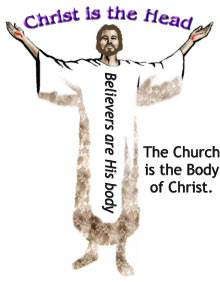
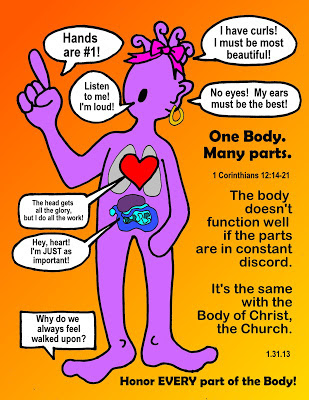
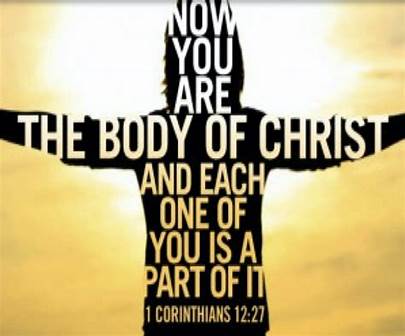
Remembering God now involves remembering Christ. When we take communion we remember what God has done for us in providing his Son as the sacrifice for our sins. We remember how we have been given the privilege of eternal life by faith in accepting Christ. We are now the family of God and the Body of Christ. Hence, we are to abide in him and his words in us. We remember that he and the Father are one, and we are to love him with all our hearts, souls, and minds (Matthew 22:37).

Moreover, upon promising the Holy Spirit’s coming, Jesus said to his disciples, ““If you love me, keep my commands” (John 14:15). “Whoever has my commands and keeps them is the one who loves me. The one who loves me will be loved by my Father, and I too will love them and show myself to them” (John 14:21).

Sadly, because of disobedience, most of those people the Lord initially intended to enter the promised land didn’t get to enter, except for Joshua and Caleb, who exercised great faith and obedience in obtaining God’s promise of the land of milk and honey.

In pondering all of these things, Lord, we remember you. Please help us to obey you.

You Are Something Else

Do you realize who you are beloved Jesus follower? You, who have repented and now live for the Lord, accepting Him as your Savior, are highly favored. You are now the light of the world and the salt of the earth.

As John 1:12 tells us, “..to all who did receive him, to those who believed in his name, he gave the right to become children of God.” You’re “no longer a slave, but God’s child…” (Galatians 4:5-7). You’ve been adopted into the family of God and may now call him Father. You are no longer the woman or man of your sinful past, but you have been adopted according to his pleasure and will (Romans 8:15; Ephesians 1:5).

2 Corinthians 5:17 says, “Anyone who belongs to Christ has become a new person.” You’ve been born again! The old is gone and now the new is here! Not only that, but you “have been crucified with Christ” (Galatians 2:20). It is no longer you who lives, but Christ who lives in you. “…We were reconciled to God through the death of His Son” (Romans 5:10). 

Heaven’s Gift – Yonsung Kim

Magnificently, you are “his workmanship, created in Christ Jesus for good works” (Ephesians 2:10). He’s prepared these things in advance for you to do. So, if you’re not quite sure what to do, don’t worry as he knows and will make sure he leads you in that direction. Your job is to follow his lead.

Your body, however it has been designed, is a temple “of the Holy Spirit who is in you, whom you’ve received from God” (1 Corinthians 6:19-20). You don’t even belong to yourself as you’ve been bought with a price–the shed blood of Jesus Christ of Nazareth. He’s committed himself to care for you as your shepherd.

The Good Shepherd – Nathan Greene

God sees you as his masterpiece, “fearfully and wonderfully made” (Psalm 139:14). He’s created you to bring about his will and glorify him. Moreover, in as much as you are his beloved child, you are an heir to his kingdom. He has forgiven you of your sins (Colossians 1:13-14; 2:13) and in him you also are being built together into a dwelling place for God by the Spirit (Ephesians 2:22).

Please keep in mind that “you are no longer a foreigner or stranger, but a fellow citizen with God’s people and also a member of his household, built on the foundation of the apostles and prophets, with Christ Jesus himself as the chief cornerstone” (Ephesians 2:19-20).

You are chosen by God and made in his image (John 15:16; Genesis 1:27). You are a redeemed overcomer of a royal priesthood and a peculiar person. You are loved with an everlasting love and with lovingkindness the Lord has drawn you (Jeremiah 31:3).

I’d say these things and more are a lot for which you can be truly grateful.