Life is good and life is wonderful, but as we’ve probably learned, a godly life does not totally exempt us from challenges or problems.
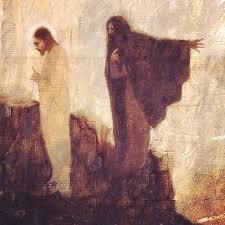
Thankfully, our difficulties help allow us to experience God as our refuge and deliverer from the temptations, trials, and troubles that seek to make us fearful and ashamed. Just as Jesus received God’s deliverance from the devil’s temptations with the speaking of our Father’s scriptures, we can also do the same. What’s good is Jesus was ministered to afterward as often we are. This confirms that God is not far from us and His power is great.
Lovingly, He has provided us with His scriptural warnings so that we are helped more than hurt when life gets tough. Proverbs 26:24-28 is a passage of warning that presents a disturbing reality of the deception of those who pretend to be our friends but are not:
“Enemies disguise themselves with their lips, but in their hearts, they harbor deceit. Though their speech is charming, do not believe them, for seven abominations fill their hearts. Their malice may be concealed by deception, but their wickedness will be exposed in the assembly. Whoever digs a pit will fall into it: if someone rolls a stone, it will roll back on them. A lying tongue hates those it hurts, and a flattering mouth works ruin.”
These words weren’t written to be scary or negative, but in love to warn God’s people of the craftiness of deception. Deception is not easily seen as it is masked. Therefore, don’t expect it to be openly recognizable. It looks and sounds wonderful and accommodating. However, we need the Lord’s discernment working in us to detect that which is not obvious and well hidden.
Deception is real and can be discerned by the Holy Spirit through our own spirits and through the study of the Bible. Yet sometimes we choose not to trust our discernment, but believe the lie for any number of reasons. May God give us the courage to use the wisdom He’s given us to adjust our lives accordingly.
The Christian life has many blessings. However, there are those things we must be warned about that can be harmful to us if disregarded. God has warned us of these issues in Scripture. So we must not forget His instructions as they serve to protect us from unnecessary trouble.
There are many warnings given to us in the Old and New Testaments of the bible. A few of them:
Forgetting God – Deuteronomy 8:10-20
Foolishness – Proverbs 6:1-19
Adultery – Proverbs 6:20-35
Adulterous Woman – Proverbs 7:1-27
Trusting in Riches – Proverbs 11:28
Hypocrisy – Matthew 6:1
Unforgiveness – Matthew 6:15
Worry – Matthew 6:25
False Prophets – Matthew 7:15
Teachings of the Pharisees and Sadducees – Matthew 16:12
Deception – Matthew 24:4
False Christs – Luke 21:8
Spiritual Drunkenness – Luke 21:34
False Doctrine – Romans 16:17
Consequences of Evil Deeds – 1 Corinthians 10:1-13
Unwise Living – Ephesians 5:15
Lukewarm Christianity – Revelation 3:15-19
Warnings help to keep us from spiritually or physically injuring ourselves. We need them to keep us on the narrow path toward heaven. Whether we get these warnings through the Bible, the Holy Spirit’s promptings, or a God-fearing friend, we should appreciate them. They are not meant to harm us though sometimes we may feel uncomfortable receiving them. Also, we show love when we care enough to caution to others.
In any event, Jesus reminds us that nothing hidden will remain secret. So we can trust the faithfulness of His Holy Spirit to “lead us into all truth.” (John 16:13)
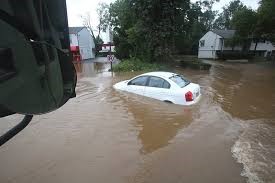
“Where can peace be found? All I want is peace!” No doubt, this is the cry of many hearts in this day and age. With all the clamor of the day’s troubles and unrest amidst mass shootings, weather disasters, food recalls, job layoffs, pestilences, scandals, etc., peace is what we all want.
Achieving a level of peace where there is no worry for what each day may bring is available to those of us willing to humble ourselves to accept the solution. He is described in the Bible as the Prince of Peace (Isaiah 9:6). His peace is not like the peace we find in this world. His is a supernatural peace that far surpasses what we can manufacture.
God’s peace is one fruit of the Holy Spirit freely given to men to enjoy. We know peace on earth to be freedom from disturbance or calmness. However, God’s supernatural peace provides this calm even in the presence of disturbance or trouble.
We who accept and love the Son of God, Jesus Christ, have peace with the Father, God. This peace was declared in Luke 2:14, “… on earth peace to those on whom his favor rests.” Then when Jesus left the earth for heaven, He stated, “Peace I leave with you, My peace I give to you; not as the world gives do I give to you. Let not your heart be troubled, neither let it be afraid” (John 14:27).
Therefore, we can put our confidence in the fact that, per Philippians 4:6-7, if we determine not to be anxious about anything, but in every situation, by prayer and petition, with thanksgiving, present our requests to God; the peace of God, which transcends all understanding, will guard our hearts and our minds in Christ Jesus.
We should ask ourselves if we truly have the peace we desire in our lives. If not, we should simply ask the Lord for it. We should study our bibles to remind ourselves of His promises regarding peace as well as be aware of those things that rob us of it. We should be watchful as our enemy loves to lie, manipulate, and cause stress at every turn of our stories’ pages.
So we must seek and allow the Lord’s authorship of our stories, freely relinquishing all to His care, trusting Him to fulfill His promise of peace to us. His ways most certainly won’t fully be our ways, as His kingdom is not of this world. However, we can even ask for help with this, that we would trust His ways for us are just and secure though we may not always understand them.
Though I am grateful for all of the ways the Lord continues to provide financial abundance to His people, I’m reminded to embrace His perspective on the value of money. Almighty God who has all power and authority understands well what’s most important as relates to resources for His children. He has promised throughout the Bible to take good care of His own and encourages us not to worry about things such as what we’ll eat or wear.
Knowing who God is as much as we are able, should help us to feel a great measure of confidence in His care for us, as His children. He knows our propensity towards greed and misunderstanding of what is most important in our lives. As such, He tells us in Matthew 6:19-24 not to store up for ourselves treasures on earth, where moths and vermin destroy, and where thieves break in and steal, but to store up for ourselves treasures in heaven, where those things can’t reach them.
He also tells us that where our treasure is, our heart will be also. So one thing we can gather from this is our focus will be on where we’ve placed our treasure. Is it on heaven or earth?
The Lord goes on in this passage to remind us of the importance of our eyes as they are the lamp to our bodies and their health will determine the health of our body. How and what are we seeing: darkness or light? Are we discerning who we are actually valuing most: money or God? I have to ask myself this question often. We’re reminded we can’t serve both (which I’ve sometimes been inclined to wonder why not?) God answers we will be devoted to one over the other. If we have two masters, one will get more attention than the other. One will be loved more than the other. Same with God and money.
I asked God what it actually means to serve money, and He immediately led me to Luke 12:21: “This is how it will be with whoever stores up things for themselves but is not rich toward God.” This was the result of the parable of the rich fool in Luke 21, who had such an abundant harvest thought, that he had no place to store his crops. So, after reaching a great increase, he’d tear down barns he had, build larger ones, then after years of great increase relax, eat, drink, and be merry–yet only to die unexpectedly.
So, it is to our advantage to remember that “A faithful man will abound with blessings, but whoever hastens to be rich will not go unpunished.” It may not be held as the most popular wisdom of today, but Jesus warned us in Luke 12:15, to “Watch out! Be on your guard against all kinds of greed; life does not consist in an abundance of possessions.”
Thankfully, God has also provided wisdom in his word about saving money and how one should give:
“Wealth gained hastily will dwindle, but whoever gathers little by little will increase it.” (Proverbs 13:11)
“Now about the collection for the Lord’s people: Do what I told the Galatian churches to do. On the first day of every week, each one of you should set aside a sum of money in keeping with your income, saving it up…” (1 Corinthians 16:1-2)
“For if the willingness is there, the gift is acceptable according to what one has, not according to what one does not have. Our desire is not that others might be relieved while you are hard pressed, but that there might be equality.” (2 Corinthians 8:12-13)
“Remember this: Whoever sows sparingly will also reap sparingly, and whoever sows generously will also reap generously. Each of you should give what you have decided in your heart to give, not reluctantly or under compulsion, for God loves a cheerful giver.” (2 Corinthians 9:6-7)
Though people within and outside the Body of Christ have debated long, with scriptures, over the paying of tithes today, we see that God has a great love for His church and we should be willing to support it.
“Bring the whole tithe into the storehouse, that there may be food in my house. Test me in this,” says the Lord Almighty, “and see if I will not throw open the floodgates of heaven and pour out so much blessing that there will not be room enough to store it.” (Malachi 3:10)
““Woe to you, teachers of the law and Pharisees, you hypocrites! You give a tenth of your spices—mint, dill and cumin. But you have neglected the more important matters of the law—justice, mercy, and faithfulness. You should have practiced the latter, without neglecting the former.”
“Jesus sat down opposite the place where the offerings were put and watched the crowd putting their money into the temple treasury. Many rich people threw in large amounts. But a poor widow came and put in two very small copper coins, worth only a few cents. Calling his disciples to him, Jesus said, “Truly I tell you, this poor widow has put more into the treasury than all the others. They all gave out of their wealth; but she, out of her poverty, put in everything—all she had to live on.”(Mark 12:41-44)
Another observation I’ve made in scripture regarding giving is God’s strong passion for poor people:
“Then Jesus said to his host, “When you give a luncheon or dinner, do not invite your friends, your brothers or sisters, your relatives, or your rich neighbors; if you do, they may invite you back and so you will be repaid. But when you give a banquet, invite the poor, the crippled, the lame, the blind, and you will be blessed. Although they cannot repay you, you will be repaid at the resurrection of the righteous.” (Luke 14:12-14)
Whoever oppresses the poor shows contempt for their Maker, but whoever is kind to the needy honors God. (Proverbs 14:31)
The generous will themselves be blessed, for they share their food with the poor. (Proverbs 22:9)
Those who give to the poor will lack nothing, but those who close their eyes to them receive many curses. (Proverbs 28:27)
In any event, God has given us many teachings on money and perhaps one of my favorite verses on it is, “Keep your lives free from the love of money and be content with what you have, because God has said, “Never will I leave you; never will I forsake you.” (Hebrews 13:5) This means we’re set and don’t really have a care in the world. The Creator of heaven and earth is with us. We simply have to believe it!
Now I must mention that in this day and age, as was in the past, there are many charlatans, false prophets, and wolves in sheep’s clothing who use methods of intimidation, manipulation, and deception to steal from God’s people. However, again, remembering who is with us, listening to the Holy Spirit’s voice, and availing ourselves of God’s wisdom and knowledge through prayer and Bible study, will keep us in the way of truth.
In this, I’m also reminded of Matthew 23:1-3: “Then Jesus said to the crowds and to his disciples: “The teachers of the law and the Pharisees sit in Moses’ seat. So you must be careful to do everything they tell you. But do not do what they do, for they do not practice what they preach.” Reading this, it may be that we have some questionable leaders sitting in Moses’ seat in our churches. However, even when giving to God via those who may be hypocrites, as we receive the authentic word of God’s Bible from them, He will reward our actions of obedience.
In our giving we can rest assured that according to 2 Corinthians 9:10-11, “…he who supplies seed to the sower and bread for food will also supply and increase your store of seed and will enlarge the harvest of your righteousness. You will be enriched in every way so that you can be generous on every occasion, and through us your generosity will result in thanksgiving to God.”
Our aim is a simple instruction in Luke 6:38: “Give and it will be given unto you pressed down shaken together and running over will men give unto your bosom.”
To all of this, my reply would be, Lord, “turn my heart toward your statutes and not toward selfish gain.” (Psalm 119:36)
When we’re watching something or someone, we’re intently looking, paying close attention to our object of focus. Jesus tells us in Luke 12:37, “It will be good for those servants whose master finds them watching when he comes.” Interestingly, He goes on to tell us, “Truly I tell you, he will dress himself to serve, will have them recline at the table, and will come and wait on them.”
Yeshuaschildart.com
A part of being ready is “watching”; the Greek word, grēgoreō or grēgorountas, which indicates staying awake; being alert, and in constant readiness; while the word luchnos is the Greek word for lamps, as in portable lamps. While watching we are waiting and make ourselves “ready” by keeping our “lamps” burning. Lamps of that day were kept burning with oil.
Oil in the Bible represents the Holy Spirit. We are to be the containers that hold the oil the Father provides. So, we should remember to stay alert and keep our lamps in good working condition. When our bridegroom comes, He will then recognize that oil within us.
A notable passage regarding lamps and oil in Matthew 25:1-13 is the parable of the ten virgins, five wise and five foolish. Upon going to meet their bridegroom, the wise virgins took their lamps as well as oil in jars for the lamps. The foolish virgins only took their lamps. They fell asleep waiting for the bridegroom as he took a long time to come. However, at midnight a voice cried out the bridegroom had arrived and to come out to meet him.
Ten Virgins by George Cocco
All the virgins awoke and trimmed their lamps while the foolish virgins asked the wise ones for some of their oil as their lamps were going out. But the wise ones declined telling them there might not be enough to do so and to go and buy some oil from those who sold it. While the foolish virgins went to buy oil, the bridegroom came and the virgins who were ready went into the wedding banquet with Him, and the door was shut.
Later, the foolish virgins came crying out for the bridegroom, “Lord, Lord, open the door for us,” but He answered, “Truly, I tell you, I don’t know you.” The parable ends with the warning to “keep watch because you do not know the day or the hour.”
Freepik.com
Jesus tells us in Luke 12:35-36, that like servants waiting for their master to return, we need to be dressed and ready so that when he comes, we can “immediately open the door for him.” But how are we to be dressed? Naturally, when we get dressed, we assess where we are going, what we’ll be doing, and what type of attire the event will require. Then, we assemble those items and clothe ourselves appropriately.
When we are dressed for the Lord’s service, we ascertain what is required for that service and clothe ourselves as such. The Bible tells us what kind of clothes the Lord desires when it says in Colossians 3:14 to put on love. Colossians 3:12 tells us to clothe ourselves with compassion, kindness, humility, gentleness, and patience. We’re also told in 1 Timothy 2:10, that as women, we are to be adorned with good deeds, appropriate for women who profess to worship God.
Most likely, we all know what it’s like to have someone visit unexpectedly. If we had no idea they were coming, there’s a good chance we may not be dressed, and if we aren’t especially neat, our living room may not be pleasantly comfortable to receive guests. So with the future event of the Lord’s return, we are blessed to be ready at all times as Jesus will come at an hour when we don’t expect him (Luke 12:40).
Aren’t you glad God created animals? I am. They are, and have been, more of a blessing than we may realize. In the Bible, we see animals created in the book of Genesis 1:20-25. Just before creating man to rule over them, God spoke the creatures of the sea into existence first, followed by the birds, and then various kinds of livestock and creatures that moved on the ground. It’s interesting God said, “Let the land produce living creatures….,” so I imagine an astonishing event of animals forming from the ground all over the earth before the eyes of the Lord. Magnificence!
Throughout the ages, animals have been a great help to us as we’ve used them for clothing, food, work, protection, and companionship. God cares about them and has assigned man to rule over them. In Genesis 1:26, “Then God said, “Let us make mankind in our image, in our likeness, so that they may rule over the fish in the sea and the birds in the sky, over the livestock and all the wild animals, and over all the creatures that move along the ground.”
However, mankind didn’t initially start out eating steak and lamb chops on the earth! Before the first couple sinned, their diet was not the meat of animals. As stated in Genesis 1:29-30: “Then God said, “I give you every seed-bearing plant on the face of the whole earth and every tree that has fruit with seed in it. They will be yours for food. And to all the beasts of the earth and all the birds in the sky and all the creatures that move along the ground—everything that has the breath of life in it—I give every green plant for food.” And it was so.”
Nevertheless, eventually, animals were used for clothing, food, and sacrifices to God. After the first man and woman sinned, they created their own plant attire to cover up before God provided His. Today, many drawings, pictures, and films depict the garments God created for them as animal skin. This could very well be the case.
Genesis 3:21 says, “The Lord God made garments of skin for Adam and his wife and clothed them.” It does not specifically say animal skin. So we may conclude it could have been either animal skin or some other kind of material or substance of God’s choosing. However, it does make great sense that perhaps the Lord performed the first sacrifice for sin by killing an animal (shedding blood) and making animal skins of clothing for the first couple.
In Genesis 4:3-4, we see Adam and Eve’s sons, Cain and Abel offering sacrifices to the Lord: “In the course of time Cain brought some of the fruits of the soil as an offering to the Lord. And Abel also brought an offering—fat portions from some of the firstborn of his flock.” Afterward, we see the practice of animal sacrifice throughout the Old Testament.
Furthermore, in Genesis 8:20-21, God allows the departure of Noah, his family, and all the animals from the ark Noah had built, at the Lord’s instructions, to remain safe from the great flood that would kill every living being outside of it. Noah then proceeds to offer sacrifices to God: “Then Noah built an altar to the Lord and, taking some of all the clean animals and clean birds, he sacrificed burnt offerings on it. The Lord smelled the pleasing aroma and said in his heart: “Never again will I curse the ground because of humans, even though every inclination of the human heart is evil from childhood. And never again will I destroy all living creatures, as I have done.”
Later, in Genesis 9:3, after Noah’s sacrifices to God, with God’s blessing on Noah and his sons, He included: “Everything that lives and moves about will be food for you. Just as I gave you the green plants, I now give you everything.” Now God was allowing more to man’s diet than plants.
In any event, the Bible states God’s animals belong to Him. “The earth is the Lord’s, and everything in it …” (Psalm 24:1) Hence, God considers the well-being of animals and expects us to take care of them. “The righteous care for the needs of their animals, but the kindest acts of the wicked are cruel.” (Proverbs 12:10)
In Jonah 4:11, we see God’s thoughts on the care of animals in one city that had some serious problems. “And should I not have concern for the great city of Nineveh, in which there are more than a hundred and twenty thousand people who cannot tell their right hand from their left—and also many animals?” He didn’t have to mention animals and would not have done so if He didn’t value them.
In conclusion, I’m wondering: Do you have a pet? If so, how has that pet added value to your life? In my eyes, these adorable, majestic, funny, brave, sometimes fearful, and wild creatures are beautiful to behold. Currently, I don’t have one, but I appreciate God’s brilliant fashioning of them.
Do you know that you are an overcomer? As one who believes and abides in Jesus Christ as the Son of God, you are! You overcome the annoying trouble and evil of these last days because of the greater one who lives inside of you. That’s something to praise the Lord about! Give glory to God, though the weapons may form, they won’t prosper against us!
The Greek definition of overcome in Strong’s Concordance is to conquer, prevail–nikao/nike– “victory”, properly, conquer; to carry off the victory, come off victorious. Merriam-Webster’s definition: to get the better of: surmount; overwhelm; to gain the superiority: win.
The Lord is faithful to give us examples of this word–overcome–in the Bible, and I’ve highlighted a few that I find especially important to remember.
In Matthew 16:18, we find God’s message to his disciple, Peter, after he declares Jesus as the Messiah, the Son of the living God: “And I tell you that you are Peter, and on this rock, I will build my church, and the gates of Hades will not overcome it.” It shows the foundation upon whom the Lord would build His church and the power of its existence; that even Hades itself would not be able to defeat it.
Another occurrence is when Jesus speaks to his disciples in preparing them for events that were to come, relating to his departure from the earth, as He was soon to return to His Father in heaven: “I have told you these things, so that in me you may have peace. In this world you will have trouble. But take heart! I have overcome the world.”(John 16:33)
Jesus wanted to encourage His beloved people with the fact that, though he would be leaving, he’d send an Advocate, the Spirit of Truth, and though they’d experience grief, it would be turned to joy. Also, they would be able to ask the Father, in Jesus’ name, for whatever they desired and they would receive it.
Though the author never revealed himself by name, it is believed that the book of 1 John was written by the apostle John who wrote in 1 John 2:13, “I am writing to you, fathers, because you know him who is from the beginning. I am writing to you, young men, because you have overcome the evil one.” John, in this event, is describing his reasons for writing them and addresses loving other believers, not loving the world, or denying Jesus, and sin.
In 1 John 4:4, the apostle referred to the spirit of the antichrist which was coming and even then was already in the world. In this passage, John taught the believers how to recognize the Spirit of God and how to recognize false prophets. “You, dear children, are from God and have overcome them, because the one who is in you is greater than the one who is in the world.”
1 John 5:4-5, shows us that “.. everyone born of God overcomes the world. This is the victory that has overcome the world, even our faith. Who is it that overcomes the world? Only the one who believes that Jesus is the Son of God.” These verses are pretty clear about who overcomes the world. So if we’ve accepted Jesus as the Son of God and have become born again, acknowledging Him as our Lord, what does that make us?
In light of what God has already done by sacrificing His Son as the atonement for our sins, and having grafted us into His wonderful family, how do we practically overcome these evil and last days upon the earth? The answer may not appear as one would immediately think, as perhaps war and revenge might surface first. However, Romans 12:21 tells us “Do not be overcome by evil, but overcome evil with good.” But how?
Romans 12: 9-20 gives us an interesting view of overcoming:
Love sincerely.
Hate what is evil; cling to what is good.
Be devoted to one another in love.
Honor one another above yourselves.
Never be lacking in zeal, but keep your spiritual fervor, serving the Lord.
Be joyful in hope, patient in affliction, faithful in prayer.
Share with the Lord’s people who are in need. Practice hospitality.
Bless those who persecute you; bless and do not curse.
Rejoice with those who rejoice; mourn with those who mourn.
Live in harmony with one another.
Do not be proud, but be willing to associate with people of low position.
Do not be conceited.
Do not repay anyone evil for evil.
Be careful to do what is right in the eyes of everyone.
If it is possible, as far as it depends on you, live at peace with everyone.
Do not take revenge, the Lord will repay.
If your enemy is hungry, feed him.
If your enemy is thirsty, give him something to drink.
I’m reminded of an event in the Old Testament that speaks of overcoming when feeling inadequate because of the perceived lack of the tools to succeed; an awesome revelation of God’s purpose, plan, and outcome to a young prophet, Jeremiah. “They will fight against you but will not overcome you, for I am with you and will rescue you,” declares the Lord.” (Jeremiah 1:19)
This was a portion of the Lord’s word to Jeremiah beginning with the Lord stating how before He had formed him in his mother’s womb, He knew him and set him apart. The Lord’s reply to Jeremiah’s concern of not knowing “how to speak” and being “too young” was that He had appointed him, told him of what was to come, to get ready, to say whatever he would give him to say, and not to be afraid. Surely, we all can note lessons from this word.
Further, we have the benefit of overcoming in Revelation 3:4-5: “… They will walk with me, dressed in white, for they are worthy. The one who is victorious will, like them, be dressed in white. I will never blot out the name of that person from the book of life[sic], but will acknowledge that name before my Father and his angels.” Then, in Revelation 3:21: “To the one who is victorious, I will give the right to sit with me on my throne, just as I was victorious and sat down with my Father on his throne.”
Moreover, Revelation 12:10 speaks of “the accuser of our brothers and sisters, who accuses them before our God day and night, and has been hurled down.” Then Revelation 12:11 says, “They triumphed over him by the blood of the Lamb and by the word of their testimony; they did not love their lives so much as to shrink from death.” Some Bible translations use the word “overcame” versus “triumphed”.
In any event, authentic believers are overcomers; which brings to mind the words of the Apostle Paul in Philippians 1:20-21: “I eagerly expect and hope that I will in no way be ashamed, but will have sufficient courage so that now as always Christ will be exalted in my body, whether by life or by death. For to me, to live is Christ and to die is gain.”
As we experience the events of our present and future times, let’s hold close to our hearts Hebrews 12:1-3, “Therefore, since we are surrounded by such a great cloud of witnesses, let us throw off everything that hinders and the sin that so easily entangles. And let us run with perseverance the race marked out for us, fixing our eyes on Jesus, the pioneer and perfecter of faith. For the joy set before him he endured the cross, scorning its shame, and sat down at the right hand of the throne of God. Consider him who endured such opposition from sinners, so that you will not grow weary and lose heart.”
Photo:Associated Press and EDDIE PELLS AP National Writer
It’s absolutely fascinating what God has provided for those who love Him. I wonder how anyone would not want a relationship with Him. Sometimes, I just want to count our blessings.
So graciously, our Father has given us:
Jesus Christ–His Son, the atoning sacrifice for our sins, who is the Lamb of God, yet King of kings and Lord of lords. He is also wonderfully known as Immanuel (God with us), Prince of Peace, Savior, Our Good Shepherd, Redeemer, the Bread of Life, and Light of the World, among other names. He’s provided forgiveness for our sins, with the ability of repentance and sanctification, along with new mercies, daily. He’s our ever-present help in times of trouble.
The Holy Spirit–the power of Himself living within us to be witnesses for Christ, and to live a holy life before the Lord. He’s our Comforter, Counselor, Advocate, and Spirit of Truth among other blessings. He’s the presence of God within us; providing His fruit of love, joy, peace, patience, kindness, goodness, faithfulness, gentleness, and self-control. Also, He’s our security in knowing He’s resident inside of us, and sees, hears, and faithfully assists us toward His will for our lives. Furthermore, He’s made available His presence for experiencing the joys of protection, prayer, counsel, companionship, and abundant compassion and mercy.
Eternal Life–now and forever, as our spirits, and later our transformed bodies, live with Him for eternity, never to experience death again.
Bible Promises–the Old and New Testament scriptural guarantees and covenants as blessings and warnings to help us live successfully for Christ.
A Heavenly Home–the loving care of living luxuriously forever in the Kingdom of Heaven, a home of unimaginable pleasure, and total freedom from all evil, sickness, and pain, with God and other families of believers from the beginning of time.
A New Heaven and New Earth–a new planet, still called Earth, and a new dwelling called Heaven, that our God will create for His and our enjoyment. And we think the old are spectacular!
TheExperience of Glorious Events–adventures of awesome glory that include the catching up of God’s people to live with Him, the return of Jesus to the earth to battle evil, and the Millennial Kingdom.
These are just a few blessings I’ve mentioned. Are there any others you can count?
Ever think about who or what we as individuals represent? Thankfully, the Bible tells us that believers are ambassadors for Christ, beloved children, a chosen race and royal priesthood, and God’s workmanship among other things. (2 Corinthians 5:20, Ephesians 5:1, 1 Peter 2:9, Ephesians 2:10).
However, sometimes, in our attempts to live as faithful Christians, we struggle with the battle between flesh and spirit, desiring to do what is good, but not carrying it out. Yet God is faithful to walk with us and counsel us as we represent Him effectively on the earth.
It’s important to note that the Bible tells us that 1 John 2 was written so that we will not sin, “but if anybody does sin, we have an advocate with the Father–Jesus Christ, the Righteous one. He is the atoning sacrifice for our sins, and not only for ours but also for the sins of the whole world.”
“We know that we have come to know him if we keep his commands. Whoever says, “I know him,” but does not do what he commands is a liar, and the truth is not in that person. But if anyone obeys his word, love for God is truly made complete in them. This is how we know we are in him: Whoever claims to live in him must live as Jesus did.“
So, as Christ’s representatives, loving is important, and understanding what it means to love is critical. The truth is seen in Christ and us: loving one another and living in the light, versus hating one another and living in darkness. Further, His Bible tells us the word of God lives in us and we have overcome the evil one! Now, our message as ambassadors or representatives of Christ is “Be reconciled to God.” (2 Corinthians 5:20/NIV).
“All this is from God, who reconciled us to himself through Christ and gave us the ministry of reconciliation: that God was reconciling the world to himself in Christ, not counting people’s sins against them. And he has committed to us the message of reconciliation.” (2 Corinthians 5:18-19/NIV)
In addition, where there’s no place like home, as representatives of Christ:
“Wives, submit to your husbands, as is fitting for those who belong to the Lord.” (Colossians 3:18/NLT)
“Husbands, love your wives and never treat them harshly.” (Colossians 3:19/NLT)
“Children, always obey your parents, for this pleases the Lord.” (Colossians 3:20/NLT)
“And whatever you do or say, do it as a representative of the Lord Jesus, giving thanks through him to God the Father.” (Colossians 3:17/NLT)
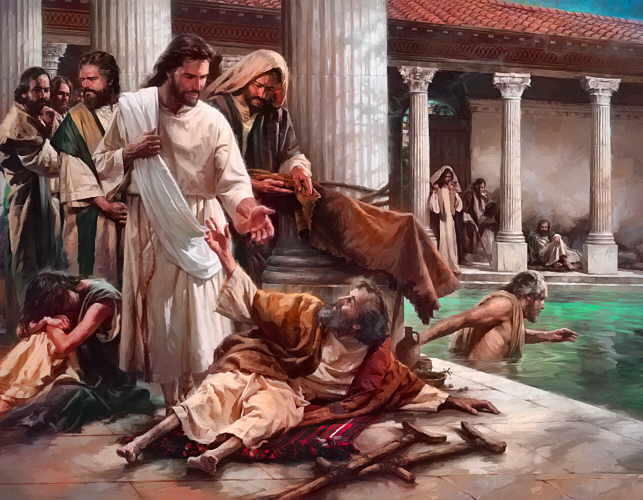
I love the fascinating story in John 5:1-13 where Jesus went to one of the Jewish festivals in Jerusalem and came upon a pool there called Bethesda. Many disabled people could be found lying there. They awaited movement in the water which took place after an angel would come down at certain times to stir it so that whoever first entered it was healed from whatever disease they had.
Can you imagine this pool where everyone, in large numbers, was blind, lame, or paralyzed? This was the pool of Bethesda.
Jesus encountered a man lying there who had been an invalid for 38 years and asked him if he wanted to get well. It’s interesting, that Jesus would ask the man that question as one would think, 1) Jesus would know if he did or not, and 2) who wouldn’t want to be healed of such a debilitating, long-term condition? Yet, of course, Jesus knew the answer, but perhaps wanted the man to express the desires of his heart verbally and be inspired with hope for change. The man explained to Jesus that he had no one to help him into the pool and that others would get in ahead of him when he was trying to get in.
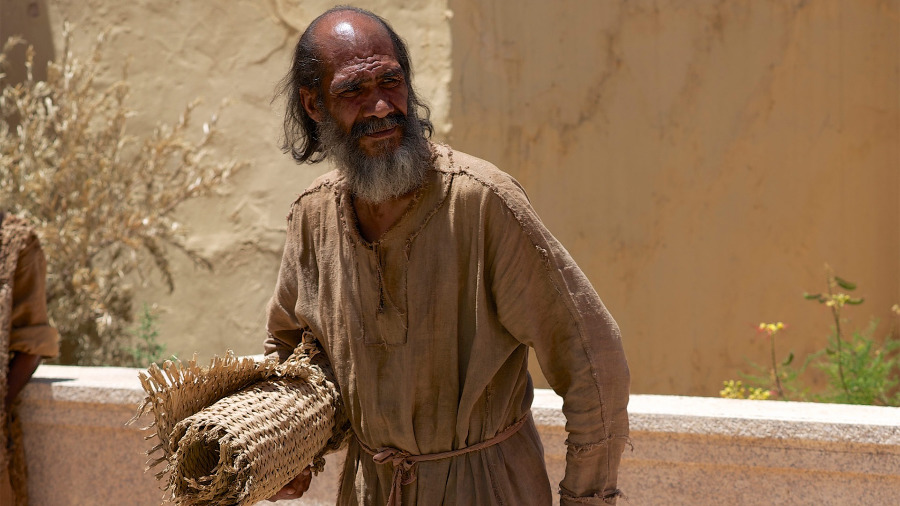
Then Jesus told him to get up, pick up his mat and walk. Now I imagine a man who had been an invalid for 38 years might be quite shocked by Jesus’ instructions, nevertheless, what would he have to lose? The Bible tells us immediately the man was cured, picked up his mat, and walked. In one sentence from Jesus, the man was suddenly healed and able to do that which he had not been able to do for 38 years. His debilitating status was immediately canceled! What an astonishing blessing!
Unfortunately, since it was a Sabbath, Jewish leaders reminded the newly healed man that the law forbade him to carry his mat on that day and asked him who told him to pick up his mat and walk. This shows just how powerful the law was in the hearts of those leaders, to even forbid the healing of someone because of a certain religious day.
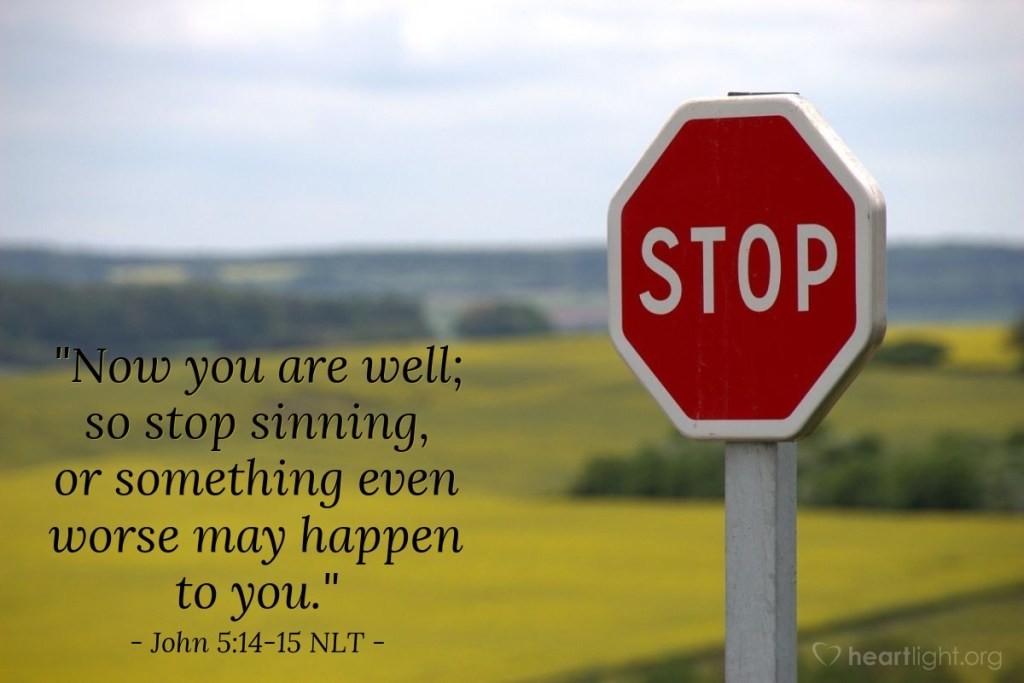
The former invalid didn’t know who healed him as Jesus had departed into the crowd, apparently before he could find out. Yet later, Jesus found him at the temple and had additional instructions for him: “See you are well again. Stop sinning or something worse may happen to you.”
This verse indicates that: 1) even though the former invalid had been incapacitated for a very long time, he wasn’t always an invalid and he had been made well again; 2) apparently, in this case, the man’s illness was caused by his sinful behavior; and 3) if he didn’t stop sinning (which indicates he could do so), something worse could have happened to him. I shudder to think of anything worse. At that point, the man went away and told the Jewish leaders it was Jesus who made him well.
The story continues later to show Jesus being persecuted by the Jewish leaders because of his activity on the Sabbath and Jesus’ response to the persecution.
We don’t have all the information on this healed man’s life before his sickness, but Jesus in this event has given us some insight into one of the things that could cause sickness in one’s body: Sin.
There are other instances of impairment mentioned in the Bible not caused by sin, one, specifically in John 9, where Jesus and his disciples encountered a blind man and his disciples asked who sinned, him or his parents, and Jesus replied, “Neither this man nor his parents sinned, “but this happened so that the works of God might be displayed in him.”
One thing we are made aware of is, per Jesus’ view, the healed invalid did not have to sin. Some hold the view that this is not possible as it very well may appear, yet Jesus clearly tells the man to stop whatever the sinful behavior was or something worse could happen to him. Would He tell anyone to do something he could not do? So, perhaps we can conclude that if Jesus tells us not to do something, it is certainly possible. Though most of us may feel like it isn’t.
The wonder of God’s power and compassion are not the only characteristics of his love I see in this story that relate to our own lives today, but also his warning. His warning is that our sin can bring about sickness, or worse, in our bodies. Sin might not always be the cause, though in this event it was.
Thankfully, we have the Bible and access to the Lord by prayer for help when we feel overwhelmed by temptation and need God’s strength and guidance to assist us in our times of need. Even Jesus was tempted and used the word of God in His resistance and was successful in not sinning, which involves behaving against God’s instructions.
We can be honest with God in prayer, as he already knows all about us. We can talk to Him about our weaknesses, temptations, or feelings, and He will still lovingly counsel us according to His scriptures. When we feel incapable of behaving as we should, we can ask for His wisdom, power, and deliverance.
We all fall short at times but have the tools to be successful. After all, in our current new covenant age, Romans 6:14 reminds us of our elevated position in Christ.
Of the many ways we may define grace, not being a slave to sin is one of them. God graciously warns us as He did the former invalid, later a newly healed man, from the pool of the disabled in Bethesda.
Embracing 1 Peter 2 of the Bible can be a tough pill to swallow, yet it is forever necessary. Perhaps the hardest action within it is submitting to every human authority, not only the good and considerate, but those who are harsh. The Bible is very clear on this instruction in 1 Peter 2:13 and 18. Moreover, this behavior is deemed in the Bible as “for the Lord’s sake” and shows a “reverential fear” of God.
This passage of 1 Peter 2, starting at verse 11, urges us to abstain from sinful desires, and to live good lives so that people will see our good works that glorify God even though we might be accused of doing wrong. We’re told that in doing good, we silence the ignorant talk of foolish people. Also, it’s comforting to know that, the Bible tells us in 1 Peter 2:16 that we are to live as free people, but not to use that freedom to cover evil. Our aim should be to live fully submitted to God.
In addition, we’re encouraged to show “proper” respect for everyone. This entails: loving our family of believers, fearing or reverencing God, and honoring the “Emperor,” or for us today, the head of government. Further, we are shown in verse 20 that it is commendable before God if we suffer for doing good and endure it. And we all know that Christ modeled suffering well for us, that we might do the same.
Moreover, “He committed no sin and no deceit was found in His mouth.” (1 Peter 2:22) We are now encouraged to even love our enemies, bless them that curse us, do good to them that hate us, and pray for them which despitefully use and persecute us (Matthew 5:43–44).
Furthermore, the Bible reminds us that when people cast insults at Jesus, he didn’t retaliate, and when he suffered, he didn’t make threats. Who doesn’t know this to be a major temptation to threaten someone who is harassing you? It does indeed take a dying to self to act as the Lord did when encountering offenders or submitting to someone in authority who may be rude and prideful. Yet it may offer some solace to know the Bible tells us in Matthew 18:15-17 how to handle an offense among spiritual family:
““If your brother sins against you, go and tell him his fault, between you and him alone. If he listens to you, you have gained your brother. But if he does not listen, take one or two others along with you, that every charge may be established by the evidence of two or three witnesses. If he refuses to listen to them, tell it to the church. And if he refuses to listen even to the church, let him be to you as a Gentile and a tax collector.”
Well, we know how Jesus treated Gentiles and tax collectors–with grace and truth–remembering when, in one passage (Luke 3:12-13), we see Jesus instructing two tax collectors who came to be baptized, not to collect more money than was required. Also, in Matthew 9:9-13, we see Jesus choose Matthew, a tax collector seated at his booth, to follow Him as one in the first group of his disciples. So we still see the Lord offering a gracious chance for a relationship.
Further, we are reminded of God’s grace toward us in Romans 11:17, “And you Gentiles, who were branches from a wild olive tree, have been grafted in. So now you also receive the blessing God has promised Abraham and his children, sharing in the rich nourishment from the root of God’s special olive tree.”
Also, Romans 13 gives us a very clear view of the authorities that God has established and how we are to relate to them. We are told that there is no authority except that which God has established and those that exist were established by Him. As a result, if we rebel against them, we rebel against what God has instituted and bring consequences on ourselves. So, when all is said and done, we are given the freedom to decide if we will include God’s Holy Spirit and His principles in our choices.
In his mercy and wisdom, God allows us the ability to make choices in employment, homes (buildings, cities, states, countries), schools, spouses, churches, purchases, etc., and with those choices, the responsibility to submit to the authorities ruling those areas, thereby choosing our officials.
When there is error or negligence in those choices we’ve made, there is God-given wisdom available through the Bible, wise counsel, and prayer on how to rectify those situations. Sometimes the remedies may include separation or staying and making adjustments. Nevertheless, our actions should be in a spirit of honor and respect for God’s word in keeping the right attitudes and representing Him well. Though imperfect, we are not without hope or help.
Hence, all of these things assist us when contemplating the obedience required in submitting to those in authority over us. Thankfully, we can look to our Lord for help in carrying out his instructions remembering “He bore our sins in His body on the cross, so that we might die to sins and live for righteousness.” (1 Peter 2:24-25) We’ve been healed by his wounds so that though we were once going astray, we’ve now returned to the Shepherd and Overseer of our souls.
Now, submission is for all of us as Ephesians 5:21 tells us, “Submit to one another out of reverence for Christ.” So, though it may be very difficult at times to follow Christ’s example of submission, we can do it. Let’s help each other through it!



















































 Ms. Rita's Minute