I believe it’s quite amazing how we’re told in the New Testament of the Bible to love our enemies and pray for those who persecute us; to bless those who curse us and to pray for those who mistreat us. (Matthew 5:44, Luke 6:28). Yet, we are given some interesting instructions relating to dealing with the trouble we may incur from our adversaries, which may be encouraging to know. These promises give us hope and confidence that our God takes good care of us during difficult relational issues.
I’m offering the following three reminders that point us toward the right thinking regarding our state of mind and behavior when encountering problems with people whose hearts are set firmly against us.
Our attitude regarding vengeance: Romans 12:19-21, “Do not take revenge, my dear friends, but leave room for God’s wrath, for it is written: “It is mine to avenge; I will repay,” says the Lord. On the contrary: “If your enemy is hungry, feed him; if he is thirsty, give him something to drink. In doing this, you will heap burning coals on his head. Do not be overcome by evil, but overcome evil with good.”
Our trust concerning defense: Psalm 44:6-7, “I put no trust in my bow, my sword does not bring me victory, but you give us victory over our enemies, you put our adversaries to shame.”
Our help in times of trouble: Psalm 41:1-3, “Blessed are those who have regard for the weak; the Lord delivers them in times of trouble. The Lord protects and preserves them–they are counted among the blessed in the land–he does not give them over to the desire of their foes. The Lord sustains them on their sickbed and restores them from their bed of illness.”
There are many additional scriptures relating to believers and God’s instructions on vengeance, defense, and trouble. It will help us to do biblical research on those three words to encourage faith in the Lord’s wisdom in dealing with our adversaries.
What does it mean to be different? What does it mean to be set apart? Being different is described as being dissimilar, distinct, unlike, or separate. As God’s holy people, His set-apart ones, we carry the spiritual presence of our Father wherever we go. Though every word and action may not have reached the full level of perfection, there is a noticeable difference between ourselves, patterning our lives based on God’s standards, versus the world’s or society’s trends and human methods or desires of thinking. As we recognize humans are flawed in many aspects, we remain as such in our thinking, without the influence of our Creator who is all-knowing, everywhere, and all-powerful.
Thankfully, God has provided statutes, commandments, declarations, and attitudes based on heavenly principles that far differ from those of this world’s system. For example, God tells us in Matthew 5: 43-45, “You have heard that it was said, ‘Love your neighbor and hate your enemy. ‘ But I tell you, love your enemies and pray for those who persecute you, that you may be children of your Father in heaven.He causes his sun to rise on the evil and the good, and sends rain on the righteous and the unrighteous.” Yet the world encourages us to hit back if we are hit. Also, God tells us in Luke 6:38 to “Give, and it will be given to you. A good measure, pressed down, shaken together, and running over, will be poured into your lap. For with the measure you use, it will be measured to you.” Nevertheless, the world elevates getting money–more and more–even if you have to step on others to do so.
If we live within a system that functions differently from God’s kingdom, we can expect to be ridiculed, mocked, misunderstood, and even slandered or bullied, much like the children who appear to be weird or odd compared to their classmates. Yet interestingly, if we find the world and those who love it, adore us, we might need to self-reflect to see if we’ve actually become just like them.
Jesus already told us in John 18:36, “My kingdom is not of this world. …” He also told us in John 15:20, ” ‘A servant is not greater than his master.’ If they persecuted me, they will persecute you also. If they obeyed my teaching, they will obey yours also.” Hence, we are faced with the choice of faith in the Way, Jesus Christ of the Bible, or human logic, philosophy, and reason. This entails God’s way of faith–believing without seeing, over human understanding–God’s Kingdom over our worldly culture.
We as believers have found in Jesus a new and better way of living differently based on life in the spirit, versus life based solely on our own wants and needs. For this, we need God’s Holy Spirit active within us, alive and active in our everyday lives, His word, the Bible, strong in our thinking and doing.
1 Corinthians 2:13-16 shows us how amazing it is to think like Christ. “This is what we speak, not in words taught us by human wisdom but in words taught by the Spirit, explaining spiritual realities with Spirit-taught words.The person without the Spirit does not accept the things that come from the Spirit of God but considers them foolishness and cannot understand them because they are discerned only through the Spirit. The person with the Spirit makes judgments about all things, but such a person is not subject to merely human judgments, for, “Who has known the mind of the Lord so as to instruct him?” But we have the mind of Christ.”
As a result, we are different in what we believe, say, and do. With gratefulness, we have the freedom or right in this country to share our beliefs and to invite whoever we may to experience our way of worship and love. We are free to share the promises, gifts, and warnings the Lord has provided us for living the godly and abundant life the Lord has given us, remembering, “The thief comes only to steal and kill and destroy; I have come that they may have life, and have it to the full.” ( John 10:10) Hence, he works with us to take part in this endeavor, by sharing with others.
So we aren’t afraid to be different or uncommon, unusual or rare. It is with us as it was with Jesus when He walked the earth. At least that is how we aim for it to be. “But whoever keeps His word, truly the love of God is perfected in him. By this we know that we are in Him. He who says he abides in Him ought himself also to walk just as He walked.” (1 John 2:5-6) “Love has been perfected among us in this: that we may have boldness in the day of judgment; because as He is, so are we in this world.” (1 John 4:17)
We recognize it is not by our own power or strength, but by God’s Spirit, that we can live life healthy and holy before Him. Moreover, God, in His Bible, makes it crystal clear, what is right and what is wrong. No method of changing or deleting it will matter. He has clearly instructed us on how to behave and how not to behave and left us with gifts to the Church to edify and instruct us on living this different life. “So Christ himself gave the apostles, the prophets, the evangelists, the pastors and teachers, to equip his people for works of service, so that the body of Christ may be built up until we all reach unity in the faith and in the knowledge of the Son of God and become mature, attaining to the whole measure of the fullness of Christ.” (Ephesians 4:11-13)
Thankfully, God sanctifies and works with us to accomplish what He’s created us to do in life. To sanctify means to consecrate, set apart, and declare holy. In this, we are made different. The world as a result will see us as different and hopefully want to join us–a very good thing!
Throughout life, many opportunities will be presented to steal the joy the Lord has provided. It may be something simple that is uniquely or commonly irritating. Or it may be a larger, jarring circumstance that may cause frustration, worry, and fear. These things seek to take the comfort, delight, and confidence we have in the Lord and replace them with doubt, anxiety, and discouragement.
I love Isaiah 41:13: “For I am the Lord your God who takes hold of your right hand and says to you, Do not fear; I will help you.” What great comfort we have in this verse, remembering according to Galatians 3:29, “If you belong to Christ, then you are Abraham’s seed, and heirs according to the promise.” So, with confidence, we can put faith in these words to apply to us as well as Israel.
Joy comes in reading what God reveals about himself and our relationship with him as his children. This is why we must make time to familiarize ourselves with the truth of the scriptures to strengthen our faith. We need to know the God whom we can rely on and what He’s promised us. Do the scriptures not tell us that He is our provider, avenger, refuge, strength, help, fortress, healer, counselor, etc.? All of these things and more should bring us great joy in facing any circumstance or just living our day-to-day lives. We should never forget that the Creator of the universe is always with us and promises to never leave nor forsake us.
Jude 1 reminds us that the Lord is able to keep us from stumbling and to present us before his glorious presence without fault and with great joy! Further, Romans 12:12 tells us to “Be joyful in hope, patient in affliction, faithful in prayer.”
It will be a great advantage for us to schedule some time each day to engage with the Lord through the reading of His word and prayer realizing that according to Acts 2:28, He has made known to us the paths of life; and will fill us with joy in His presence.
So, let us not allow anything or anyone to steal the fruit of joy God has provided us through His Holy Spirit. We are greatly blessed!
As we’re coming upon a new spring season, I’ve considered a few scriptures that I believe the Lord downloaded to me regarding living well:
Agree in Prayer with a Prayer Partner
“Again, truly I tell you that if two of you on earth agree about anything they ask for, it will be done for them by my Father in heaven.” ~Matthew 18:19/NIV
The Bible tells us that God hears the prayers of the righteous. However, the Lord himself makes known the power in a prayer of agreement in this verse. Whenever possible, take some time to pray in agreement with someone else about your desires or concerns, remembering Ecclesiastes 4:9, “Two are better than one…”.
Steer Clear of Covetousness
It is better to be of a lowly spirit with the poor than to divide the spoil with the proud. ~Proverbs 16:19/ESV
It’s quite evident throughout scripture that God is generous and often blesses his people with abundance. However, when faced with the option of wealth with arrogance versus having little with contrite contentment, go with the latter.
Guard Your Journey
The highway of the upright avoids evil; those who guard their ways preserve their lives.~Proverbs 16:17/NIV
In the Bible, the Lord has shown us the path we should follow. We should be alert to the directions He gives us for our individual lives and see them as important guideposts toward fulfilling our destiny for Him. The protection or security of our lives is influenced by how we safeguard our ways. It is healthy to assess from time to time where we are in our walk with Christ and make adjustments according to the wisdom and knowledge we’re given by his word and Holy Spirit.
Avoid Evil Influences and Behavior
Follow God’s example, therefore, as dearly loved children and walk in the way of love, just as Christ loved us and gave himself up for us as a fragrant offering and sacrifice to God.
But among you there must not be even a hint of sexual immorality, or of any kind of impurity, or of greed, because these are improper for God’s holy people. Nor should there be obscenity, foolish talk or coarse joking, which are out of place, but rather thanksgiving. For of this you can be sure: No immoral, impure or greedy person—such a person is an idolater—has any inheritance in the kingdom of Christ and of God.Let no one deceive you with empty words, for because of such things God’s wrath comes on those who are disobedient.Therefore do not be partners with them. ~Ephesians 5:1-7/NIV
This passage is pretty explicit about the type of behavior we should shun–works that aren’t congruent with a Christ follower. Walking in love is God’s way. Moreover, in Romans 13:10 we see that “Lovedoesnoharm to a neighbor. Therefore love is the fulfillment of the law.”
Embrace the Grace God Has Given Us to Live a Holy Life
So you also should consider yourselves to be dead to the power of sin and alive to God through Christ Jesus.
Do not let sin control the way you live; do not give in to sinful desires. Do not let any part of your body become an instrument of evil to serve sin. Instead, give yourselves completely to God, for you were dead, but now you have new life. So use your whole body as an instrument to do what is right for the glory of God. Sin is no longer your master, for you no longer live under the requirements of the law. Instead, you live under the freedom of God’s grace.~Romans 6:11-14/NLT
It is an awesome privilege that God has given us to be able to live free from the control of sin in our lives. Though it may at times seem like an impossible task, scripture speaks differently. We have power over our actions, and the option to choose good over evil. We are no longer considered slaves to sin but are free to live the godly life that God expects from us. It’s called grace. He’s given it to us to live for His glory. We are now loose, able, and at liberty to exercise God’s righteousness in our behavior, versus letting sin control how we live.
Resist the Urge to Shrink Back
…“But my righteousone will live by faith. And I take no pleasure in the one who shrinks back.” But we do not belong to those who shrink back and are destroyed, but to those who have faith and are saved. ~Hebrews 10:38-39/NIV
As believers we live by faith which means we are confident of those things we hope for, those things we are unable to tangibly see. We trust God’s work and word in our lives and we don’t recoil or retract from what we know to be truth. Apparently, to do so could bring about tragic consequences. So we remain vigilant in our faith as it is crucial.
Unity is a beautiful thing. However, sometimes separating isn’t so bad. Sometimes it’s necessary. I’m referencing 2 Corinthians 6:14-18/NIV where the Apostle Paul is preaching regarding God’s will on separation. He first tells us not to be yoked together with unbelievers. The Greek word for yoked is Zugas which means to be burdened or in bondage. When you yoke yourself with someone or a thing, you are attaching, connecting, or closely linking with them.
Image: anna/Flickr
Unbelievers are those who have no relationship with Christ and don’t believe as God determines belief. They haven’t repented, submitted their lives to the Lord, nor been baptized. Also, they are often those who have professed faith in Christ by words only while living totally contrary to its definition.
Paul characterized this wrongly yoked relationship with the following contrasts:
Righteousness vs Wickedness
Light vs Darkness
Christ vs Belial
Believer vs Unbeliever
Temple of God vs Idols
Image: aboodi vesakaran/Pexels
Paul reminds us that we are the temple of God. So, as believers, we can now trust what God has said that He will live with us, walk among us, and be our God and we His people. But the Lord tells us to come out and be separate, not to touch any unclean thing and He’ll receive us. Therefore, we can expect God to be a Father to us and we’ll be His sons and daughters.
Further, in 2 Corinthians 7/NIV, Paul tells us to purify ourselves from everything that contaminates body and spirit, “perfecting holiness out of reverence for God.” Hence, since we love and respect our Father, we honor Him by living holy and separate from the sinful life that grieves Him.
Image: Hagerty Ryan, USFWS/Pixnio
This doesn’t mean we don’t pray for and show love toward those who don’t believe, but we aren’t to yoke ourselves to them. This can be seen in the Bible’s commands that believers only marry believers. There should only be bonding and connection in this manner to believers. He gives us these commands for a reason. They aren’t to be a means of haughtiness or conceit, but of protection as the bible clearly tells us “A little yeast works through the whole batch of dough.” (Galatians 5:9/NIV)
video: BYJUSClass910/Youtube
There’s no mistaking the awesome privilege of God’s grace and mercy toward us in that while we were yet sinners Christ died for us. However, there is clearly still work to be done where we recognize what contaminates, defiles, or corrupts our bodies and spirits and cleanse ourselves of those things as shown in 2 Corinthians 7/NIV. We should not be mistaken on this, as some might have us to be, because God expects this of us. If He didn’t, He would not have expressed it in His word.
Revelation 18:4/NIV tells us, “Then I heard another voice from heaven say: “‘Come out of her, my people,’ so that you will not share in her sins so that you will not receive any of her plagues; … .” This is another instance of God requiring separation.
Image: Chris Clark/Pexels
We are wise to assess ourselves and where we are in Christ, as we’re reminded in Revelation 22:12/NIV, ““Look, I am coming soon! My reward is with me, and I will give to each person according to what they have done…, ” and Revelation 22:14-15/NIV, “Blessed are those who wash their robes, that they may have the right to the tree of life and may go through the gates into the city. Outside are the dogs, those who practice magic arts, the sexually immoral, the murderers, the idolaters, and everyone who loves and practices falsehood.” We want to live eternally with Christ and don’t want the consequences of being disobedient to His commands.
Moreover, we should not be surprised about the popularity of ungodly living. God has warned us ahead of time, that according to Matthew 7:13-14, we are to “Enter through the narrow gate. For wide is the gate and broad is the road that leads to destruction, and many enter through it. But small is the gate and narrow the road that leads to life, and only a few find it.”
Image: Adam/Flickr
In any event, we all have been given the right to choose whose way we will follow: our own, another wayward man’s, or God’s. Nevertheless, a sobering thought is Revelation 22:11, “Let the one who does wrong continue to do wrong; let the vile person continue to be vile; let the one who does right continue to do right; and let the holy person continue to be holy.”
While remaining alert to how we yoke ourselves in relationships, whether marriage, career, dating, business, etc., may we choose to remember these words of our Lord, ” I am coming soon. Hold on to what you have so that no one will take your crown.” (Revelation 3:11/NIV)
Ever felt like you just want to be pleasing to God? Yet just how do we please God? 1 Thessalonians 4 tells how to live to please God. In it, we learn that it is God’s will that we are sanctified. The Greek translation for sanctify is hagiazo, which means to set apart for God’s purpose; make holy or consecrate–sanctification being the separation from that which is evil for dedication to God.
In God’s will for us to be sanctified, it is first indicated in 1 Thessalonians 4 that we avoid sexual immorality. Sexual immorality can be defined as any sexual behavior apart from God’s standards provided in the Bible. We are told to control our own bodies, by living holy and honorable. We aren’t to behave in passionate lust like we don’t even know God. We aren’t to take advantage of a brother or sister and we should understand that the Lord will punish those who do these things. We should recognize that God didn’t call us to be impure but to live holy, and if we reject this teaching, we don’t reject men, but God.
In addition, we are told to love one another as we have been taught by God. Moreover, if we are already doing it, we should do it more and more.
In today’s society where we are encouraged to grind and strive to work ambitiously toward monetary success, here we are taught our ambition should be to lead a quiet life with the following qualities:
— Minding our own business (focusing on what God is requiring of us, specifically in our own individual lives). — Working with our hands (performing assignments we’ve been given, whether preaching, parenting, building, selling, teaching, nursing, managing, etc.); winning the respect of outsiders (esteemed because of the way we exemplify godly living); and ensuring that we aren’t dependent upon anybody.
In conclusion, I’m reminded of another scripture that relates largely to pleasing God: Hebrews 11:6, “And without faith, it is impossible to please God, because anyone who comes to him must believe that he exists and that he rewards those who earnestly seek him.” Faith, love, trust, belief, confidence–all these things exercised toward God make Him happy.
The Bible also references these actions in pleasing God:
— When we offer our bodies as living sacrifices, holy and pleasing to God—this is our true and proper worship (Romans 12:1). — When we serve Christ in a spirit of righteousness, peace, and joy in the Holy Spirit, because anyone who serves Christ in this way is pleasing to God and receives human approval (Romans 14:17-18). — When we speak as those approved by God to be entrusted with the gospel, not seeking to please people, but God, who tests our hearts (1 Thessalonians 2:4). — When we honor our parents, and take care of our widowed parents and grandparents (1 Timothy 5:4, Deuteronomy 5:16).
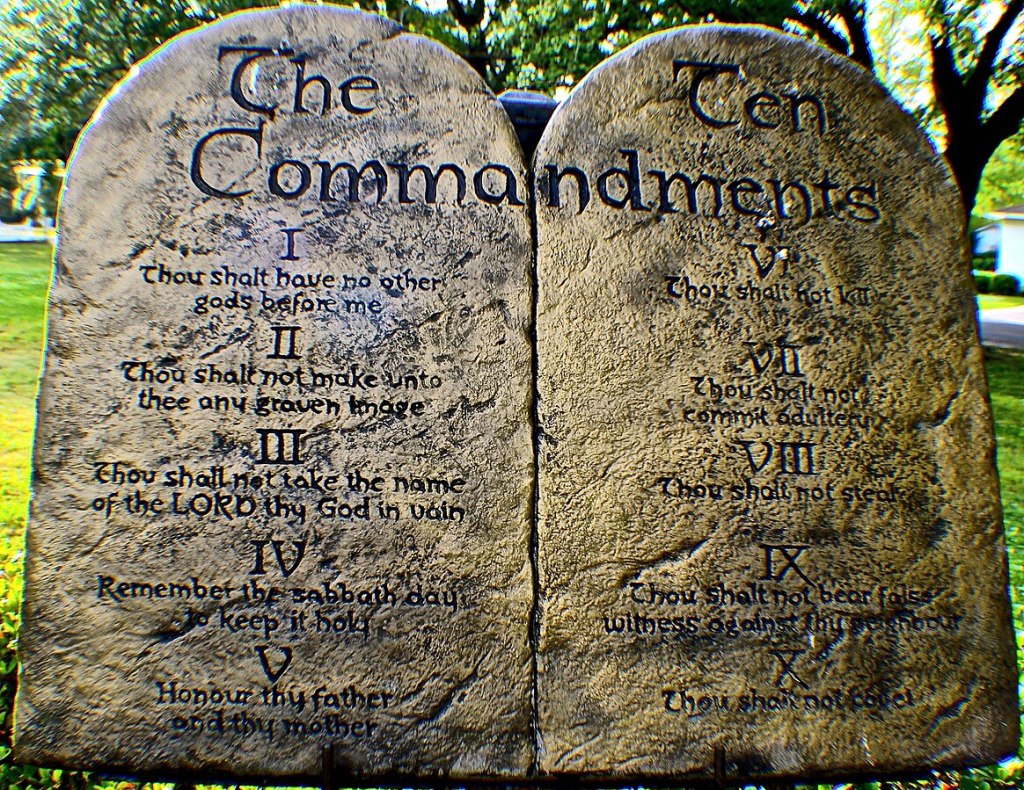
Recently, I read an interesting account in the Bible (1 Samuel 5-6) about the theft of the ark of God (a wooden chest coated in pure gold that contained the tablets of the 10 Commandments given to Moses by God) taken into a place of idolatry. The placement of the ark, representing God’s presence, in this evil place, brought about a curse of tumors and death.
The Philistines who were enemies of Israel stole the ark and carried it to Ashdod, into the temple of their god, Dagon, and and set it beside him. When they got up the next day, Dagon had fallen on his face, so they stood him back up again. The next morning they found him fallen over on the ground with his head and hands broken off in the doorway and his torso remaining. Then, the people of Ashdod were afflicted with tumors.
(Image credit: Universal History Archive / Contributor via Getty Images)
Needless to say, the people of Ashdod wanted nothing more to do with the ark and moved it to a city called Gath. However, after they moved it there, the Bible says God afflicted the people of that city, “both young and old” with an outbreak of tumors. So they moved the ark to another city, Ekron, but as it was arriving, the people of Ekron cried out in fear that the ark was brought to kill them. Apparently, death had filled that city and those who didn’t die were afflicted with tumors and there was a great cry toward heaven.
The Philistines later called for the priests and diviners to inquire what to do with the ark and they were instructed to return it with a gift, a guilt offering (with special instructions on how this would be done), as this would bring healing. As they moved on, sadly, on the ark’s trip back to the Israelites, God struck down some of the inhabitants of another city, Beth Shemesh, killing 70 of them because they looked inside the ark.
The people marveled asking, “Who can stand in the presence of the Lord, this holy God? To whom will the ark go up from here?” Messengers were sent to notify the men of a town, Kiriath Jearim, that the Philistines were returning the ark and they brought it to the house of a man named Abinadab. Afterward, the ark remained there for a long time, twenty years.
The ark of the covenant represented the presence of God for His people, the Israelites. But I pondered how it might relate to us, all of God’s people, today. Currently, believers in Christ are indwelt by the Holy Spirit, and in 1 Corinthians 6:19-20, the Bible tells us we are temples of the Holy Spirit who is in us whom we’ve received from God. We are not our own, but bought with a price and as such, we should honor God with our bodies.
Hence, our bodies are a place of holiness, set apart for God’s presence. Isn’t this an awesome thought that this could occur? I had to repent in my heart of any way I might have dishonored or disrespected this holy presence I carry by behaving in some way inappropriate for a child of God.
God is merciful and forgiving toward his children, yet to continually grieve God’s Spirit brings about consequences that would not be advantageous to us. Because we love God, we choose not to involve ourselves in idolatry or other acts of evil that might cause grievance to His Spirit within us.
We can clearly see from this, and other scriptural examples, how God feels about idolatry or the worship of other gods. So, even with Jesus’ atonement made for our sins, He can become saddened by our behavior. However, the good news is that when we confess our sins, God is faithful and just to forgive us and cleanse us (1 John 1:9). We are privileged to carry the person and companionship of the One who created heaven and earth. This is mindboggling and thrilling to me.
Many of us have heard and thought about God, but feel at a loss in seeking or getting to know Him. We’re accustomed to our ways of interacting with other human beings, but the thought of truly knowing a supreme being may appear to be out of our reach. We may even have a desire to worship such a person but don’t feel we have the tools to be successful in doing so. Yet we can be comforted in knowing that Jesus, “…the Son of Man came to seek and save those who are lost” (Luke 19:10/NLT). Jesus tells us in Matthew 7:8/NLT, “For everyone who asks, receives. Everyone who seeks, finds. And to everyone who knocks, the door will be opened.” We can be confident that when we seek God with all of our hearts, we will find Him. (Deuteronomy 4:29, Jeremiah 29:13).
The three ways I have sought and found God are through:
PRAYER
Prayer is simply communicating with God. We position ourselves to receive from Him when we, first, establish a relationship with Him by which we:
Acknowledge, Repent, and Submit to God. Our prayer should be one of acknowledgment, repentance, and submission, accepting His Son, Jesus, as the Savior by which we are reconciled to God. We understand the first man and woman (Adam and Eve) had made us guilty of sin, and worthy of death, after which our Heavenly Father provided atonement for our dire consequences. Repentance is our willingness to turn from our old ways of doing and being to God’s ways. By submitting, we yield ourselves to His authority and participate in baptism, where we express identification with the Lord’s death and resurrection, carried out via the Lord’s gifts discussed later.
As we communicate with God we also offer Him:
Thanksgiving and Praise. Gratitude, adoration, and worship for all that He is and does for us.
Supplications. Making our requests known to Him.
We can communicate with God at any time because the bible tells us He is omnipresent, capable of being everywhere at the same time. “Can anyone hide from me in a secret place? Am I not everywhere in all the heavens and earth? says the Lord” (Jeremiah 23:24/NLT). However, it would be a good habit of discipline to schedule a time daily to meet with God consistently during periods when there are fewer distractions. We choose a time when we feel most alert and at ease to spend time with God, whether for 15 minutes or an hour or more.
THE BIBLE
In seeking God, the Bible is to be respected as the necessary guide for living a Christ-like life by the power of the Holy Spirit. It contains the history and future of God’s relationship with mankind and contains His attributes, character, and will for our lives. I’d say the Bible is the chief way of seeking Him; getting to know Him, and what He expects of us. Reading or studying alone, and/or with others, is crucial to strengthening our faith and growth. “So faith comes from hearing, that is, hearing the Good News about Christ” (Romans 10:17/NLT). Further, we know that seeking the Lord through His word is pleasing to Him. “And it is impossible to please God without faith. Anyone who wants to come to him must believe that God exists and that he rewards those who sincerely seek him.” (Hebrews 11:6/NLT).
THE BODY OF CHRIST
Jesus Christ is the Head of the Church, the Body of Christ. “God has put all things under the authority of Christ and has made him head over all things for the benefit of the church. And the church is his body; it is made full and complete by Christ, who fills all things everywhere with himself” (Ephesians 1:22-23).
As the Body of Christ, we have been given gifts. The bible names, these gifts in Ephesians 4:11/NLT: “Now these are the gifts Christ gave to the church: the apostles, the prophets, the evangelists, and the pastors and teachers.” After seeking God for His will for our lives in the place He chooses, and availing ourselves of these gifts (of which we may eventually become ourselves) we mature, growing in our faith into those who resemble our Lord in word and deed. “For God knew his people in advance, and he chose them to become like his Son, so that his Son would be the firstborn among many brothers and sisters” (Romans 8:29/NLT).
Perhaps the most precious gift working with us today is the gift of the Holy Spirit, who has been described as our Counselor, Comforter, and Advocate, and endues us with power for godly living and ministry. “But when the Father sends the Advocate as my representative—that is, the Holy Spirit—he will teach you everything and will remind you of everything I have told you” (John 14:26/NLT). “But you will receive power when the Holy Spirit comes upon you. And you will be my witnesses, telling people about me everywhere—in Jerusalem, throughout Judea, in Samaria, and to the ends of the earth” (Acts 1:8/NLT).
We have so many resources available to us as we seek God. He has given us various additional gifts to help us to be successful in glorifying God in our families, careers, local church ministries, and simply, everyday life. I’m remembering 1 Corinthians 12:8-10, and the nine gifts of the Spirit: the word of wisdom, word of knowledge, faith, healing, miracles, prophecy, discerning of spirits, speaking in tongues, and the interpretation of tongues. Not to mention the fruit of the spirit in Galatians 5:22: love, joy, peace, patience, kindness, goodness, faithfulness, gentleness, and self-control.
All of this and more involves seeking God, and as we do, we get to know Him, grow, and function in His grace as His very own children, dearly loved.
There’s a phrase that we’ve all heard and may have even said at some point in our lives: “Don’t judge me.” It suggests we should not form a conclusion about a person with condemnation. Perhaps it’s even more than just examining the fruit of a person’s life, but passing a judgment where we don’t have the information about the person that God would have. Or the event we may not have the authority to judge.
Practically, every day in various ways we navigate through life with decision-making. We make determinations about what actions to take next on matters as well as who we seek for guidance, support, or friendship. But how might this relate to communicating with or evaluating another person? Or should we even assess people? Might we just pray about them and see if the Lord approves?
The Greek word for “judge” in the Bible is krino, which means to pronounce an opinion concerning right and wrong. Other definitions include to condemn, sentence, or levy a punishment. The scriptures are pretty clear in their references to judging. First, we’re told: “Judge not, that you be not judged. For with what judgment you judge, you will be judged; and with the measure you use, it will be measured back to you. And why do you look at the speck in your brother’s eye, but do not consider the plank in your own eye? Or how can you say to your brother, ‘Let me remove the speck from your eye’; and look, a plank is in your own eye? Hypocrite! First, remove the plank from your own eye, and then you will see clearly to remove the speck from your brother’s eye” (Matthew 7:1-5/NKJV).
Hence, though we are told not to judge, it appears in Matthew 7:5 that we are allowed to move forward to help our brother when we’re able to see clearly to remove a speck from his eye when we’ve removed the plank from our own. In doing this we are taught in Galatians 6:1/NIV “… if someone is caught in a sin, you who live by the Spirit should restore that person gently. But watch yourselves, or you also may be tempted.” So, we are shown in what Spirit we are to restore a person.
We are careful when we remember John 5: 22-23, “Moreover, the Father judges no one, but has entrusted all judgment to the Son, that all may honor the Son just as they honor the Father. …” In addition, James 4:12/NIV, “There is only one Lawgiver and Judge, the one who is able to save and destroy. But you—who are you to judge your neighbor?”
At the same time, Matthew 18:15-17/NIV tells us how to deal with sin in the church: “If your brother or sister sins, go and point out their fault, just between the two of you. If they listen to you, you have won them over. But if they will not listen, take one or two others along, so that ‘every matter may be established by the testimony of two or three witnesses.’ If they still refuse to listen, tell it to the church; and if they refuse to listen even to the church, treat them as you would a pagan or a tax collector.”
Further, we’re reminded in 1 Corinthians 6:1-5/NLT, “When one of you has a dispute with another believer, how dare you file a lawsuit and ask a secular court to decide the matter instead of taking it to other believers! Don’t you realize that someday we believers will judge the world? And since you are going to judge the world, can’t you decide even these little things among yourselves? Don’t you realize that we will judge angels? So you should surely be able to resolve ordinary disputes in this life. If you have legal disputes about such matters, why go to outside judges who are not respected by the church? I am saying this to shame you. Isn’t there anyone in all the church who is wise enough to decide these issues? “
Another reference to judging is found in John 7:24/NKJV where Jesus says, “Do not judge according to appearance, but judge with righteous judgment,” another definition of “judgment” that would be valid. The Lord does not want us to be like the Pharisees whom he considered hypocritical in that they condemned others for the same sins they were committing.
Therefore, I’ve concluded we must look at all of the Bible’s references to judging to be able to accurately understand when and how to judge. We must remember the authority of the Bible in that, “All Scripture is God-breathed and is useful for teaching, rebuking, correcting and training in righteousness, so that the servant of God may be thoroughly equipped for every good work” (2 Timothy 3:16-17/NIV). We know there are certainly times when encountering a problem and teaching the scripture as the solution is necessary.
There is much to be learned in the Bible about how we are to treat one another, all provided by the Scriptures, along with the Holy Spirit available to help us succeed. This is why we need to read the Bible daily and walk by the Spirit so that we can be obedient to God’s commands regarding judgment. Through consistent time spent with the Lord in prayer and study of the scriptures for knowledge and understanding, we prepare ourselves for the challenges we are certain to face in relationships.










































 Ms. Rita's Minute