Throughout life, many opportunities will be presented to steal the joy the Lord has provided. It may be something simple that is uniquely or commonly irritating. Or it may be a larger, jarring circumstance that may cause frustration, worry, and fear. These things seek to take the comfort, delight, and confidence we have in the Lord and replace them with doubt, anxiety, and discouragement.
I love Isaiah 41:13: “For I am the Lord your God who takes hold of your right hand and says to you, Do not fear; I will help you.” What great comfort we have in this verse, remembering according to Galatians 3:29, “If you belong to Christ, then you are Abraham’s seed, and heirs according to the promise.” So, with confidence, we can put faith in these words to apply to us as well as Israel.
Joy comes in reading what God reveals about himself and our relationship with him as his children. This is why we must make time to familiarize ourselves with the truth of the scriptures to strengthen our faith. We need to know the God whom we can rely on and what He’s promised us. Do the scriptures not tell us that He is our provider, avenger, refuge, strength, help, fortress, healer, counselor, etc.? All of these things and more should bring us great joy in facing any circumstance or just living our day-to-day lives. We should never forget that the Creator of the universe is always with us and promises to never leave nor forsake us.
Jude 1 reminds us that the Lord is able to keep us from stumbling and to present us before his glorious presence without fault and with great joy! Further, Romans 12:12 tells us to “Be joyful in hope, patient in affliction, faithful in prayer.”
It will be a great advantage for us to schedule some time each day to engage with the Lord through the reading of His word and prayer realizing that according to Acts 2:28, He has made known to us the paths of life; and will fill us with joy in His presence.
So, let us not allow anything or anyone to steal the fruit of joy God has provided us through His Holy Spirit. We are greatly blessed!
As we’re coming upon a new spring season, I’ve considered a few scriptures that I believe the Lord downloaded to me regarding living well:
Agree in Prayer with a Prayer Partner
“Again, truly I tell you that if two of you on earth agree about anything they ask for, it will be done for them by my Father in heaven.” ~Matthew 18:19/NIV
The Bible tells us that God hears the prayers of the righteous. However, the Lord himself makes known the power in a prayer of agreement in this verse. Whenever possible, take some time to pray in agreement with someone else about your desires or concerns, remembering Ecclesiastes 4:9, “Two are better than one…”.
Steer Clear of Covetousness
It is better to be of a lowly spirit with the poor than to divide the spoil with the proud. ~Proverbs 16:19/ESV
It’s quite evident throughout scripture that God is generous and often blesses his people with abundance. However, when faced with the option of wealth with arrogance versus having little with contrite contentment, go with the latter.
Guard Your Journey
The highway of the upright avoids evil; those who guard their ways preserve their lives.~Proverbs 16:17/NIV
In the Bible, the Lord has shown us the path we should follow. We should be alert to the directions He gives us for our individual lives and see them as important guideposts toward fulfilling our destiny for Him. The protection or security of our lives is influenced by how we safeguard our ways. It is healthy to assess from time to time where we are in our walk with Christ and make adjustments according to the wisdom and knowledge we’re given by his word and Holy Spirit.
Avoid Evil Influences and Behavior
Follow God’s example, therefore, as dearly loved children and walk in the way of love, just as Christ loved us and gave himself up for us as a fragrant offering and sacrifice to God.
But among you there must not be even a hint of sexual immorality, or of any kind of impurity, or of greed, because these are improper for God’s holy people. Nor should there be obscenity, foolish talk or coarse joking, which are out of place, but rather thanksgiving. For of this you can be sure: No immoral, impure or greedy person—such a person is an idolater—has any inheritance in the kingdom of Christ and of God.Let no one deceive you with empty words, for because of such things God’s wrath comes on those who are disobedient.Therefore do not be partners with them. ~Ephesians 5:1-7/NIV
This passage is pretty explicit about the type of behavior we should shun–works that aren’t congruent with a Christ follower. Walking in love is God’s way. Moreover, in Romans 13:10 we see that “Lovedoesnoharm to a neighbor. Therefore love is the fulfillment of the law.”
Embrace the Grace God Has Given Us to Live a Holy Life
So you also should consider yourselves to be dead to the power of sin and alive to God through Christ Jesus.
Do not let sin control the way you live; do not give in to sinful desires. Do not let any part of your body become an instrument of evil to serve sin. Instead, give yourselves completely to God, for you were dead, but now you have new life. So use your whole body as an instrument to do what is right for the glory of God. Sin is no longer your master, for you no longer live under the requirements of the law. Instead, you live under the freedom of God’s grace.~Romans 6:11-14/NLT
It is an awesome privilege that God has given us to be able to live free from the control of sin in our lives. Though it may at times seem like an impossible task, scripture speaks differently. We have power over our actions, and the option to choose good over evil. We are no longer considered slaves to sin but are free to live the godly life that God expects from us. It’s called grace. He’s given it to us to live for His glory. We are now loose, able, and at liberty to exercise God’s righteousness in our behavior, versus letting sin control how we live.
Resist the Urge to Shrink Back
…“But my righteousone will live by faith. And I take no pleasure in the one who shrinks back.” But we do not belong to those who shrink back and are destroyed, but to those who have faith and are saved. ~Hebrews 10:38-39/NIV
As believers we live by faith which means we are confident of those things we hope for, those things we are unable to tangibly see. We trust God’s work and word in our lives and we don’t recoil or retract from what we know to be truth. Apparently, to do so could bring about tragic consequences. So we remain vigilant in our faith as it is crucial.
Think of the greatest king who ever lived. I’d say he is Jesus who still lives–King of all kings. However, I imagine the mightiest earthly king, apart from Jesus, having the largest army with well-stocked weapons to be used as necessary. In addition, I envision a palace full of all kinds of wealth and decor that would make one gasp for breath at its luxury.
(Image: Wikipedia – King Cyrus)
I imagine he’d have thousands of subjects and horses so tall, confident, and gorgeous to behold. In addition, I visualize he’d have the very best of tailored attire and jewelry made of the finest metals and stones I’ve never personally seen. Yet Jesus remains greater than any earthly king. He is the chief of royalty, King Yeshua!
(Image: Sergeant Rupert Frere, Royal Logistic Corps, 2016)
Moreover, when I think of the reality of Jesus and his authority as King of all Kings, my heart faints with repentance as I know I have not truly honored him as the awesome true king that He is with the reverence He deserves. Jesus is not just a friend, buddy, acquaintance, homey, or man upstairs. He has been given all power and authority and has a name above all names–Jesus!
Understanding who the King of Kings, the Son of God, is and His connection to the Father who created all things, with the Holy Spirit of greatest power, makes me shudder at the thought of His greatness. Can we even truly comprehend it?
In His dwelling place are riches beyond our imagination. Surely this current earth pales in comparison. Imagine the greatest beauty He’s already created on Earth and throughout the universe. Yet He will create new heavens and a new earth and the old will pass away. Isaiah 65:17 says, “See, I will create new heavens and a new earth. The former things will not be remembered, nor will they come to mind.” Further, scripture shows us in Revelation 21:1 where the Apostle John said, “Then I saw “a new heaven and a new earth,” for the first heaven and the first earth had passed away, and there was no longer any sea.”
(Image: NASA via PICKYL)
Thankfully, His kingdom is now at hand and we also pray, as Jesus instructed, that His kingdom come and will be done on earth, just like it is in heaven. Do we really know what that means? To see the earth manifest Jesus’ kingdom in this way would be amazing, to say the least. The greatest blessing we could receive would be His kingdom on this earth, everyone doing and being as He desires. as he rules and reigns supreme as Lord.
A really neat thing is that we, the body of Christ, His family, as those who truly love him are heirs to his kingdom. Romans 8:17 tells us that “if we are children, then we are heirs–heirs of God and co-heirs with Christ if indeed we share in His sufferings so that we may also share in His glory. But just how did he suffer? Being lied to, rejected, mocked, betrayed, tempted, not believed, defamed, beaten, made to carry a heavy cross, and dying on that cross.
(Image: Guard the Doors/DeviantArt)
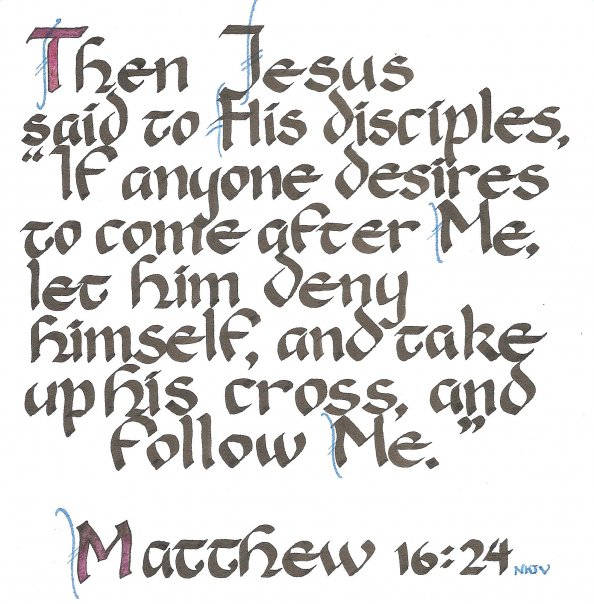
Our suffering may not be to the extent of some of these things, yet we must all take up our own crosses and follow Jesus. It certainly does not mean we will be accepted and praised by society for doing so. Yet He promises never to leave nor forsake us and we’re encouraged that greater is He that is in us than He who is in the world.
Unity is a beautiful thing. However, sometimes separating isn’t so bad. Sometimes it’s necessary. I’m referencing 2 Corinthians 6:14-18/NIV where the Apostle Paul is preaching regarding God’s will on separation. He first tells us not to be yoked together with unbelievers. The Greek word for yoked is Zugas which means to be burdened or in bondage. When you yoke yourself with someone or a thing, you are attaching, connecting, or closely linking with them.
Image: anna/Flickr
Unbelievers are those who have no relationship with Christ and don’t believe as God determines belief. They haven’t repented, submitted their lives to the Lord, nor been baptized. Also, they are often those who have professed faith in Christ by words only while living totally contrary to its definition.
Paul characterized this wrongly yoked relationship with the following contrasts:
Righteousness vs Wickedness
Light vs Darkness
Christ vs Belial
Believer vs Unbeliever
Temple of God vs Idols
Image: aboodi vesakaran/Pexels
Paul reminds us that we are the temple of God. So, as believers, we can now trust what God has said that He will live with us, walk among us, and be our God and we His people. But the Lord tells us to come out and be separate, not to touch any unclean thing and He’ll receive us. Therefore, we can expect God to be a Father to us and we’ll be His sons and daughters.
Further, in 2 Corinthians 7/NIV, Paul tells us to purify ourselves from everything that contaminates body and spirit, “perfecting holiness out of reverence for God.” Hence, since we love and respect our Father, we honor Him by living holy and separate from the sinful life that grieves Him.
Image: Hagerty Ryan, USFWS/Pixnio
This doesn’t mean we don’t pray for and show love toward those who don’t believe, but we aren’t to yoke ourselves to them. This can be seen in the Bible’s commands that believers only marry believers. There should only be bonding and connection in this manner to believers. He gives us these commands for a reason. They aren’t to be a means of haughtiness or conceit, but of protection as the bible clearly tells us “A little yeast works through the whole batch of dough.” (Galatians 5:9/NIV)
video: BYJUSClass910/Youtube
There’s no mistaking the awesome privilege of God’s grace and mercy toward us in that while we were yet sinners Christ died for us. However, there is clearly still work to be done where we recognize what contaminates, defiles, or corrupts our bodies and spirits and cleanse ourselves of those things as shown in 2 Corinthians 7/NIV. We should not be mistaken on this, as some might have us to be, because God expects this of us. If He didn’t, He would not have expressed it in His word.
Revelation 18:4/NIV tells us, “Then I heard another voice from heaven say: “‘Come out of her, my people,’ so that you will not share in her sins so that you will not receive any of her plagues; … .” This is another instance of God requiring separation.
Image: Chris Clark/Pexels
We are wise to assess ourselves and where we are in Christ, as we’re reminded in Revelation 22:12/NIV, ““Look, I am coming soon! My reward is with me, and I will give to each person according to what they have done…, ” and Revelation 22:14-15/NIV, “Blessed are those who wash their robes, that they may have the right to the tree of life and may go through the gates into the city. Outside are the dogs, those who practice magic arts, the sexually immoral, the murderers, the idolaters, and everyone who loves and practices falsehood.” We want to live eternally with Christ and don’t want the consequences of being disobedient to His commands.
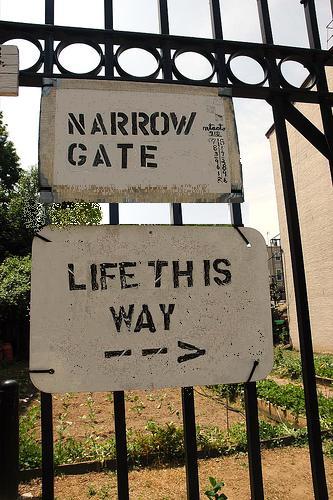
Moreover, we should not be surprised about the popularity of ungodly living. God has warned us ahead of time, that according to Matthew 7:13-14, we are to “Enter through the narrow gate. For wide is the gate and broad is the road that leads to destruction, and many enter through it. But small is the gate and narrow the road that leads to life, and only a few find it.”
Image: Adam/Flickr
In any event, we all have been given the right to choose whose way we will follow: our own, another wayward man’s, or God’s. Nevertheless, a sobering thought is Revelation 22:11, “Let the one who does wrong continue to do wrong; let the vile person continue to be vile; let the one who does right continue to do right; and let the holy person continue to be holy.”
While remaining alert to how we yoke ourselves in relationships, whether marriage, career, dating, business, etc., may we choose to remember these words of our Lord, ” I am coming soon. Hold on to what you have so that no one will take your crown.” (Revelation 3:11/NIV)
Ever felt like you just want to be pleasing to God? Yet just how do we please God? 1 Thessalonians 4 tells how to live to please God. In it, we learn that it is God’s will that we are sanctified. The Greek translation for sanctify is hagiazo, which means to set apart for God’s purpose; make holy or consecrate–sanctification being the separation from that which is evil for dedication to God.
In God’s will for us to be sanctified, it is first indicated in 1 Thessalonians 4 that we avoid sexual immorality. Sexual immorality can be defined as any sexual behavior apart from God’s standards provided in the Bible. We are told to control our own bodies, by living holy and honorable. We aren’t to behave in passionate lust like we don’t even know God. We aren’t to take advantage of a brother or sister and we should understand that the Lord will punish those who do these things. We should recognize that God didn’t call us to be impure but to live holy, and if we reject this teaching, we don’t reject men, but God.
In addition, we are told to love one another as we have been taught by God. Moreover, if we are already doing it, we should do it more and more.
In today’s society where we are encouraged to grind and strive to work ambitiously toward monetary success, here we are taught our ambition should be to lead a quiet life with the following qualities:
— Minding our own business (focusing on what God is requiring of us, specifically in our own individual lives). — Working with our hands (performing assignments we’ve been given, whether preaching, parenting, building, selling, teaching, nursing, managing, etc.); winning the respect of outsiders (esteemed because of the way we exemplify godly living); and ensuring that we aren’t dependent upon anybody.
In conclusion, I’m reminded of another scripture that relates largely to pleasing God: Hebrews 11:6, “And without faith, it is impossible to please God, because anyone who comes to him must believe that he exists and that he rewards those who earnestly seek him.” Faith, love, trust, belief, confidence–all these things exercised toward God make Him happy.
The Bible also references these actions in pleasing God:
— When we offer our bodies as living sacrifices, holy and pleasing to God—this is our true and proper worship (Romans 12:1). — When we serve Christ in a spirit of righteousness, peace, and joy in the Holy Spirit, because anyone who serves Christ in this way is pleasing to God and receives human approval (Romans 14:17-18). — When we speak as those approved by God to be entrusted with the gospel, not seeking to please people, but God, who tests our hearts (1 Thessalonians 2:4). — When we honor our parents, and take care of our widowed parents and grandparents (1 Timothy 5:4, Deuteronomy 5:16).
Freedom. Nothing seems to ring more blessed to one’s ears than this word. It is described by Oxford Languages as “the power or right to act, speak, or think as one wants without hindrance or restraint.” The Bible’s Hebrew word for it is “cherut”, and its Greek word, “eleutheria”. Both denote liberty, “a state of freedom, especially as opposed to political subjection, imprisonment, or slavery” (britannica.com). It is also a state where God has given us the ability to choose right or wrong in our daily decisions.
What makes you feel free? Is it the ability to say whatever you want, whenever you want? The ability to sleep in on a weekday without disturbance? The ability to go on a shopping spree anytime you want? Or, perhaps the ability to take a weekend trip away at any hour you choose?
Those of us who have chosen to believe in the Lord Jesus Christ and to give our hearts and lives to Him, understand that “it is for freedom that Christ has set us free…” and that we should stand firm, not letting ourselves be “burdened again by a yoke of slavery.” (Galatians 5:1)
To do this, we must have knowledge of those things that bind or constrict us; those things that cause us to feel imprisoned, and how to rid ourselves of them. If the Bible tells us that God’s people perish for lack of knowledge, we can expect that we are also hindered by it.
Helpful to the maintenance of our freedom is renewing our mind (Romans 12:2) with the study of His word, the Bible, so as not to be “conformed to this world, but transformed”, so by testing we may discern the will of God. Hence, Psalm 119:45, “I will walk about in freedom, for I have sought out your precepts.”
Let’s remember to walk in the freedom Christ has given us. He came to set the captives free from the state of bondage in which we once found ourselves.
——————————————–
More scriptures to remember on freedom:
Isaiah 61:1 (The Year of the Lord’s Favor) The Spirit of the Sovereign Lord is on me because the Lord has anointed me to proclaim good news to the poor. He has sent me to bind up the brokenhearted, to proclaim freedom for the captives and release from darkness for the prisoners,
Luke 4:18 “The Spirit of the Lord is on me, because he has anointed me to proclaim good news to the poor. He has sent me to proclaim freedom for the prisoners and recovery of sight for the blind, to set the oppressed free,
Romans 8:21 that the creation itself will be liberated from its bondage to decay and brought into the freedom and glory of the children of God.
2 Corinthians 3:17 Now the Lord is the Spirit, and where the Spirit of the Lord is, there is freedom.
Galatians 2:4 This matter arose because some false believers had infiltrated our ranks to spy on the freedom we have in Christ Jesus and to make us slaves.
Ephesians 3:12 In Him and through faith in him we may approach God with freedom and confidence.
James 1:25 But whoever looks intently into the perfect law that gives freedom, and continues in it—not forgetting what they have heard, but doing it—they will be blessed in what they do.
1 Peter 2:16 Live as free people, but do not use your freedom as a cover-up for evil; live as God’s slaves.
James 2:12 Speak and act as those who are going to be judged by the law that gives freedom.
“..When your judgments come upon the earth, the people of the world learn righteousness. But when grace is shown to the wicked, they do not learn righteousness; even in a land of uprightness they go on doing evil and do not regard the majesty of the Lord.” (~Isaiah 26:9-10/NIV)
Upon reading these verses, I felt a little sad. Sad, because I realize that even in my own life, there have been times when I received a measure of God’s uncomfortable discipline, rather than His pleasant grace. I understood the truth of the matter; that sometimes we as human beings can be stubborn, prideful, and self-absorbed, wanting our own way in all things. However, God always has a plan to lead us along the correct paths as we submit to His direction and discipline. His ways are always better than our own, and we simply don’t always live our lives honoring them.
Oxford defines discipline as “the practice of training people to obey rules or a code of behavior, using punishment to correct disobedience,” while it defines judgment as “a misfortune or calamity viewed as a divine punishment.”
For the believer, I equated this topic to the correction of a toddler or puppy. Sometimes, a favorite treat or toy won’t bring about the good behavior we want in a situation, though occasionally it may. Learning the right conduct often may require some measure of discipline instead. Of course, it doesn’t mean we don’t love our toddlers or puppies, but we want them to avoid trouble and have the best existence possible. So, we teach them with all the healthy and effective methods of wisdom, knowledge, and correction we can provide.
Hebrews 12:11 teaches us that “No discipline seems pleasant at the time, but painful.” Yet we can find comfort in the fact that “Later on, however, it produces a harvest of righteousness and peace for those who have been trained by it.”
For those who may not yet have accepted Christ, they lack the Holy Spirit’s power to be successful in living for the Lord as He wills. Thus, consistently being open to spiritual attacks on their lives and painful judgment. However, we who choose to believe can rest assured that when we sin, “If we confess our sins, he is faithful and just and will forgive us our sins and purify us from all unrighteousness” (1 John 1:9/NIV).
It’s interesting how with all the wisdom the Bible provides regarding trusting the Lord for protection, it instructs us in the practical ways to live safely.
There’s a passage in Proverbs 2 that teaches us that wise choices will watch over us and understanding will keep us safe. This means we should seriously consider and pray about our options regarding any decisions we make in life. What might be the outcome and what are the related costs? Having a good understanding of all of the elements involved and their effect on our lives, along with seeking God’s will in each case, will provide protection from unnecessary, future distress.
This passage also teaches us that wisdom will save us from people who don’t mean us well and who use words that are unhealthy or distorted. Further, it indicates that these people turned from a right path onto a wrong one which leads to darkness and corruption. These are people who enjoy doing wrong and the perverted ways of wickedness. These are people who only bring problems to your life and should be avoided.
In this new year, we should make it our aim to gain wisdom and understanding for making godly choices in all areas of our lives. The Bible has more than enough information to help us gain all the wisdom and understanding we need. We just need to apply ourselves by taking some time during the day to read and pray. This needn’t be a lengthy amount of time, but just a consistency of time, so that we are successful in acclimating ourselves to God’s character and principles.
In this age of information technology, there are so many convenient resources available to us. Not to mention the traditional ways of learning via counsel from people personally, or through books or other forms of media.
Doesn’t it feel good to know you can be safe, avoiding unnecessary trouble and deception through wise decision-making? I’m so glad God has given us His very own word for assistance.
————————————————-
Wise choices will watch over you. Understanding will keep you safe. Wisdom will save you from evil people, from those whose words are twisted. These men turn from the right way to walk down dark paths. They take pleasure in doing wrong, and they enjoy the twisted ways of evil. ~Proverbs 2:11-14/NLT
There’s a phrase that we’ve all heard and may have even said at some point in our lives: “Don’t judge me.” It suggests we should not form a conclusion about a person with condemnation. Perhaps it’s even more than just examining the fruit of a person’s life, but passing a judgment where we don’t have the information about the person that God would have. Or the event we may not have the authority to judge.
Practically, every day in various ways we navigate through life with decision-making. We make determinations about what actions to take next on matters as well as who we seek for guidance, support, or friendship. But how might this relate to communicating with or evaluating another person? Or should we even assess people? Might we just pray about them and see if the Lord approves?
The Greek word for “judge” in the Bible is krino, which means to pronounce an opinion concerning right and wrong. Other definitions include to condemn, sentence, or levy a punishment. The scriptures are pretty clear in their references to judging. First, we’re told: “Judge not, that you be not judged. For with what judgment you judge, you will be judged; and with the measure you use, it will be measured back to you. And why do you look at the speck in your brother’s eye, but do not consider the plank in your own eye? Or how can you say to your brother, ‘Let me remove the speck from your eye’; and look, a plank is in your own eye? Hypocrite! First, remove the plank from your own eye, and then you will see clearly to remove the speck from your brother’s eye” (Matthew 7:1-5/NKJV).
Hence, though we are told not to judge, it appears in Matthew 7:5 that we are allowed to move forward to help our brother when we’re able to see clearly to remove a speck from his eye when we’ve removed the plank from our own. In doing this we are taught in Galatians 6:1/NIV “… if someone is caught in a sin, you who live by the Spirit should restore that person gently. But watch yourselves, or you also may be tempted.” So, we are shown in what Spirit we are to restore a person.
We are careful when we remember John 5: 22-23, “Moreover, the Father judges no one, but has entrusted all judgment to the Son, that all may honor the Son just as they honor the Father. …” In addition, James 4:12/NIV, “There is only one Lawgiver and Judge, the one who is able to save and destroy. But you—who are you to judge your neighbor?”
At the same time, Matthew 18:15-17/NIV tells us how to deal with sin in the church: “If your brother or sister sins, go and point out their fault, just between the two of you. If they listen to you, you have won them over. But if they will not listen, take one or two others along, so that ‘every matter may be established by the testimony of two or three witnesses.’ If they still refuse to listen, tell it to the church; and if they refuse to listen even to the church, treat them as you would a pagan or a tax collector.”
Further, we’re reminded in 1 Corinthians 6:1-5/NLT, “When one of you has a dispute with another believer, how dare you file a lawsuit and ask a secular court to decide the matter instead of taking it to other believers! Don’t you realize that someday we believers will judge the world? And since you are going to judge the world, can’t you decide even these little things among yourselves? Don’t you realize that we will judge angels? So you should surely be able to resolve ordinary disputes in this life. If you have legal disputes about such matters, why go to outside judges who are not respected by the church? I am saying this to shame you. Isn’t there anyone in all the church who is wise enough to decide these issues? “
Another reference to judging is found in John 7:24/NKJV where Jesus says, “Do not judge according to appearance, but judge with righteous judgment,” another definition of “judgment” that would be valid. The Lord does not want us to be like the Pharisees whom he considered hypocritical in that they condemned others for the same sins they were committing.
Therefore, I’ve concluded we must look at all of the Bible’s references to judging to be able to accurately understand when and how to judge. We must remember the authority of the Bible in that, “All Scripture is God-breathed and is useful for teaching, rebuking, correcting and training in righteousness, so that the servant of God may be thoroughly equipped for every good work” (2 Timothy 3:16-17/NIV). We know there are certainly times when encountering a problem and teaching the scripture as the solution is necessary.
There is much to be learned in the Bible about how we are to treat one another, all provided by the Scriptures, along with the Holy Spirit available to help us succeed. This is why we need to read the Bible daily and walk by the Spirit so that we can be obedient to God’s commands regarding judgment. Through consistent time spent with the Lord in prayer and study of the scriptures for knowledge and understanding, we prepare ourselves for the challenges we are certain to face in relationships.
Thinking about your most recent conversations, would you say that they involved talking about other people and their lives? Or, do you find yourself desiring to read information about other people and what is happening to date? Do you believe the people you receive from are reliable sources of truth and is the information edifying or inspirational to your life?
In this day and age of social media and other forms of communication, there are so many opinions, and more comments than ever on other people’s lives, many times with truth being embellished or exaggerated. A safeguard is needed to discourage gossip and avoid furthering possible erroneous information about others.
What exactly is gossip? Oxford Learner’s Dictionary describes it as, 1) informal talk or stories about other people’s private lives, that may be unkind or not true; 2) a conversation about other people and their private lives; and 3) a person who enjoys talking about other people’s private lives. Sadly, these definitions would most likely apply to all of us at one time or another.

The Bible teaches that, “A gossip betrays a confidence, but a trustworthy person keeps a secret” (Proverbs 11:13). Further, “A perverse person stirs up conflict, and a gossip separates close friends” (Proverbs 16:28). It reminds us that, “Those who consider themselves religious and yet do not keep a tight rein on their tongues deceive themselves, and their religion is worthless” (James 1:26). It also condemns gossip as being inappropriate for Christians and a consequence of a depraved mind (Romans 1:29; 2 Corinthians 12:20).
If there’s one thing we hopefully know, is that sometimes, people will lie about others for any number of reasons, which might often include sensationalism, especially for media purposes.
It’s important to realize it’s best not to repeat anything about someone else that doesn’t come straight from that person’s mouth for public knowledge. Moreover, it makes good sense not to believe everything one hears about a person as factual, without personal knowledge of the information as being true.
Two scriptures, one in the Old Testament and the other in the New Testament, teach us about the importance of witnesses in a matter:
2 Corinthians 13:1 … “By the mouth of two or three witnesses, every word shall be established.”
Deuteronomy 9:15 “One witness shall not rise against a man concerning any iniquity or any sin that he commits; by the mouth of two or three witnesses the matter shall be established.”
It may take some time to break oneself from a habit of gossiping, but it is possible as we remind ourselves of what God thinks of the matter and pray for His grace to help us to place a “tight rein on our tongues.” Or, perhaps I should add keyboards.