
How to Pray

Matthew 6:9-13

 “This, then, is how you should pray: “‘Our Father in heaven, hallowed be your name, your kingdom come, your will be done, on earth as it is in heaven. Give us today our daily bread. And forgive us our debts, as we also have forgiven our debtors. And lead us not into temptation, but deliver us from the evil one.”

Jesus is so generous. He even shared with his disciples how to communicate with Almighty God, his Father, and now ours. He didn’t have to, but He did. So, if we ever wonder how we should pray, I believe this would be our first example among the other references to prayer in the Bible:

+ “This, then, is how you should pray:

There are various references to prayer in the Bible; all of them valid. They speak of people praying corporately in one location together, as well as praying alone in one’s room. They tell us we don’t need to go on and on babbling or in vain repetitions thinking we’ll be heard for our many words. Nor should we pray just to be seen by others. However, in these verses, Jesus tells his disciples more specifically how to pray.
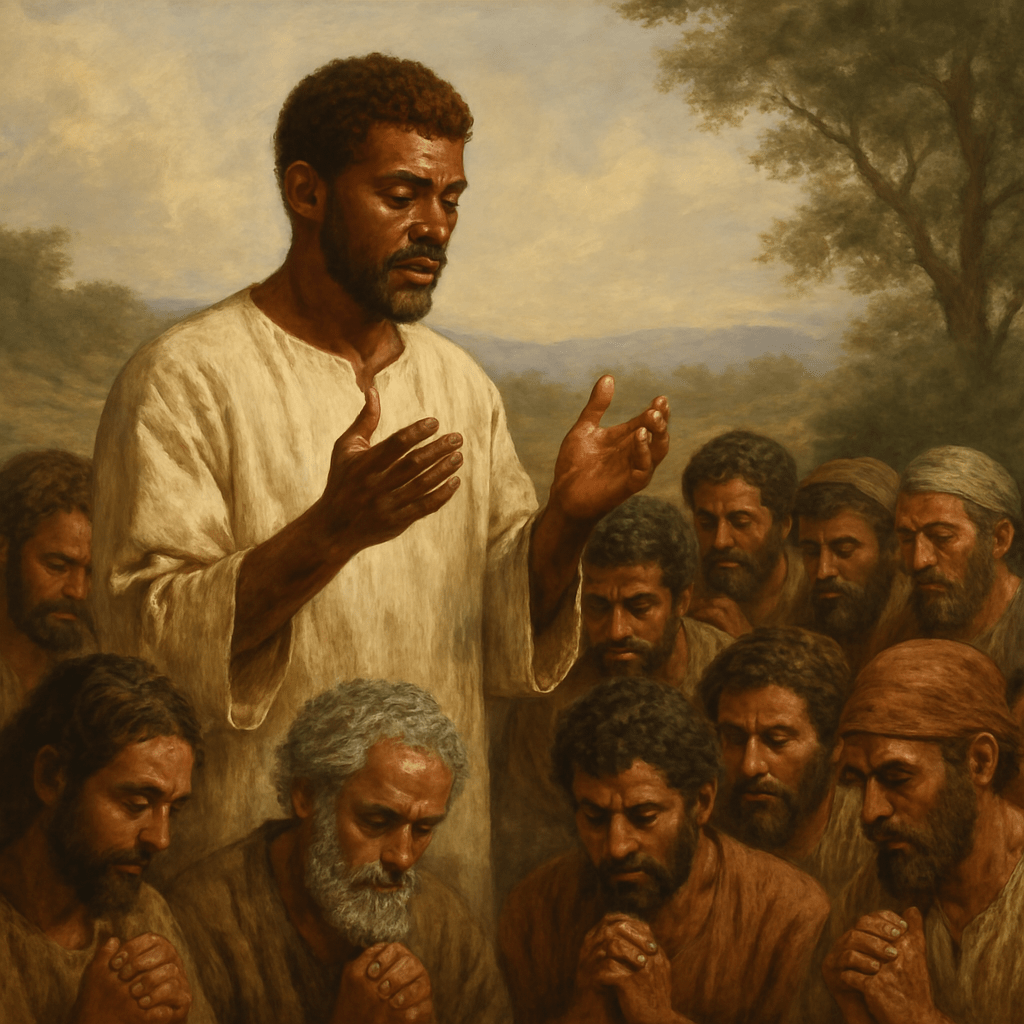
In examining this simple, yet brilliant prayer, let’s briefly look at its parts:

+ “‘Our Father in heaven, hallowed be your name,

Jesus doesn’t start the prayer with “Father” or “My Father”, but with “Our Father.” This denotes that we share kinship and the status of family with our Lord and his Father. In addition, we acknowledge his name in Greek as sanctified and holy; or in Oxford’s definition of revered and honored.

+ your kingdom come, your will be done, on earth as it is in heaven.
Though there are many kingdoms on the earth, we ask that the Father’s kingdom come to this earth. We request his rulership, which encompasses his government, to come. Further, we ask that his desires and ways of doing and being would be done here on earth as it is in heaven.

Thankfully, he’s revealed a large part of his will for us in the Bible. He’s also given us his grace to carry it out. But there’s a greater measure of the Father’s presence and will to be seen, which is an awesome state of living to anticipate for the future.

+ Give us today our daily bread.
“Bread” here in Greek literally means bread or loaf. So we can interpret this to refer to our daily nourishment or sustenance; provision for our physical needs. We see “bread” referenced in other important ways in the New Testament such as Christ’s body, a central element of Christian communion, and remembrance of his sacrifice. Or, Jesus identifying himself as the “Bread of Life,” offering spiritual nourishment and eternal life to those who believe in him. 

+ And forgive us our debts, as we also have forgiven our debtors.

Here we are asking that the Father forgive us our debts as we have also forgiven others of theirs. Interestingly, “debts” in Greek here is defined as that which is owed or obligations, whether financially or morally. Yet in other translations, “debts” are translated as “trespasses” or “sins” to convey the same idea of wrongdoing or failure to meet our obligations. This is a crucial part of the prayer as we see in other places in the Bible, God’s command to forgive others so that our heavenly Father would forgive us (e.g., Matthew 6:14-15).

+ And lead us not into temptation, but deliver us from the evil one.

Moreover, temptation in Greek here translates as putting to proof, by experiment (of good), experience (of evil), solicitation, discipline, or provocation; by implication, adversity. Hence, we ask that the Father would not lead us into trials or experiments in the context of trials that come for testing and strengthening as well as temptations that come from evil. However, we are to ask for deliverance or to be rescued or saved from the evil one; the person of Satan or evil in general terms, that can include everything evil (thoughts, deeds, demons, etc.).

We’ve been given an awesome privilege to have access to the creator of heaven and earth through prayer. To have his dear Son share with us his method in this manner is priceless. There’s so much we could ask of the Lord, but let’s pray His will be done here today in our lives, where we live, just as it is in heaven.

On Earth As It Is In Heaven

On this National Day of Prayer, I’m reminded of an event in the Bible in Luke 11:1-4/KJV where the Lord responded to his disciples when they asked him to teach them to pray as John had taught his disciples. The Lord gave them a simple prayer that encompasses everything we need today. He started by telling them that when they prayed they were to say:

Our Father which art in heaven,
We can now pray to the Father in the place He resides, which the Bible tells us is Heaven, though Jesus also lives in us.
“Who is like unto the Lord our God, who dwelleth on high…” (Psalm 113:5/KJV) Examine yourselves, whether ye be in the faith; prove your own selves. Know ye not your own selves, how that Jesus Christ is in you, except ye be reprobates? (2 Corinthians 13:5)

Hallowed be thy name.
The Lord’s name is holy, consecrated; set apart
“Neither shall ye profane my holy name; but I will be hallowed among the children of Israel: I am the Lord which hallow you,” (Leviticus 22:32/KJV)

Thy kingdom come.
The Lord introduces His kingdom to his disciples as well as the blessings that come with it.
“And heal the sick that are therein, and say unto them, The kingdom of God is come nigh unto you.” (Luke 10:9/KJV)

Thy will be done, as in heaven, so in earth.
The Lord desires His will to be done where we live as where He lives. This can happen by renewing our minds via the Bible, thereby forgoing the ways of the world, which results in change.
“And be not conformed to this world: but be ye transformed by the renewing of your mind, that ye may prove what is that good, and acceptable, and perfect, will of God.” (Romans 12:2/KJV)

Give us day by day our daily bread.
As our heavenly Father, God can be trusted to supply all of our needs. He created the earth and everything in it. He is omnipotent; all-powerful. This is easy for Him.
But my God shall supply all your need according to his riches in glory by Christ Jesus. (Philippians 4:19/KJV)

And forgive us our sins; for we also forgive everyone that is indebted to us.

God is merciful and gracious to forgive our sins, but He does require that we forgive others when we’ve been offended.
“For if ye forgive men their trespasses, your heavenly Father will also forgive you:
But if ye forgive not men their trespasses, neither will your Father forgive your trespasses.” (Matthew 6:14-15/KJV)

And lead us not into temptation; but deliver us from evil.
We can rely on God to order our steps and deliver us from every form of evil.
“And the Lord shall deliver me from every evil work and will preserve me unto his heavenly kingdom: to whom be glory forever and ever. Amen.” (2 Timothy 4:18/KJV)
“For it is God which worketh in you both to will and to do of his good pleasure.” (Philippians 2:13/KJV)

Many other factual words of encouragement can be given to uphold these verses in the Lord’s teaching on prayer. However, I’ve only provided a few in my minutes of sharing with you. Nevertheless, I’d like us to remember the following words when our needs or the needs of others come to mind:

“And this is the confidence that we have in him, that, if we ask anything according to his will, he heareth us: And if we know that he hear us, whatsoever we ask, we know that we have the petitions that we desired of him.” (1 John 5:14-15/KJV)
“And I say unto you, Ask, and it shall be given you; seek, and ye shall find; knock, and it shall be opened unto you.” (Luke 11:9/KJV)
“Therefore I say unto you, What things soever ye desire, when ye pray, believe that ye receive them, and ye shall have them.” (Mark 11:24/KJV)
“If ye then, being evil, know how to give good gifts unto your children, how much more shall your Father which is in heaven give good things to them that ask him?” (Matthew 7:11/KJV)

How to Seek God

Many of us have heard and thought about God, but feel at a loss in seeking or getting to know Him.  We’re accustomed to our ways of interacting with other human beings, but the thought of truly knowing a supreme being may appear to be out of our reach. We may even have a desire to worship such a person but don’t feel we have the tools to be successful in doing so.  Yet we can be comforted in knowing that Jesus, “…the Son of Man came to seek and save those who are lost” (Luke 19:10/NLT). Jesus tells us in Matthew 7:8/NLT, “For everyone who asks, receives. Everyone who seeks, finds. And to everyone who knocks, the door will be opened.”  We can be confident that when we seek God with all of our hearts, we will find Him. (Deuteronomy 4:29, Jeremiah 29:13). 

The three ways I have sought and found God are through:

PRAYER

Prayer is simply communicating with God. We position ourselves to receive from Him when we, first, establish a relationship with Him by which we:

  • Acknowledge, Repent, and Submit to God.  Our prayer should be one of acknowledgment, repentance, and submission, accepting His Son, Jesus, as the Savior by which we are reconciled to God. We understand the first man and woman (Adam and Eve) had made us guilty of sin, and worthy of death, after which our Heavenly Father provided atonement for our dire consequences. Repentance is our willingness to turn from our old ways of doing and being to God’s ways.  By submitting,  we yield ourselves to His authority and participate in baptism, where we express identification with the Lord’s death and resurrection, carried out via the Lord’s gifts discussed later.

As we communicate with God we also offer Him:

  • Thanksgiving and Praise. Gratitude, adoration, and worship for all that He is and does for us.
  • Supplications.  Making our requests known to Him.

We can communicate with God at any time because the bible tells us He is omnipresent, capable of being everywhere at the same time. “Can anyone hide from me in a secret place? Am I not everywhere in all the heavens and earth? says the Lord” (Jeremiah 23:24/NLT).  However, it would be a good habit of discipline to schedule a time daily to meet with God consistently during periods when there are fewer distractions. We choose a time when we feel most alert and at ease to spend time with God, whether for 15 minutes or an hour or more.  

THE BIBLE

In seeking God, the Bible is to be respected as the necessary guide for living a Christ-like life by the power of the Holy Spirit.  It contains the history and future of God’s relationship with mankind and contains His attributes, character, and will for our lives.  I’d say the Bible is the chief way of seeking Him; getting to know Him, and what He expects of us.  Reading or studying alone, and/or with others, is crucial to strengthening our faith and growth. “So faith comes from hearing, that is, hearing the Good News about Christ” (Romans 10:17/NLT).  Further, we know that seeking the Lord through His word is pleasing to Him. “And it is impossible to please God without faith. Anyone who wants to come to him must believe that God exists and that he rewards those who sincerely seek him.” (Hebrews 11:6/NLT).

THE BODY OF CHRIST

Jesus Christ is the Head of the Church, the Body of Christ.  “God has put all things under the authority of Christ and has made him head over all things for the benefit of the church. And the church is his body; it is made full and complete by Christ, who fills all things everywhere with himself” (Ephesians 1:22-23). 

As the Body of Christ, we have been given gifts.  The bible names, these gifts in Ephesians 4:11/NLT:  “Now these are the gifts Christ gave to the church: the apostles, the prophets, the evangelists, and the pastors and teachers.”  After seeking God for His will for our lives in the place He chooses, and availing ourselves of these gifts (of which we may eventually become ourselves) we mature, growing in our faith into those who resemble our Lord in word and deed. “For God knew his people in advance, and he chose them to become like his Son, so that his Son would be the firstborn among many brothers and sisters” (Romans 8:29/NLT).

Perhaps the most precious gift working with us today is the gift of the Holy Spirit, who has been described as our Counselor, Comforter, and Advocate, and endues us with power for godly living and ministry.  “But when the Father sends the Advocate as my representative—that is, the Holy Spirit—he will teach you everything and will remind you of everything I have told you” (John 14:26/NLT).  “But you will receive power when the Holy Spirit comes upon you. And you will be my witnesses, telling people about me everywhere—in Jerusalem, throughout Judea, in Samaria, and to the ends of the earth” (Acts 1:8/NLT).

We have so many resources available to us as we seek God.  He has given us various additional gifts to help us to be successful in glorifying God in our families, careers, local church ministries, and simply, everyday life.  I’m remembering 1 Corinthians 12:8-10, and the nine gifts of the Spirit:  the word of wisdom, word of knowledge, faith, healing, miracles, prophecy, discerning of spirits, speaking in tongues, and the interpretation of tonguesNot to mention the fruit of the spirit in Galatians 5:22:  love, joy, peace, patience, kindness, goodness, faithfulness, gentleness, and self-control. 

All of this and more involves seeking God, and as we do, we get to know Him, grow, and function in His grace as His very own children, dearly loved.